

Nepal has a strange talent for making travelers feel adventurous and completely unprepared at the exact same time. One moment, you’re glued to the airplane window watching the Himalayas rip through the clouds like something out of a fantasy movie. The next, you’re standing inside the immigration hall at Tribhuvan International Airport realizing three important things:
- You forgot to bring cash.
- Your passport photo is buried somewhere in your backpack.
- The person ahead of you somehow filled the visa form in under twelve seconds while you’re still trying to find the “surname” box.
Landing in Kathmandu after a mountain flight sounds magical, until you’re stuck in a visa queue without passport photos or cash.” And honestly, that is why Nepal’s visa process matters more than most travelers expect. The good news is that Nepal is one of the easiest countries in South Asia to enter for tourism. For most nationalities, the process is refreshingly simple. You can usually get a Visa on Arrival either at Kathmandu airport or through major land borders with India, without dealing with lengthy embassy procedures or complicated pre-approvals.
Still, “easy” does not always mean stress-free. Every trekking season, travelers lose hours at immigration because they arrive without understanding how the system actually works. Some bring old or torn US dollar bills that are rejected at payment counters. Others assume card machines always work. Many do not realize trekking permits are completely separate from tourist visas. And during peak trekking months in spring and autumn, immigration queues can easily stretch beyond an hour after multiple international flights land at once.
A little preparation makes a massive difference. Before boarding your flight, here’s the quick snapshot most travelers actually need:
| Nepal Visa Basics | What You Should Know |
| Visa on Arrival | Available for most nationalities |
| Tourist Visa Cost | USD 30 to 125 depending on duration |
| Visa Duration Options | 15, 30, 90 days |
| Visa Extensions | Easy to extend inside Nepal |
| Best Arrival Point | Tribhuvan International Airport (TIA) |
| Most Common Mistake | Arriving without cash or passport-sized photos |
One of Nepal’s biggest advantages is flexibility. Travelers regularly arrive planning a short trek and end up staying far longer than expected. A two-week itinerary somehow turns into a month of mountain trails, café-hopping in Thamel, sunrise views in Pokhara, and spontaneous side trips you never planned for. Fortunately, Nepal’s visa system quietly supports that kind of travel spontaneity.
Extensions are relatively straightforward, especially in Kathmandu and Pokhara, which is one reason Nepal remains so popular among backpackers, trekkers, climbers, and slow travelers.
This guide breaks down everything you actually need to know from Visa on Arrival rules and extension procedures to common mistakes travelers regret making after they land. So, with this guide, you can spend less time dealing with immigration confusion and more time enjoying the reason you came to Nepal in the first place.
Do You Need a Visa for Nepal?
For most travelers, entering Nepal is refreshingly uncomplicated. Unlike countries that bury visitors under layers of paperwork and embassy appointments, Nepal still keeps tourism relatively accessible, especially for independent travelers, trekkers, and backpackers arriving from Europe, North America, Australia, and much of Asia. The majority of foreign nationals can obtain a Tourist Visa on Arrival after landing at Tribhuvan International Airport or through designated land border crossings with India and China.
This visa process is available to “most nationalities” and remains the primary entry system for tourism. That simplicity is one of the reasons Nepal remains such a popular destination for spontaneous travel. You can book a flight to Kathmandu without spending weeks dealing with consulates, interviews, or lengthy approval timelines. For many travelers, the visa process takes less time than collecting checked luggage. However, there are important exceptions.
Countries Eligible for Visa on Arrival
Citizens from most Western countries including the United States, Canada, the United Kingdom, EU nations, Australia, and New Zealand are eligible for Nepal’s Visa on Arrival system. The same generally applies to travelers from large parts of Asia, the Middle East, and Latin America. Nepal currently issues Visa on Arrival facilities at:
- Kathmandu’s international airport
- Major land border crossings with India
- Selected border checkpoints with China
The visa process is “very quick and simple,” although queues during peak trekking seasons can still be substantial.
Countries That Need Pre-Approval Before Arrival
Not every traveler can obtain a visa after landing.Citizens of several countries must obtain a visa in advance through a Nepalese embassy or consulate before traveling to Nepal. These travelers are not eligible for standard Visa on Arrival facilities unless special authorization has been issued by Nepal’s Ministry of Home Affairs. The restricted list currently includes:
- Afghanistan
- Cameroon
- Ethiopia
- Ghana
- Iraq
- Liberia
- Nigeria
- Palestine
- Somalia
- Swaziland (Eswatini)
- Syria
- Zimbabwe
- Iran
- Refugees traveling with refugee travel documents
Nepal occasionally updates these restrictions, which is why travelers from affected countries should always verify requirements directly through Nepalese diplomatic missions before booking flights.
SAARC Nation Exceptions
Nepal also applies special rules for citizens of South Asian Association for Regional Cooperation (SAARC) countries. Indian citizens do not require a visa to enter Nepal. Instead, they can travel using valid identification documents such as a passport or voter ID card. This open-border arrangement between Nepal and India makes cross-border travel unusually easy compared to most international borders in Asia.
Citizens from other SAARC nations including Bangladesh, Bhutan, Maldives, Pakistan, and Sri Lanka are eligible for a Gratis Visa for up to 30 days once per visa year. Afghan citizens are treated differently and require additional recommendations from Nepal’s immigration authorities even under SAARC arrangements. Before you book your ticket, this is the simplest way to understand Nepal’s visa eligibility system:
| Traveler Type | Visa Requirement |
| Indian Citizens | No visa required |
| Most Western Travelers | Visa on Arrival available |
| SAARC Citizens | Gratis visa available under conditions |
| Restricted Nationalities | Embassy visa required before travel |
One important thing many travelers miss: Nepal’s “Visa on Arrival” system only applies to tourist entry. If you are entering Nepal for work, study, journalism, business, or long-term residency, you will still enter initially on a tourist visa in many cases, but you may later need to change your visa category through the Department of Immigration inside Nepal.
Nepal Visa Types Explained
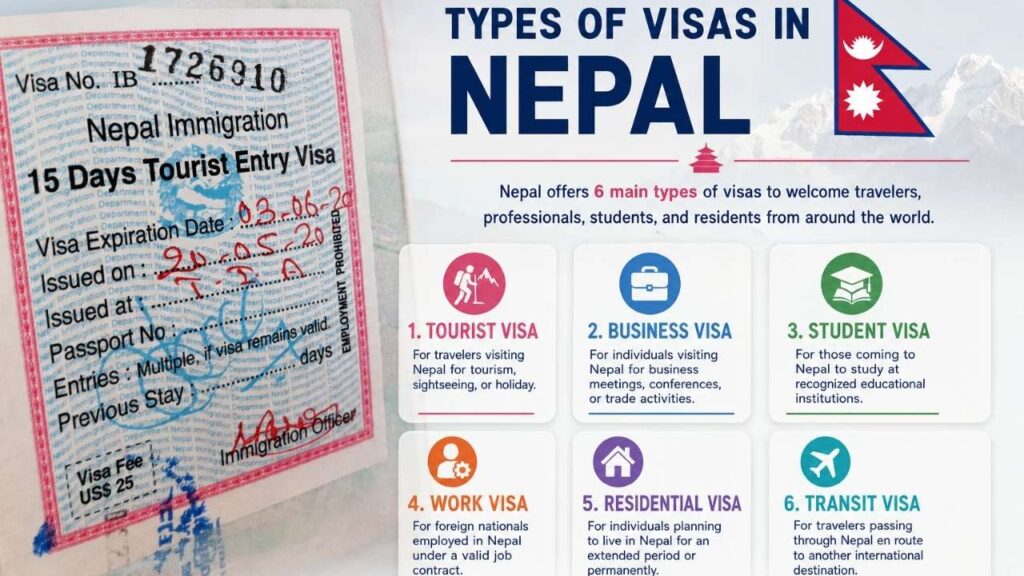
Nepal keeps its visa system surprisingly straightforward for a country that attracts everyone from Everest trekkers and backpackers to investors, monks, researchers, and remote workers trying to “accidentally” stay longer than planned. In reality, most foreign visitors entering Nepal use just one visa category: the Tourist Visa. Almost everything else business, study, work, residential, and non-tourist categories usually involves additional approvals from government departments inside Nepal after arrival.
That distinction matters because many first-time travelers assume they need a special visa before flying in for trekking, volunteering, business meetings, or short courses. In most cases, they do not. Tourist Visa functions as Nepal’s primary entry visa, even for many travelers whose long-term purpose later changes inside the country. Here’s how Nepal’s major visa categories actually work in practice.
Tourist Visa
The Tourist Visa is by far the most commonly used visa in Nepal. It is designed for leisure travel, trekking, sightseeing, visiting friends or family, mountaineering, and general tourism. For most nationalities, it can be obtained either on arrival or through a Nepalese embassy abroad.
This is the visa almost every traveler uses when entering Nepal for:
- Trekking in Everest or Annapurna
- Backpacking across Kathmandu and Pokhara
- Spiritual retreats and yoga programs
- Adventure tourism
- Visiting friends and family
Tourist visas are issued in 15-day, 30-day, and 90-day durations, and they come with multiple-entry facilities. One reason Nepal remains so popular among long-term travelers is that tourist visas can also be extended relatively easily inside the country. What makes Nepal unusual is that even travelers arriving for purposes beyond tourism including business meetings or study preparation often initially enter using a Tourist Visa before converting to another category later through the Department of Immigration.
Business Visa
Business Visas are intended for foreign nationals involved in investment, trade, business operations, or commercial activities in Nepal. In practice, this is a much smaller category than many travelers assume. Short business meetings or conferences usually do not require a dedicated Business Visa at entry. Travelers attending meetings often enter first on a Tourist Visa and later transition into a Business Visa if they begin long-term investment or business activities.
Business Visas are generally used by:
- Foreign investors
- Company directors
- Entrepreneurs operating businesses in Nepal
- Long-term commercial representatives
These visas usually require documentation tied to business registration, investment proof, tax clearance, or recommendations from relevant government departments.
Student Visa
Student Visas are issued to foreign nationals pursuing academic or non-academic study programs in Nepal. This includes university students, researchers, language learners, and certain academic instructors. Unlike the Tourist Visa, a Student Visa requires official institutional backing. Applicants need:
- A recommendation letter from Nepal’s Ministry of Education
- Admission confirmation from a recognized educational institution
- Proof of sufficient financial support
- Passport and current visa documentation
Student Visas are typically issued for up to one year at a time and renewed based on the length of study. In reality, this is still a relatively niche category compared to tourism. Most foreign visitors arriving in Nepal are trekkers and leisure travelers rather than full-time international students.
Work Visa
Work Visas are designed for foreigners employed by organizations, companies, embassies, INGOs, airlines, or institutions operating in Nepal. This category involves significantly more bureaucracy than a Tourist Visa. Work Visa applicants generally require:
- Employer sponsorship
- Labor approval or recommendation
- Supporting documents from relevant ministries or departments
- A valid employment contract
Compared to neighboring countries, Nepal issues relatively fewer foreign work permits outside sectors such as development work, aviation, diplomacy, education, and specialized technical roles. For that reason, Work Visas are rarely discussed in typical travel guides because they apply to a very small percentage of foreign arrivals.
Residential Visa
Residential Visas are intended for foreigners planning long-term residence in Nepal. This category commonly applies to:
- Foreign investors
- Retirees with financial qualifications
- Non-Resident Nepalis (NRNs)
- Foreign spouses of Nepali citizens
- Long-term residents with approved status
Residential visas are one of Nepal’s least understood visa categories because they operate more like long-term residency permissions than tourism permits. Although rarely used by short-term travelers, they have become increasingly relevant among retirees, business investors, and long-stay foreign residents living in Kathmandu or Pokhara.
Transit Visa
Transit Visas are the simplest and shortest visa category Nepal offers. Foreign travelers transiting through Nepal can obtain a 24-hour Transit Visa by showing proof of onward travel.
This category mainly applies to travelers:
- Staying overnight during flight connections
- Waiting for onward international departures
- Temporarily exiting the airport during transit
In practice, relatively few tourists use Transit Visas because most travelers entering Nepal stay for trekking or tourism rather than brief layovers.
Which Nepal Visa Do Travelers Actually Use?
For the overwhelming majority of travelers, Nepal’s visa system is much simpler than it first appears. If you are visiting Nepal for trekking, sightseeing, backpacking, yoga retreats, short volunteer experiences, photography, or general travel, you will almost certainly use a Tourist Visa. Business, Student, Work, and Residential Visas exist primarily for specialized long-term purposes and usually involve additional approvals inside Nepal.
They matter far more to investors, employees, researchers, and residents than to ordinary travelers planning a Himalayan adventure. That is why most travel discussions about Nepal visas focus almost entirely on Tourist Visas, Visa on Arrival procedures, extensions, and trekking permits, because those are the categories that affect nearly everyone stepping off a plane in Kathmandu.
Nepal Visa on Arrival: Step-by-Step Process
For most travelers, Nepal’s Visa on Arrival process is surprisingly straightforward, at least by South Asian travel standards. There is no intimidating embassy interview, no weeks of waiting for approval, and no complicated pre-clearance for the majority of tourists. In fact, many travelers complete the entire process within 20 to 45 minutes after landing in Kathmandu.
That said, the experience feels far less smooth when you arrive tired, jet-lagged, and completely unaware of how the airport system actually works.
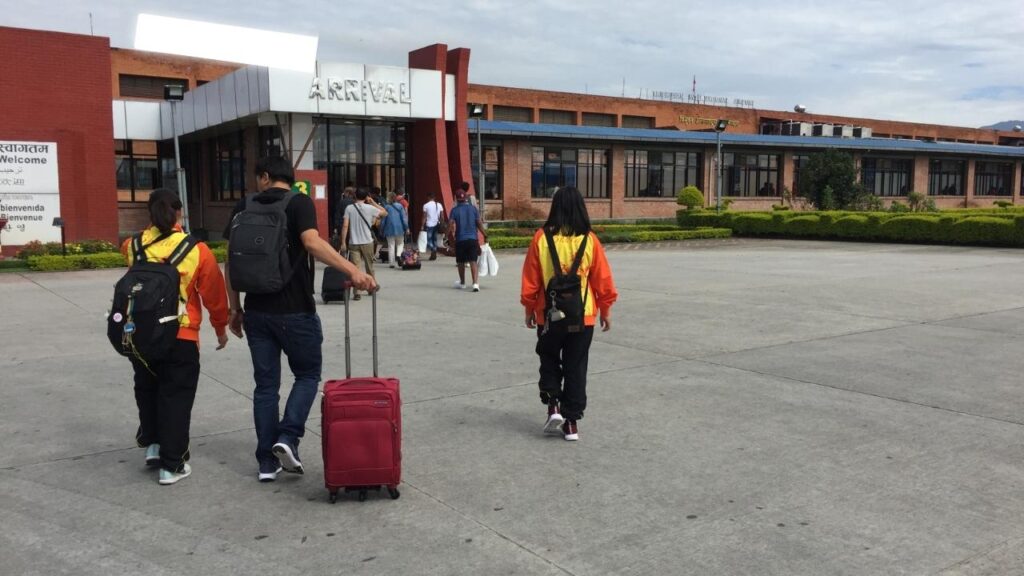
The confusion usually begins the moment passengers enter the immigration hall at Tribhuvan International Airport. You will see kiosks, payment counters, multiple visa queues, airport staff shouting directions, and dozens of travelers trying to figure out whether they should stand in line first or fill the form first. Knowing the flow beforehand makes the process dramatically easier.
Where Can You Get a Nepal Visa on Arrival?
You will find the Visa on Arrival facilities are available at:
- Tribhuvan International Airport in Kathmandu
- Major land border crossings with India
- Selected border entry points with China
The most common entry point by far is Kathmandu airport, which handles the overwhelming majority of international arrivals into Nepal. The Nepal Tourism Board currently lists the following major land crossings where foreign travelers can obtain visas:
- Kakarbhitta
- Birgunj
- Bhairahawa
- Nepalgunj
- Gaddachowki
- Kodari
However, land border experiences can vary significantly. Some crossings are efficient and straightforward, while others can feel disorganized, especially during busy travel periods or regional disruptions. Most first-time travelers still prefer arriving through Kathmandu because the process is more standardized.
Documents Required for Nepal Visa on Arrival
Nepal’s visa requirements are relatively light compared to many countries, but there are still a few essentials you absolutely cannot overlook. Your passport must be machine-readable and valid for at least six months from your arrival date. Immigration authorities specifically state that handwritten passports are not accepted.
You should also have:
- At least one blank passport page
- A completed arrival form
- Visa fee payment
- Hotel or local address details
- Passport-sized photo (recommended even if not always requested)
Interestingly, the passport photo situation causes a lot of confusion online. Official tourism sources still recommend carrying one passport-sized photo, while many recent travelers report that airport systems now capture photos digitally at immigration counters. Experienced travelers still carry spare photos anyway because Nepal occasionally operates with a mix of digital and manual processes depending on system availability.
Cash also matters more than many travelers expect. Although Nepal’s immigration system now supports some electronic payments, the Department of Immigration still advises travelers to carry cash “to be on the safe side.” US dollars remain the preferred currency for visa fees.
Step-by-Step Airport Experience
The actual airport process is simpler once you understand the order.
- Step 1: Fill Out the Visa Form
After entering the immigration hall, foreign travelers first complete the Tourist Visa form. You can either:
- Fill it online before departure through Nepal’s immigration website
- Use the self-service kiosk machines at the airport upon arrival
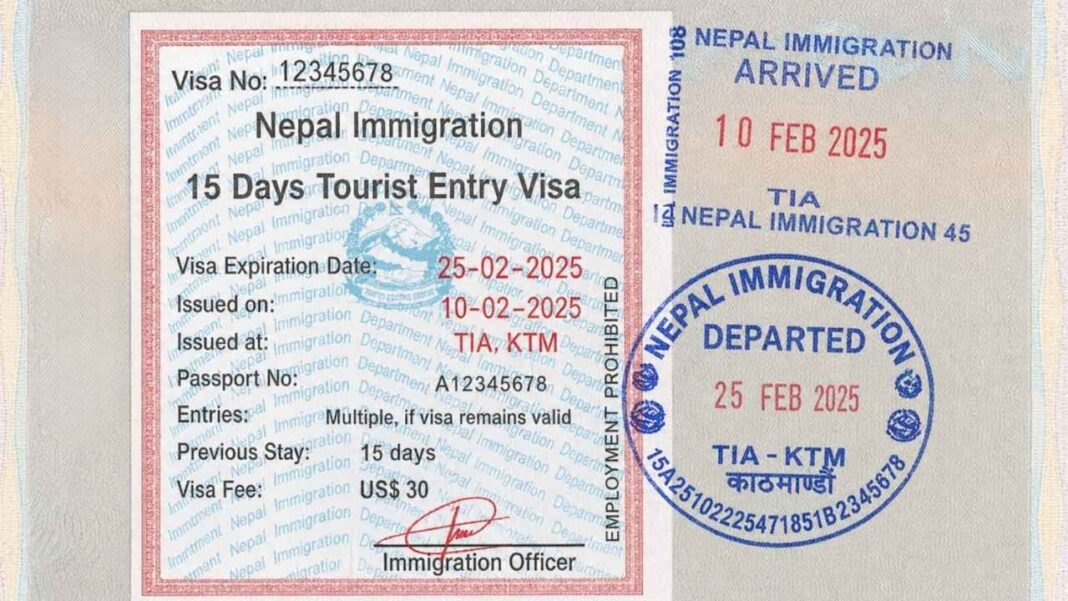
If you complete the form online beforehand, you receive a barcode confirmation receipt that remains valid for 15 days. Printing this receipt before flying can save considerable time after landing.
This is usually the first bottleneck inside the airport. When several international flights land close together, travelers crowd around the kiosks trying to enter passport details while balancing backpacks and fighting airport Wi-Fi. During peak trekking months, queues for the machines can sometimes take longer than immigration itself.
- Step 2: Pay the Visa Fee
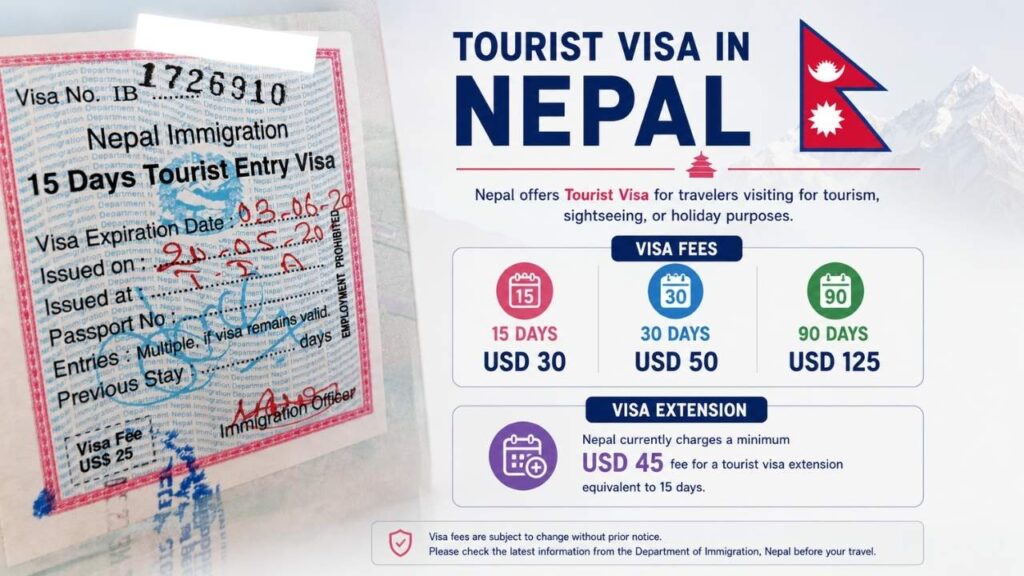
Once the form is completed, travelers proceed to the visa fee payment counter. Nepal currently charges:
- USD 30 for 15 days
- USD 50 for 30 days
- USD 125 for 90 days
This stage creates another common point of confusion. Some travelers assume payment happens directly at immigration desks, while others expect fully automated online processing. In reality, the system often still involves separate payment counters before immigration verification.
Recent travelers report that online payment systems now exist, but many still prefer paying at the airport because the process remains somewhat inconsistent. Old, damaged, or heavily folded US dollar bills may also be rejected something that catches surprising numbers of travelers off guard.
- Step 3: Immigration Verification
After payment, travelers join the immigration queue with:
- Passport
- Arrival card
- Barcode receipt
- Visa payment receipt
Immigration officers typically review the documents, ask a few simple questions about your stay, take a photo if needed, and process the visa. Questions are usually straightforward:
- How long are you staying?
- Where are you staying first?
- Is this your first visit to Nepal?
The atmosphere is generally relaxed compared to stricter immigration systems elsewhere in Asia or the Middle East.
- Step 4: Entry Stamp and Arrival in Nepal
Once approved, the immigration officer places the visa sticker or stamp into your passport, and you officially enter Nepal. This is usually the moment exhaustion suddenly disappears and the realization hits: you are finally in the Himalayas.
What the Real Experience Feels Like?
Nepal’s Visa on Arrival process works well most of the time but it still feels slightly old-school in a way that surprises modern travelers. The airport itself is relatively small for an international gateway handling large tourism volumes. During busy trekking seasons in March to May and September to November, arrival halls can become crowded very quickly. Multiple queues form at once, airport staff direct travelers between counters, and many first-time visitors are unsure whether they should pay first, fill forms first, or join immigration immediately.
Despite the occasional chaos, the system is usually more efficient than it initially appears.
Travelers who arrive prepared with printed forms, valid cash, hotel details, and passport copies often move through the airport far faster than expected. Those who arrive without preparation usually spend most of their time figuring out the process rather than actually waiting for approval. And honestly, that is the real secret to Nepal’s Visa on Arrival system: it is not difficult, but it rewards travelers who understand the flow before they land.
Nepal Visa Extension Guide
Nepal has a habit of ruining people’s travel schedules. What begins as a “quick two-week trekking trip” somehow turns into sunrise cafés in Pokhara, extra acclimatization days in the mountains, a last-minute jungle safari in Chitwan, and at least one conversation in Thamel about whether abandoning your entire life to live near the Himalayas is financially responsible. Fortunately, Nepal’s visa system is surprisingly accommodating when plans change.
Unlike many countries where extending a tourist visa feels like navigating a bureaucratic obstacle course, Nepal keeps the process relatively straightforward for most travelers. According to the Department of Immigration, tourist visas can be extended from within Nepal without leaving the country, provided travelers apply before their current visa expires. For trekkers, backpackers, long-term travelers, climbers, and slow travelers, this flexibility is one of Nepal’s biggest advantages.
Where Can You Extend Your Nepal Visa?
Tourist visa extensions are primarily handled through two immigration offices:
- The Department of Immigration in Kathmandu
- The Immigration Office in Pokhara (immigration.gov.np)
Most travelers extend their visa in Kathmandu simply because it is Nepal’s main administrative center and where most international travelers pass through before or after trekking. However, Pokhara has become increasingly popular for extensions because many trekkers finish routes in the Annapurna region and prefer avoiding another trip back to Kathmandu immediately.
Kathmandu Immigration Office
The main immigration office is located in Kalikasthan, Kathmandu, not far from the Thamel tourist district. This is Nepal’s central immigration authority and handles the largest volume of visa extensions in the country. During peak trekking seasons especially March to May and September to November, the office becomes extremely busy. Travelers arriving late in the morning often encounter long queues filled with trekkers carrying dusty backpacks, climbers extending permits, and digital nomads trying to calculate how many more weeks they can justify staying in Nepal.
The process itself is usually manageable, but the waiting time depends heavily on when you arrive. Experienced travelers typically recommend arriving early in the morning with all documents already prepared. The difference between arriving at opening time and arriving near lunch can easily mean the difference between a one-hour process and losing most of your day inside a government office.
Pokhara Immigration Office
Pokhara’s immigration office is smaller, quieter, and generally less intimidating than Kathmandu’s. For travelers finishing the Annapurna Circuit, Annapurna Base Camp, Mardi Himal, or other western Nepal trekking routes, extending a visa in Pokhara is often far more convenient than returning immediately to Kathmandu. The atmosphere also tends to feel less chaotic.
Instead of packed administrative halls and dense city traffic, Pokhara’s office usually handles fewer travelers per day, particularly outside peak trekking months. That said, “less crowded” in Nepal does not always mean fast. Systems occasionally go offline, paperwork sometimes moves slowly, and queues can still build unexpectedly during trekking season. Still, many travelers consider Pokhara the more relaxed option.
How the Nepal Visa Extension Process Works?
The extension process itself is relatively straightforward once you understand the flow.
According to Nepal’s Department of Immigration, travelers must complete an online application form before visiting the immigration office. After submitting the online form, travelers visit the immigration office with:
- Their passport
- Current visa details
- Printed application submission receipt
- Passport-sized photograph (recommended)
- Visa extension fee payment
Immigration officers then review the application, calculate the extension duration, and issue the updated visa extension directly into the passport. For most travelers, the process is procedural rather than interrogative. Officers usually focus on documentation and payment rather than extensive questioning.
Nepal Visa Extension Fees
Nepal currently charges a minimum USD 45 fee for a tourist visa extension equivalent to 15 days. Additional days are charged at USD 3 per day after the initial extension period. There is also an additional late penalty if travelers overstay their visa. This is where many travelers get caught. People often assume Nepal’s relaxed travel culture translates into relaxed immigration enforcement. It does not. Overstaying your visa results in financial penalties, and immigration officers calculate overstay days carefully when travelers attempt to leave the country.
A “one more trek” mindset becomes expensive surprisingly quickly if you forget your visa expiry date while hiking in remote mountain regions without internet access.
The Real Experience of Extending a Visa in Nepal
In practice, Nepal’s visa extension system feels far more human than overly bureaucratic.
You will likely stand in line beside climbers extending permits for Himalayan expeditions, backpackers reworking their travel budgets, spiritual retreat participants staying longer than intended, and exhausted trekkers who underestimated how much time mountain travel actually requires in Nepal. There is a strange shared understanding inside those immigration waiting rooms: almost nobody planned to stay this long.
And that is exactly why Nepal’s extension system matters so much. The country rewards flexible travel. Weather delays happen. Treks take longer than expected. Mountain flights get canceled. Travelers discover places they do not want to leave yet. Nepal’s immigration system, surprisingly, is built with that reality in mind.