

When most people hear the word Sherpa, they think of the legendary mountain guides who have helped climbers reach the summit of Mount Everest. But Sherpas are much more than expert mountaineers; they are an ethnic group with a rich culture, deep Buddhist traditions, and centuries of history in Nepal’s high Himalayas. Their villages offer a chance to experience a way of life that has been shaped by rugged mountains, trade, farming, and some of the world’s highest peaks.
It is also important to know that not every mountain village in Nepal is a Sherpa village. Nepal is home to dozens of ethnic communities, each with its own language, customs, and traditions. Sherpa villages are found mainly in the Khumbu (Everest) region, where Tibetan Buddhist culture, ancient monasteries, prayer flags, and stone-built homes create a landscape that feels unlike anywhere else in the country.
For many trekkers, visiting these villages becomes one of the most memorable parts of an Everest journey. Beyond the spectacular views, you will meet local families, visit centuries-old monasteries, learn about Sherpa traditions, and experience the hospitality that has made the region famous around the world. Doesn’t matter if you are stopping in the bustling streets of Namche Bazaar or spending a quiet evening in a small village like Khumjung or Thame; every stop offers something different.
No two Sherpa villages are exactly alike. Some are lively trekking hubs filled with cafés and lodges, while others remain peaceful communities where daily life still revolves around farming, yak herding, and Buddhist traditions. Understanding what makes each village unique will help you choose where to spend your time and make your journey through the Everest region even more rewarding.
Understanding Sherpa Villages
A Sherpa village is a community where the Sherpa people have traditionally lived for generations. The word “Sherpa” comes from the Tibetan words Shar (east) and Pa (people), meaning “people from the east.” Historians believe the Sherpas migrated from eastern Tibet into the Himalayan region of Nepal several hundred years ago, eventually settling in the high valleys where they built permanent villages and developed a lifestyle adapted to life at high altitude.
Although Sherpas are now internationally recognized for their achievements in mountaineering, their history extends far beyond Everest expeditions. For centuries, they survived by farming hardy crops such as potatoes and barley, raising yaks, trading across Himalayan passes, and living in close-knit communities. Tourism has become an important source of income today, but many villages still preserve traditional customs that have been passed down through generations.
One of the defining features of every Sherpa village is its strong Tibetan Buddhist heritage. Monasteries, chortens (Buddhist shrines), mani stone walls carved with sacred prayers, colorful prayer flags, and spinning prayer wheels are part of everyday life. Religion is woven into the rhythm of the community, influencing festivals, family traditions, architecture, and even the design of trekking trails that often pass around sacred monuments in a clockwise direction.
Most Sherpa villages sit between 3,000 and 4,000 meters (9,840–13,120 feet) above sea level, although some are even higher. The stone houses, narrow footpaths, terraced fields, and surrounding peaks create some of the most iconic mountain landscapes in Nepal. While modern lodges, cafés, and internet access are now common in larger villages, the traditional way of life remains remarkably intact in many smaller settlements.
Quick Facts About Sherpa Villages
| Fact | Details |
| Main Region | Khumbu (Everest Region) |
| Religion | Tibetan Buddhism |
| Language | Sherpa (many residents also speak Nepali and English in tourist areas) |
| Traditional Occupations | Mountaineering, trekking, guiding, farming, yak herding, and tourism |
| Typical Elevation | 3,000 to 4,000+ meters (9,840 to 13,120+ feet) |
Sherpa communities are concentrated in eastern Nepal, but they are not limited to a single valley. The most famous settlements are found in the Khumbu (Everest) region, home to villages such as Namche Bazaar, Khumjung, Khunde, Pangboche, Tengboche, and Thame. This is where most visitors experience Sherpa culture while trekking to Everest Base Camp, Gokyo Lakes, or the Three Passes.
South of Khumbu lies the Solu region, where Sherpa communities are spread across lower elevations. Many trekkers pass through Solu when taking the longer route from Salleri or Phaplu to Everest, offering a quieter introduction to Sherpa culture before reaching the busier trails in Khumbu.
Smaller Sherpa populations also live in the Rolwaling Valley, a remote Himalayan region west of Everest known for its dramatic scenery, traditional villages, and challenging trekking routes. Although far less visited, Rolwaling preserves many of the same cultural traditions found in Khumbu.
Another area with a significant Sherpa presence is Helambu, located north of Kathmandu. While the region is also home to Hyolmo communities, several villages have long-established Sherpa populations and share many elements of Tibetan Buddhist culture. Helambu provides a more accessible cultural trekking experience without the extreme altitude of the Everest region.
Among all these regions, Khumbu remains the heart of Sherpa culture and the most popular destination for visitors. It contains Nepal’s best-known Sherpa villages, the country’s highest concentration of historic monasteries, and the landscapes that have made the Everest region famous around the world.
Namche Bazaar (3,440m/ 11,286ft)
If there is one Sherpa village that every visitor to the Everest region should experience, it is Namche Bazaar. Perched on a natural amphitheater overlooking the Dudh Koshi Valley, this vibrant mountain town is widely regarded as the cultural, economic, and administrative heart of the Khumbu. Nearly every trek to Everest Base Camp, Gokyo Lakes, or the Three Passes passes through Namche, making it far more than just another stop on the trail it is where many travelers get their first real introduction to Sherpa life.
Historically, Namche grew as an important trading center between Nepal and Tibet. Long before trekking became popular, merchants crossed high Himalayan passes with caravans of yaks, exchanging salt, wool, grains, and other goods. While cross-border trade has changed over the decades, Namche has retained its role as the region’s main marketplace. Today, its narrow streets are lined with trekking outfitters, bakeries, cafés, gear shops, pharmacies, banks, and family-run lodges, serving both local communities and thousands of trekkers each year.
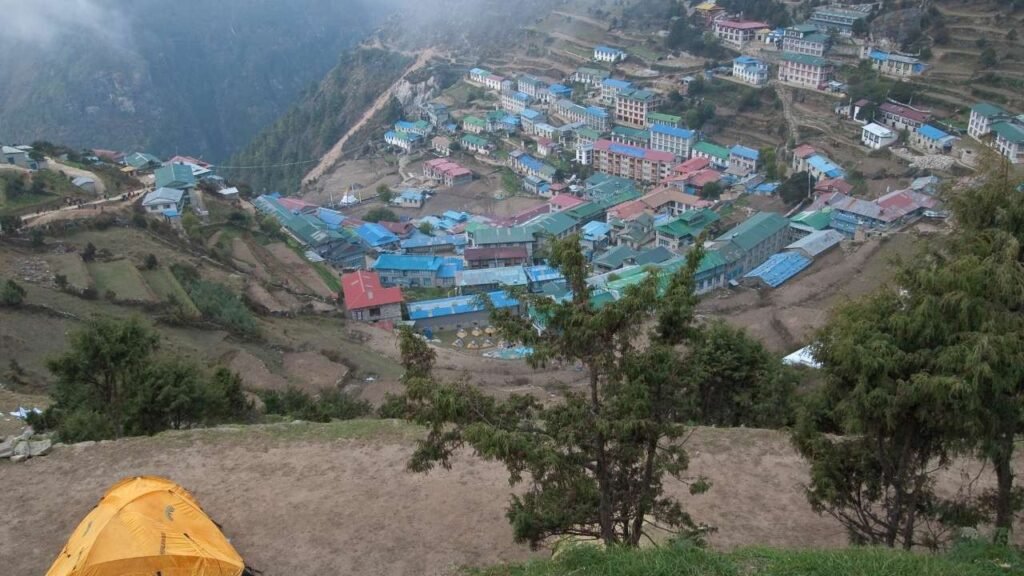
Despite its modern conveniences, Namche remains deeply rooted in Sherpa culture. One of the best places to understand this heritage is the Sherpa Culture Museum, where exhibits explore traditional Sherpa homes, Buddhist customs, mountaineering history, and the evolution of life in the Khumbu.
Most Everest itineraries schedule two nights in Namche Bazaar, allowing your body to adapt before ascending above 3,500 meters. Instead of remaining idle, trekkers are encouraged to spend the acclimatization day hiking to higher elevations before returning to sleep in the village. This “climb high, sleep low” approach helps reduce the risk of altitude sickness while giving you time to explore nearby villages such as Khumjung and Khunde.
Namche is also one of the few places in the Khumbu where you will experience a lively social atmosphere. Fresh coffee, Himalayan bakeries, bookstores, art galleries, and small museums sit alongside traditional stone houses and Buddhist monuments, reflecting how the village has balanced tourism with its cultural identity. If your visit falls on a Saturday, you can also explore the weekly market, where residents from surrounding villages gather to trade fresh produce, livestock supplies, clothing, and household goods, a tradition that predates modern trekking.
If you are interested in Sherpa history, mountain photography, local food, or simply taking a well-earned rest before the tougher stages of the trek, Namche Bazaar offers the richest combination of culture, scenery, and visitor facilities anywhere in the Everest region. For many travelers, it becomes one of the most memorable stops of the entire journey, not because it is the highest village, but because it best captures the spirit of the Khumbu.
Khumjung (3,790m/ 12,434ft)
Just a short climb above Namche Bazaar lies Khumjung, one of the largest and most traditional Sherpa villages in the Khumbu. Nestled beneath the sacred peak of Khumbila, which Sherpas regard as the protector deity of the region, Khumjung offers a very different atmosphere from the bustling trekking hub below. While Namche revolves around tourism, Khumjung remains first and foremost a living community where families continue to farm, worship, and preserve traditions that have shaped Sherpa life for centuries.
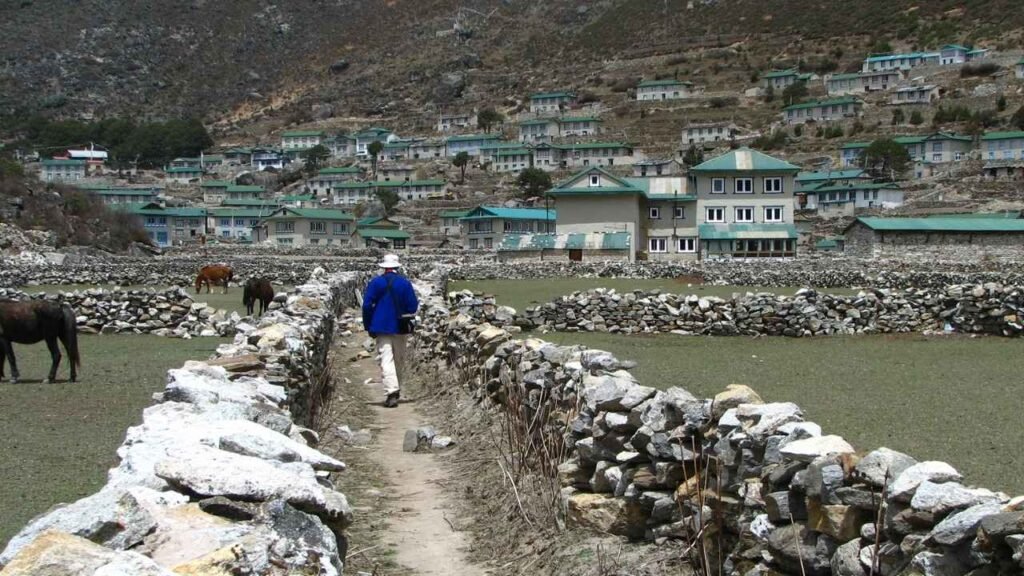
The village is immediately recognizable by its clusters of stone houses with green metal roofs, neatly enclosed potato fields, and winding footpaths lined with mani walls and prayer flags. Agriculture remains an important part of daily life here, with potatoes serving as one of the few crops that thrive at this altitude. Yaks and dzopkyos graze on the surrounding hillsides, while villagers continue to maintain many of the farming practices their ancestors relied on long before trekking became the region’s main industry.
One of Khumjung’s most significant landmarks is the Khumjung Monastery, a centuries-old Buddhist monastery that continues to serve as the spiritual heart of the community. The monastery is internationally known for displaying an alleged Yeti scalp, a relic that has intrigued explorers, scientists, and travelers for decades. Although modern research has never confirmed its origin, the artifact has become part of local folklore and remains one of the Everest region’s most famous curiosities. Beyond the legend, the monastery offers visitors an opportunity to appreciate traditional Tibetan Buddhist art, prayer halls, and the quiet rhythm of monastic life.
Khumjung also holds an important place in Nepal’s modern history through the Khumjung School, established in 1961 by Sir Edmund Hillary and the Himalayan Trust. What began as a small school for local children has grown into one of the region’s leading educational institutions, reflecting Hillary’s long-term commitment to improving healthcare, education, and living standards in Sherpa communities after his historic ascent of Mount Everest.
Many trekkers visit Khumjung during their acclimatization day from Namche Bazaar, but those who stay overnight often discover a quieter side of the Khumbu. Without the constant flow of trekkers found on the main Everest trail, evenings are peaceful, the mountain scenery feels more intimate, and daily village life unfolds at a slower pace. For travelers hoping to experience Sherpa culture beyond busy trekking lodges, Khumjung is one of the most rewarding villages in the Everest region.
Khunde (3,840m/ 12,598ft)
Only a few minutes’ walk from Khumjung, Khunde is often overlooked by trekkers, yet it is one of the most important Sherpa settlements in the Khumbu. Sitting on an open hillside with sweeping views across the surrounding valleys, the village combines spectacular scenery with a rich legacy of community development that continues to benefit residents throughout the Everest region.
Khunde is best known for the Khunde Hospital, established in 1966 by Sir Edmund Hillary’s Himalayan Trust. Before the hospital opened, access to healthcare in the Khumbu was extremely limited, with serious illnesses often requiring days of travel to reach medical assistance. Today, the hospital provides essential healthcare services for local residents, guides, porters, and trekkers, making it one of Hillary’s most enduring contributions to the region. Although modest by urban standards, it remains a vital institution in one of Nepal’s most remote mountain communities.
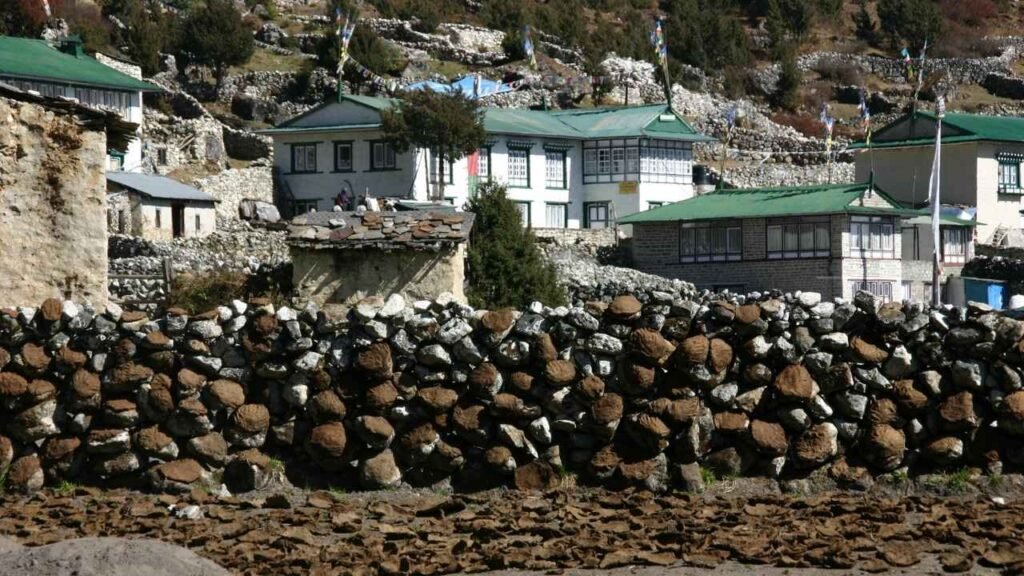
Unlike Namche Bazaar, Khunde has largely retained its residential character. Traditional stone homes sit among cultivated fields and grazing pastures, while Buddhist shrines and prayer flags reflect the strong spiritual traditions shared across Sherpa villages. Tourism exists here, but it has never overshadowed daily life, allowing visitors to experience a quieter and more authentic side of the Khumbu.
Khunde’s location also makes it one of the finest viewpoints in the lower Everest region. Because the village occupies a broad, open slope rather than a narrow valley, many trails and lodges offer uninterrupted panoramas of Everest, Lhotse, Ama Dablam, Khumbila, and the surrounding Himalayan ridges. Early mornings are particularly rewarding, as the first sunlight gradually illuminates the snow-covered peaks while the villages below remain in shadow.
Many trekkers combine Khunde with Khumjung during an acclimatization hike from Namche, but spending additional time here offers a deeper appreciation of Sherpa life away from the busiest trekking route. For visitors interested in local history, community projects, and peaceful mountain landscapes, Khunde is one of the Khumbu’s most underrated destinations.
Pangboche (3,985m/ 13,074ft)
Set beneath the dramatic southwest face of Ama Dablam, Pangboche is widely regarded as one of the oldest and most culturally significant Sherpa villages in Nepal. Archaeological records are limited, but local history suggests the settlement has been continuously inhabited for centuries, making it one of the earliest permanent Sherpa communities established in the upper Khumbu. Its combination of history, religion, and extraordinary mountain scenery makes Pangboche far more than just another overnight stop on the Everest Base Camp trek.
At the center of the village stands the historic Pangboche Monastery, traditionally considered the oldest monastery in the Everest region. Founded by Lama Sanga Dorje according to local tradition, it has long served as an important religious center where monks conduct daily prayers, seasonal ceremonies, and community festivals. The monastery has also been associated with stories of alleged Yeti relics, although today it is primarily valued for its religious significance rather than its legends.
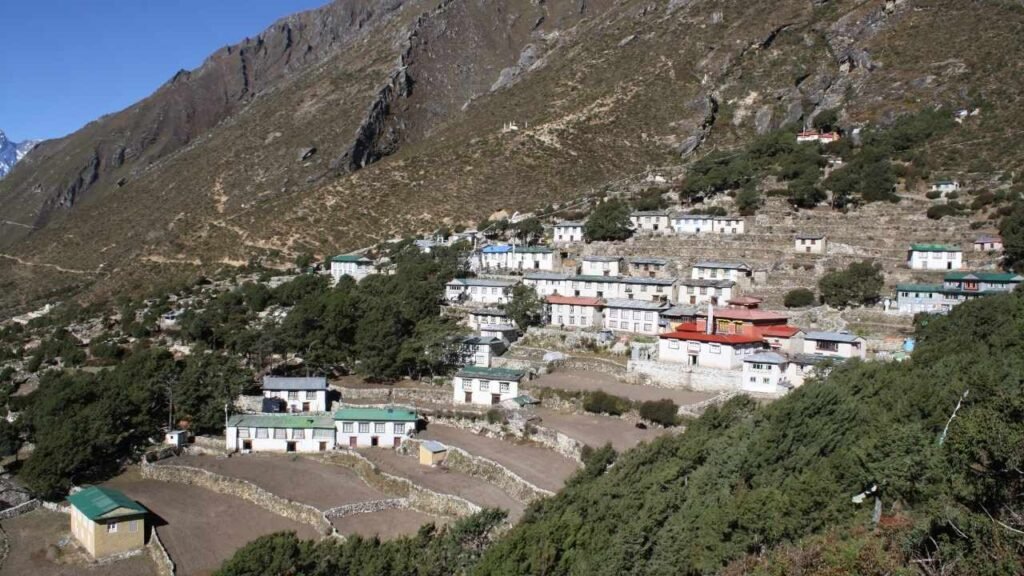
Life in Pangboche remains closely connected to the surrounding landscape. Stone houses, cultivated fields, and yak pastures spread across the hillside, illustrating how Sherpa families have adapted to farming and herding in a harsh alpine environment. Even as tourism has grown, many residents continue to balance lodge management with traditional agricultural work, preserving a way of life that has changed surprisingly little over generations.
The village’s setting is among the most spectacular in the Himalayas. The elegant pyramid of Ama Dablam dominates the skyline, while Everest, Lhotse, and other towering peaks rise in the distance. Photographers often consider Pangboche one of the best locations on the Everest trail because the village combines dramatic mountain backdrops with traditional Sherpa architecture, Buddhist monuments, and open grazing fields.
For many visitors, Pangboche offers the perfect balance between culture and scenery. It feels less commercial than Namche Bazaar yet more vibrant than many smaller settlements, making it an excellent place to experience both the spiritual heritage and everyday life of the Sherpa people.
Tengboche (3,867m/ 12,687ft)
Although home to only a small permanent population, Tengboche is one of the most famous villages in Nepal because of its profound religious importance and breathtaking mountain setting. Surrounded by forests of rhododendron, birch, and juniper, the village occupies a ridge that offers panoramic views of Everest, Lhotse, Nuptse, Ama Dablam, and Thamserku, creating one of the most photographed landscapes in the Himalayas.
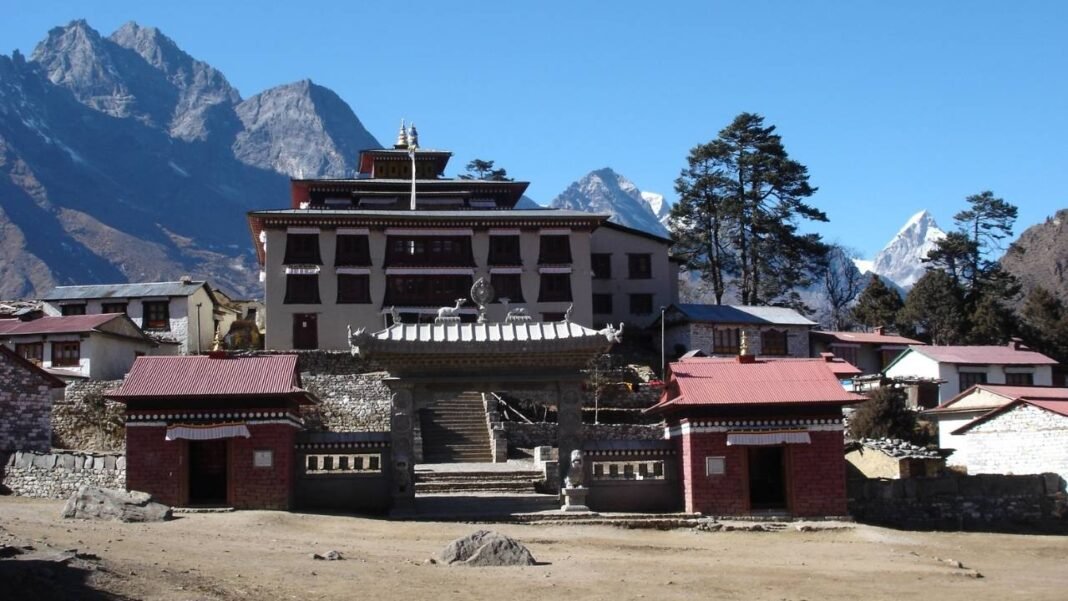
The heart of Tengboche is the Tengboche Monastery, the largest and most influential Buddhist monastery in the Khumbu. Founded in 1916, it serves as the spiritual center of the Everest region, where monks preserve centuries-old Tibetan Buddhist traditions through daily prayers, meditation, and annual religious festivals. Visitors are welcome to attend the afternoon prayer ceremonies, provided they observe monastery etiquette and maintain a respectful silence. The rhythmic chanting of monks, accompanied by traditional horns and drums, offers one of the most memorable cultural experiences on the Everest trail.
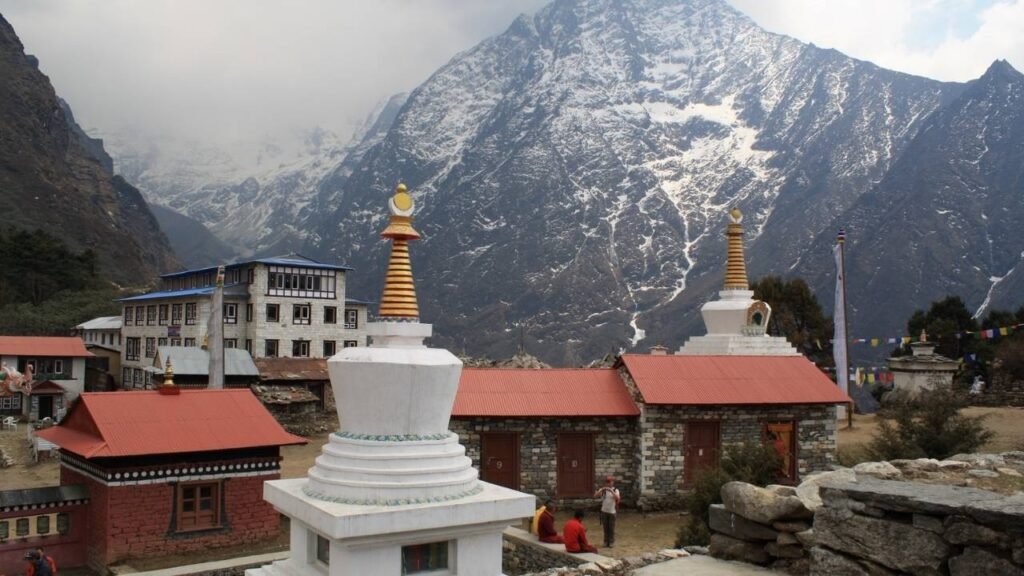
Beyond its religious significance, Tengboche is famous for its natural beauty. During spring, the surrounding hillsides burst into color as rhododendron forests bloom, while autumn brings exceptionally clear skies and crisp mountain views. Sunrise and sunset are particularly spectacular, when the changing light transforms Ama Dablam and Everest into glowing shades of gold and pink, attracting photographers from around the world.
Nearly every Everest Base Camp itinerary includes an overnight stay in Tengboche, not only because of its ideal trekking distance from Namche Bazaar but also because it represents a cultural highlight of the journey. Doesn’t matter whether you are attending a monastery ceremony, walking through quiet forest trails, or simply watching clouds drift across the Himalayan peaks, Tengboche offers an experience that captures the spiritual and natural beauty of the Khumbu like few other places can.
Phortse (3,810m/ 12,500ft)
Tucked away on a hillside overlooking the Dudh Koshi Valley, Phortse is one of the most authentic Sherpa villages in the Everest region. Unlike the busy Everest Base Camp trail, the village sits slightly off the main trekking corridor, meaning far fewer visitors spend the night here. For travelers willing to take the short detour, Phortse offers a rare opportunity to experience everyday Sherpa life with fewer crowds and a stronger connection to the local community.
What makes Phortse truly remarkable is its extraordinary mountaineering heritage. Despite having a population of only a few hundred people, the village has produced an exceptional number of high-altitude guides and Everest summiteers. Climbing is not simply a profession here, it is part of the community’s identity. Many families have multiple generations who have worked on Himalayan expeditions, and it is common to meet lodge owners, farmers, or teachers who have stood on the summit of Everest or guided climbers on some of the world’s highest mountains. This unique legacy has earned Phortse a reputation as one of Nepal’s true “villages of climbers.”
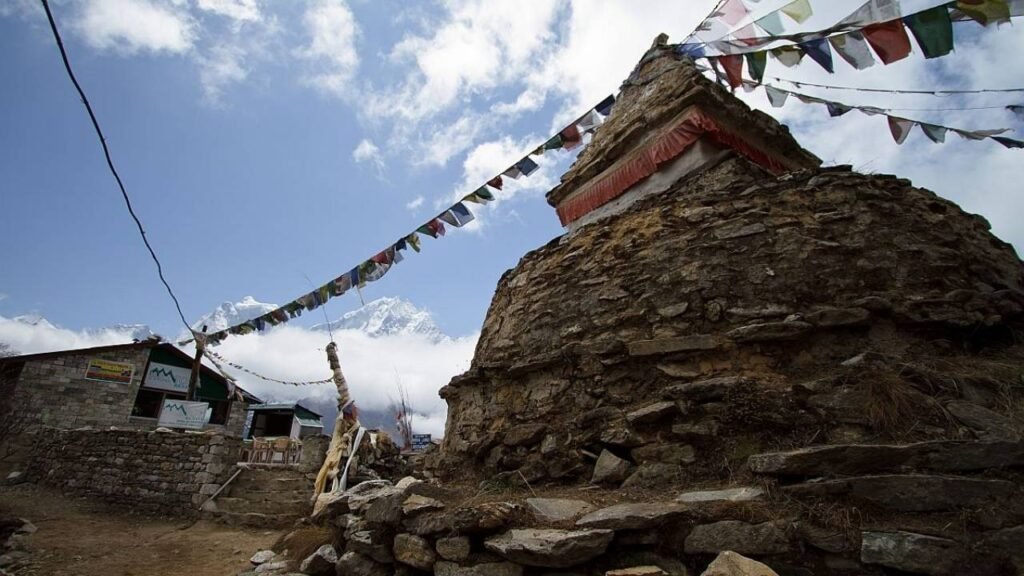
Away from expedition stories, life in Phortse still revolves around farming, yak herding, and Buddhist traditions. Stone houses are built into the steep hillside, terraced fields stretch across the surrounding slopes, and prayer flags flutter above ancient mani walls. Tourism provides additional income for many families, but it has not transformed the village in the way it has larger settlements such as Namche Bazaar.
Phortse also rewards visitors with impressive mountain scenery. From the trails surrounding the village, you will enjoy sweeping views of Ama Dablam, Taboche, Cholatse, and the upper Khumbu Valley. The quieter setting makes it an excellent destination for photographers and trekkers looking to experience a less commercial side of the Everest region.
For those following the Gokyo Lakes Trek, the Everest Three Passes Trek, or a customized itinerary, Phortse is one of the most worthwhile side trips in the Khumbu. It combines genuine Sherpa hospitality, fascinating climbing history, and peaceful Himalayan landscapes into an experience that feels far removed from the busier Everest trail.
Thame (3,800m/ 12,467ft)
Located west of Namche Bazaar in the upper Bhote Koshi Valley, Thame is one of the oldest Sherpa villages in Nepal and a place where the region’s history feels especially alive. Long before Everest became a global trekking destination, Thame was an important stop on the ancient trade route connecting Nepal and Tibet. Caravans carrying salt, wool, grain, and livestock once passed through the valley, helping shape the economy and culture of the Sherpa people for centuries.
Today, Thame is best known as the birthplace of many legendary Himalayan climbers. Some of Nepal’s most respected mountaineers, including several Everest record holders, grew up in this small village, where life at high altitude naturally developed the resilience and mountain skills that later made Sherpas famous around the world. For many visitors, simply walking through the village offers a deeper appreciation of the community that has played such a significant role in Himalayan exploration.
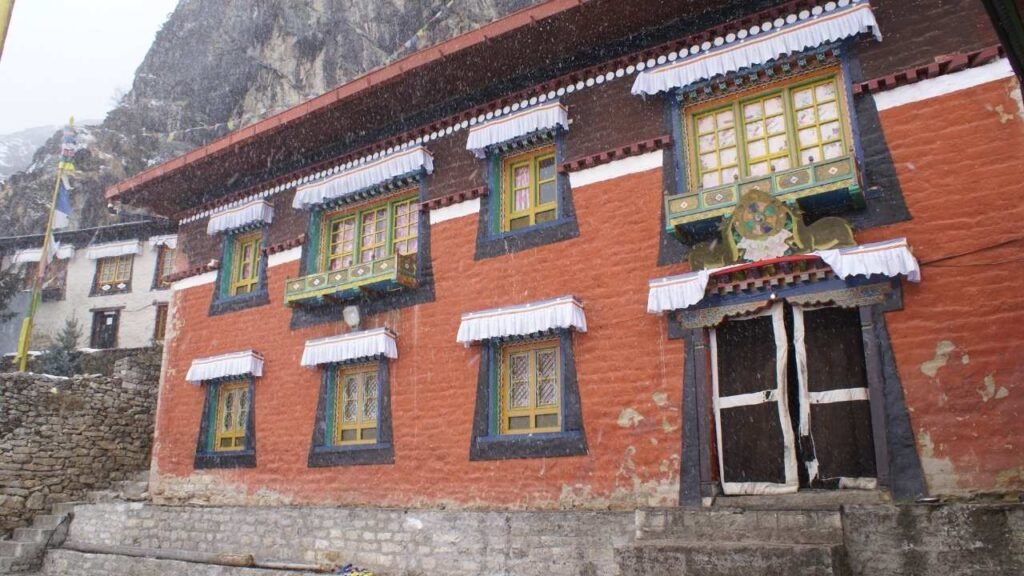
Overlooking the settlement is the historic Thame Monastery, one of the oldest monasteries in the Khumbu. Perched on a hillside above the village, it provides not only a peaceful place for prayer and meditation but also spectacular views across the valley. The monastery remains an active religious center where local monks continue centuries-old Buddhist traditions, making it a rewarding destination for travelers interested in Sherpa culture.
Unlike villages on the Everest Base Camp route, Thame has remained relatively untouched by mass tourism. The atmosphere is noticeably quieter, with traditional stone homes, grazing yaks, and narrow village paths replacing the cafés and trekking shops found elsewhere in the Khumbu. This slower pace is one of Thame’s greatest strengths, allowing visitors to experience a more authentic side of Sherpa life while exploring one of the region’s richest cultural landscapes.
If you are interested in mountaineering history, Buddhism, or simply escaping the busiest trekking routes, Thame is one of the Khumbu’s hidden gems and well worth the extra time.
Dingboche (4,410m/ 14,469ft)
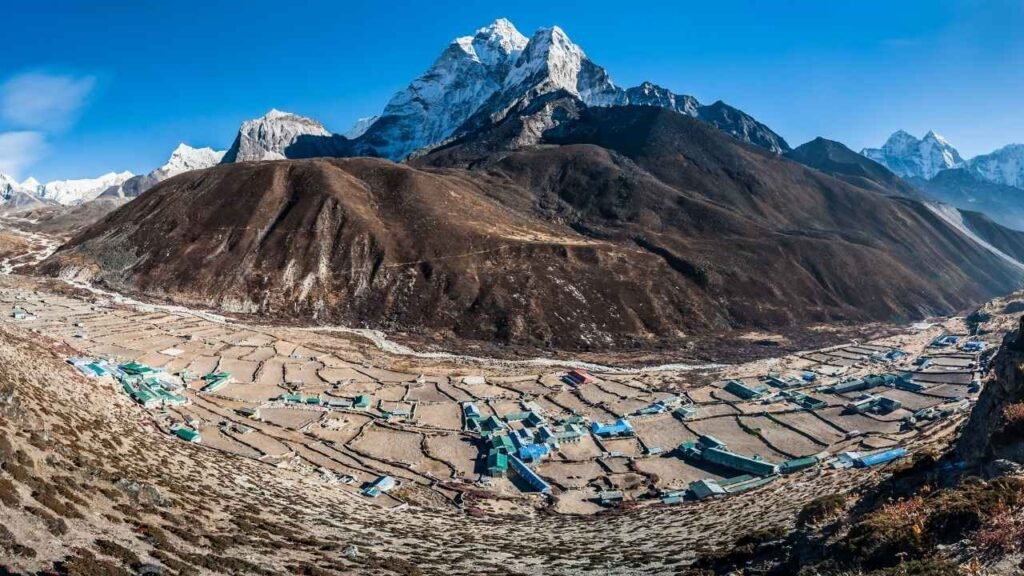
Surrounded by towering peaks and sitting above the tree line, Dingboche is one of the highest permanent Sherpa settlements in the Everest region. At over 4,400 meters, the village marks an important transition on the journey toward Everest Base Camp, where the landscape becomes more rugged, vegetation becomes sparse, and the effects of altitude become increasingly noticeable.
For most trekkers, Dingboche serves as the second major acclimatization stop after Namche Bazaar. Standard Everest Base Camp itineraries include two nights here, allowing your body time to adjust before continuing toward Lobuche and Gorak Shep. Acclimatization hikes to nearby viewpoints such as Nangkartshang Peak provide spectacular panoramas while following the important principle of “climb high, sleep low.”
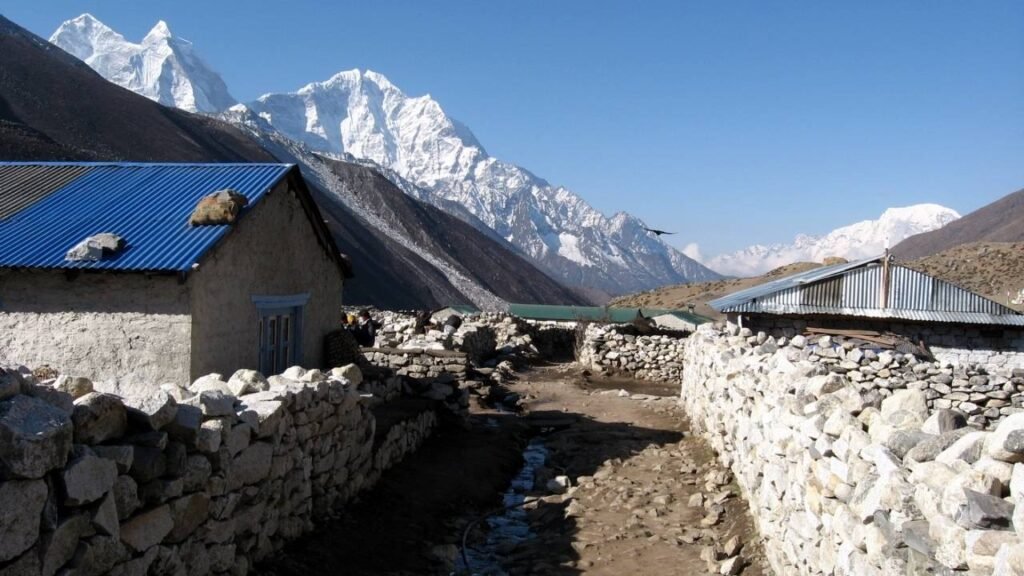
One of Dingboche’s most distinctive features is its network of stone-walled fields. These carefully constructed walls protect potato crops and other hardy vegetation from strong Himalayan winds while preventing yaks and livestock from wandering into cultivated land. They are a striking example of how Sherpa communities have adapted agriculture to one of the world’s harshest mountain environments.
Unlike villages enclosed by narrow valleys, Dingboche sits in a broad alpine basin surrounded by some of the Himalayas’ most impressive peaks, including Ama Dablam, Lhotse, Island Peak, Taboche, and Cholatse. The wide-open landscape creates a feeling of space rarely experienced elsewhere on the Everest trail and offers outstanding opportunities for photography, particularly during sunrise and sunset.
Dingboche is also the main gateway for climbers attempting Island Peak (Imja Tse), one of Nepal’s most popular trekking peaks. Many expeditions use the village as their final staging point before heading toward base camp, adding another layer to its importance within the Khumbu. Whether you are continuing to Everest Base Camp or preparing for a climbing expedition, Dingboche is one of the region’s most memorable high-altitude settlements.
Monjo (2,835m/ 9,301ft)
Although often overshadowed by Namche Bazaar, Monjo is one of the first villages where many trekkers begin to experience the unique culture of the Sherpa homeland. Nestled beside the Dudh Koshi River and surrounded by pine forests, the village offers a peaceful introduction to the Everest region before the trail begins its long climb toward higher elevations.
Monjo’s greatest significance is its location at the entrance to Sagarmatha National Park, Nepal’s UNESCO World Heritage Site that protects Mount Everest and much of the surrounding Khumbu. All trekkers pass through the park’s entrance checkpoint here, making Monjo an important gateway to one of the world’s most famous mountain landscapes.
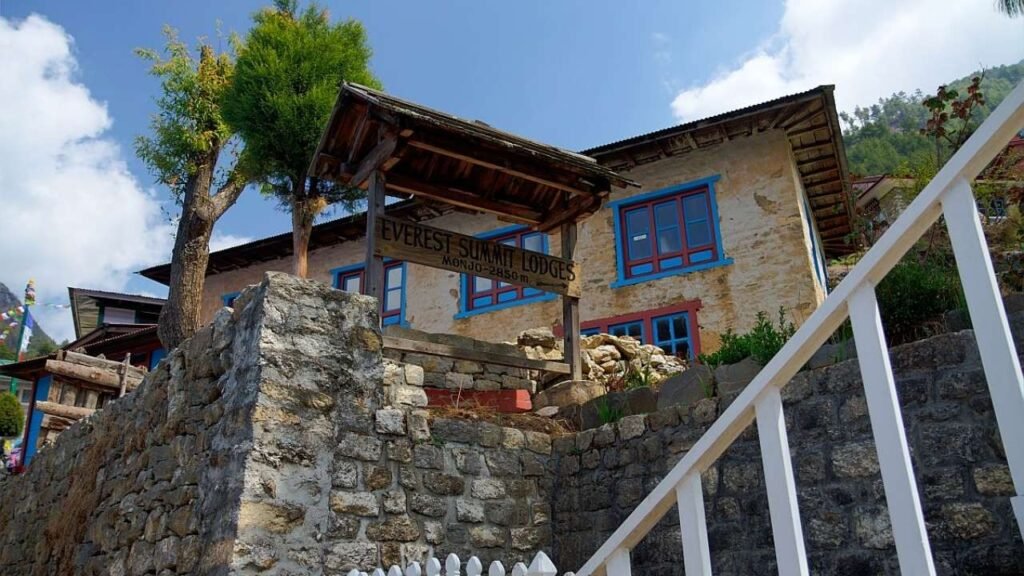
Compared with larger settlements farther up the trail, Monjo has a noticeably quieter atmosphere. Traditional family-run lodges line the village paths, while prayer wheels, chortens, and suspension bridges create the classic Himalayan scenery many visitors imagine before arriving in the Everest region. The sound of the Dudh Koshi River and the surrounding forest make it one of the most relaxing overnight stops on the trek.
Many itineraries continue directly to Namche Bazaar from Phakding, but choosing to stay in Monjo offers several advantages. The shorter hiking day allows for a more gradual ascent, which some trekkers find more comfortable during the early stages of the journey. It also provides additional time to enjoy the peaceful surroundings before entering the busier sections of the Everest trail.
While Monjo may not have the famous monasteries of Tengboche or the bustling markets of Namche, it provides something equally valuable: a quiet and authentic first impression of Sherpa hospitality, mountain life, and the natural beauty that defines the Khumbu.
Comparison of the Best Sherpa Villages
| Village | Elevation | Famous For | Trek Difficulty to Reach | Recommended Overnight Stay |
| Namche Bazaar | 3,440 m | Gateway to Everest, Sherpa culture, markets | Moderate | 2 nights |
| Khumjung | 3,790 m | Traditional Sherpa village, Hillary School, Yeti legend | Moderate | 1 night |
| Khunde | 3,840 m | Hillary Hospital, panoramic mountain views | Moderate | 1 night |
| Pangboche | 3,985 m | Ancient monastery, Ama Dablam scenery | Challenging | 1 night |
| Tengboche | 3,867 m | Famous monastery, Buddhist ceremonies | Moderate to Challenging | 1 night |
| Phortse | 3,810 m | Village of elite climbers, authentic Sherpa life | Challenging (detour from the main EBC trail) | 1 night |
| Thame | 3,800 m | Historic trade route, climbing legends, monastery | Moderate (side valley from Namche) | 1 night |
| Dingboche | 4,410 m | Acclimatization stop, stone-walled fields, Island Peak gateway | Challenging (high altitude) | 2 nights |
| Monjo | 2,835 m | Sagarmatha National Park entrance, peaceful riverside setting | Easy | Optional (1 night) |
Difficulty reflects the typical effort required to reach each village as part of a standard Everest region trek, considering trail conditions, elevation gain, and altitude rather than technical difficulty.