
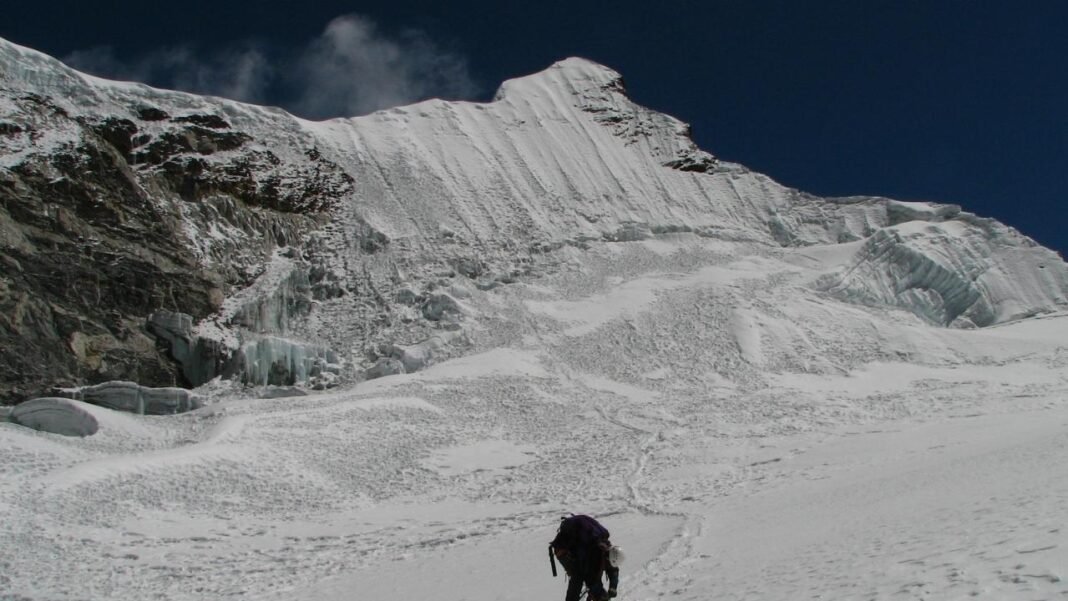

Many people assume that climbing a mountain in Nepal means taking on Everest or another extreme Himalayan expedition reserved for experienced mountaineers. While Nepal is home to eight of the world’s fourteen 8,000-meter peaks, it also offers a wide selection of trekking peaks designed for people taking their first step into mountaineering. These peaks, generally between 5,500 and 6,500 meters, provide an achievable introduction to high-altitude climbing without the advanced technical demands of major expedition peaks.
That said, the word “beginner” can be misleading. It does not mean the climb is easy or risk-free. You will still spend several days trekking at high altitude, cross glaciers, use crampons and fixed ropes on many routes, and face freezing temperatures, unpredictable mountain weather, and long summit days that often begin before dawn. For most first-time climbers, altitude, not technical climbing, is the biggest challenge.
Choosing the right first peak is one of the most important decisions you will make. A mountain that matches your fitness level, trekking experience, and confidence can turn your first Himalayan climb into a rewarding adventure instead of an exhausting struggle. In this guide, you will discover the best beginner peaks in Nepal, how they compare, and which one is the right fit for your first mountaineering experience.
What Is a Beginner Peak? Can Beginners Really Climb Mountains in Nepal?
Yes, with the right preparation, beginners can successfully climb several peaks in Nepal. A beginner peak is not simply a mountain that’s easy; it’s one that requires only basic mountaineering skills and is well-suited to guided expeditions. Most beginner-friendly peaks are between 5,500 and 6,500 meters, where you will learn to use equipment like crampons, a harness, and fixed ropes under the supervision of experienced guides.
While some prior trekking experience is helpful, advanced ice climbing or technical mountaineering skills are generally not required. The biggest misconception is that climbing is all about technical ability. In reality, fitness, acclimatization, and mental endurance are usually far more important.
Every year, thousands of first-time climbers reach the summits of peaks like Mera Peak and Island Peak after completing a structured itinerary and learning basic climbing techniques during the expedition. Training before your trip, especially hiking, stair climbing, and cardio, can make the experience significantly more enjoyable.
That said, you should still expect a real mountaineering challenge. Summit days often last 10–14 hours; you will travel across glaciers, climb in freezing temperatures before sunrise, and spend multiple days above 4,000 meters where altitude becomes the biggest obstacle.
Trekking vs Trekking Peaks vs Expedition Peaks
| Feature | Trekking | Trekking Peak | Expedition Peak |
| Climbing required | No | Basic climbing | Advanced technical climbing |
| Rope use | No | Fixed ropes on some sections | Extensive rope systems |
| Equipment | Hiking boots | Crampons, harness, helmet | Full alpine climbing gear |
| Technical difficulty | Low | Moderate | High |
| Best for | Hikers | First-time climbers | Experienced mountaineers |
Quick Comparison of the Best Beginner Peaks in Nepal
Not every beginner peak offers the same experience. Some focus on high-altitude endurance with relatively straightforward climbing, while others introduce steeper snow slopes, fixed ropes, and more technical terrain. Your ideal first peak depends on your fitness, previous trekking experience, and how much mountaineering you want to learn.
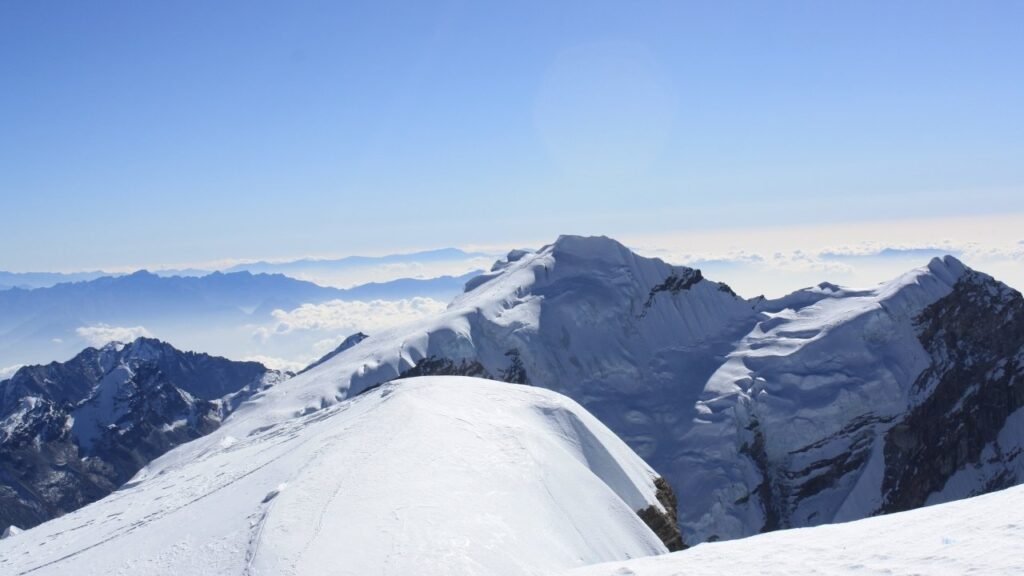
The table below compares Nepal’s most popular beginner-friendly climbing peaks to help you quickly narrow down your options.
| Peak | Elevation | Typical Duration | Difficulty | Technical Level | Best Season |
| Mera Peak | 6,476 m (21,247 ft) | 15–18 days | Moderate | Low–Moderate | Spring (Mar–May), Autumn (Sep–Nov) |
| Island Peak (Imja Tse) | 6,189 m (20,305 ft) | 16–20 days | Moderate to Challenging | Moderate | Spring, Autumn |
| Lobuche East | 6,119 m (20,075 ft) | 16–19 days | Challenging | Moderate–High | Spring, Autumn |
| Yala Peak | 5,500 m (18,045 ft) | 7–10 days | Moderate | Low | Spring, Autumn |
| Pisang Peak | 6,091 m (19,984 ft) | 16–20 days | Challenging | Moderate | Spring, Autumn |
| Chulu East | 6,584 m (21,601 ft) | 18–21 days | Challenging | Moderate–High | Spring, Autumn |
Note: Yala Peak has historically been one of Nepal’s most popular introductory climbing peaks. However, climbing regulations and permit availability have changed in recent years, so it’s important to confirm its current status with your trekking agency before planning an expedition.
Which Peak Is Right for You?
- Choose Mera Peak if you want the best first Himalayan summit with minimal technical climbing and a high success rate. The main challenge is its altitude rather than the climbing itself.
- Choose Island Peak if you have already completed a high-altitude trek such as Everest Base Camp and want to experience glacier travel, fixed ropes, and a more technical summit.
- Choose Lobuche East if you are a strong trekker looking for a more demanding climb with excellent preparation for future alpine objectives.
- Choose Yala Peak if you are seeking a shorter, lower-altitude introduction to mountaineering and basic climbing techniques.
- Choose Pisang Peak if you plan to combine your climb with the Annapurna Circuit and are comfortable with a longer expedition.
- Choose Chulu East if you are ready for a bigger challenge that combines high altitude with more sustained glacier travel and technical climbing.
Although all of these are considered beginner-friendly compared with Nepal’s major expedition peaks, Mera Peak and Yala Peak are generally the most approachable for first-time climbers, while Island Peak, Lobuche East, Pisang Peak, and Chulu East require greater fitness, stronger acclimatization, and more confidence on snow and ice.
Best Beginner Peaks in Nepal
Although these mountains are often described as “beginner peaks,” they offer very different experiences. Some emphasize high-altitude endurance with relatively straightforward climbing, while others introduce steeper snow slopes, exposed ridges, and more technical rope work.
Understanding these differences will help you choose a peak that matches your experience, fitness, and long-term mountaineering goals.
Mera Peak (6,476 m / 21,247 ft): Best Overall First Himalayan Peak
Quick Facts
| Elevation | 6,476 m (21,247 ft) |
| Region | Everest (Makalu Barun National Park) |
| Typical Duration | 15–18 days |
| Difficulty | Moderate |
| Technical Level | Low to Moderate |
| Best Season | March–May, September–November |
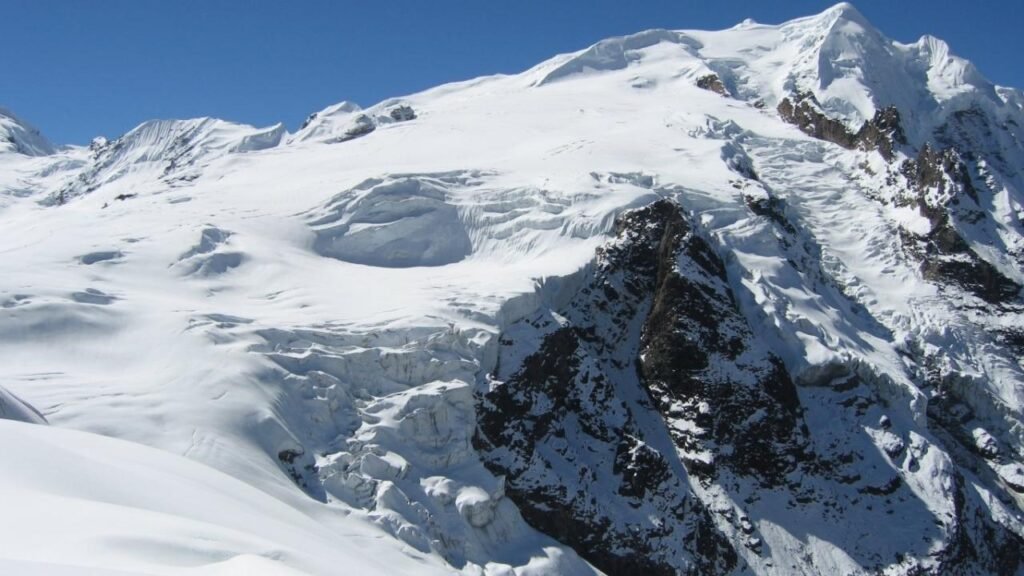
If you are looking for the best first Himalayan summit, Mera Peak is difficult to beat. As Nepal’s highest trekking peak, it offers the thrill of standing above 6,000 meters without demanding advanced climbing skills. Most of the climb follows gradual snow slopes, making altitude—not technical climbing the biggest obstacle.
Most expeditions begin with a flight to Lukla before taking a quieter route through Paiya, Panggom, Kothe, Thangnak, and Khare. After a few days of acclimatization and basic climbing training, climbers head to High Camp before making a pre-dawn summit push.
The summit day is long, often lasting 10–12 hours, but the reward is extraordinary. On a clear day, you can see five 8,000-meter peaks Everest, Lhotse, Cho Oyu, Makalu, and Kanchenjunga, making it one of the finest viewpoints in the Himalayas.
Pros
- Ideal first 6,000-meter peak.
- Less crowded than Island Peak.
- Technical difficulty is relatively low.
- Incredible summit panorama.
Cons
- Highest altitude among Nepal’s trekking peaks.
- Long summit day can be physically demanding.
- Weather windows are critical near the summit.
Island Peak (Imja Tse) (6,189 m / 20,305 ft): Best After Everest Base Camp
Quick Facts
| Elevation | 6,189 m (20,305 ft) |
| Region | Everest (Sagarmatha National Park) |
| Typical Duration | 16–20 days |
| Difficulty | Moderate to Challenging |
| Technical Level | Moderate |
| Best Season | March–May, September–November |
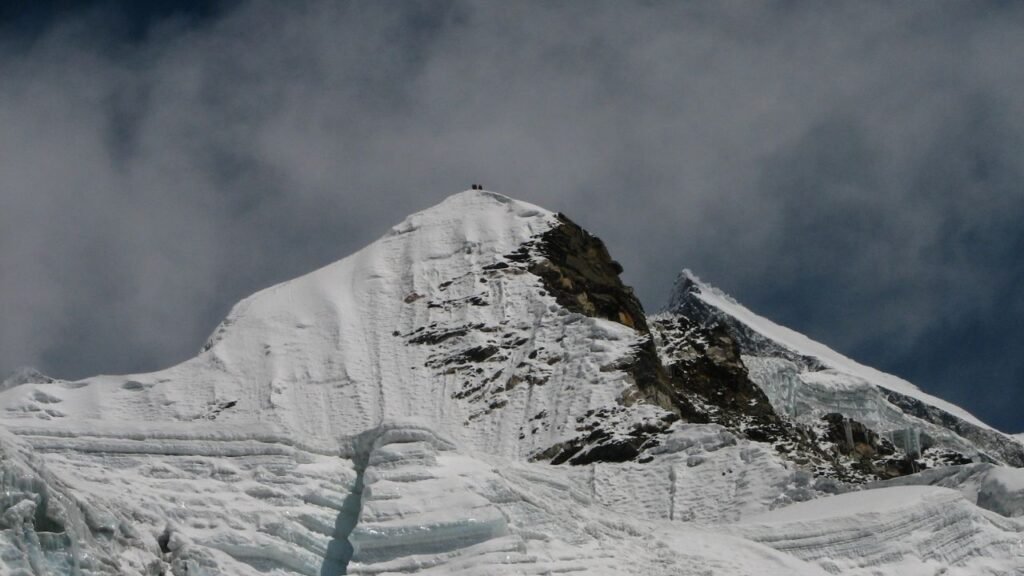
Island Peak is one of Nepal’s most iconic trekking peaks and is often chosen by trekkers who want to add a summit attempt after completing the Everest Base Camp trek. Compared to Mera Peak, it demands more climbing skill and confidence on steep snow and ice.
The standard route follows the classic Everest trail through Namche Bazaar, Tengboche, Dingboche, and Chhukung before reaching Island Peak Base Camp. Most operators include a climbing course where you will learn to use crampons, ascenders, descenders, and fixed ropes.
Summit day is more technical than Mera Peak.
You will cross a glacier, negotiate crevasses (conditions vary by season), climb fixed ropes on a steep headwall of around 40–50 degrees, and in some seasons may encounter ladder crossings over crevasses.
These ladders are not guaranteed every year, as glacier conditions change. The summit rewards you with close-up views of Lhotse, Ama Dablam, Baruntse, Nuptse, and Makalu, offering one of the most dramatic alpine settings in Nepal.
Pros
- Excellent progression after Everest Base Camp.
- Teaches practical rope and glacier skills.
- Outstanding Everest-region scenery.
Cons
- More technical than most beginner peaks.
- Crowded during peak climbing seasons.
- Success depends heavily on weather and glacier conditions.
Yala Peak (5,500 m / 18,045 ft): Best for Absolute Beginners
Quick Facts
| Elevation | 5,500 m (18,045 ft) |
| Region | Langtang National Park |
| Typical Duration | 7–10 days |
| Difficulty | Moderate |
| Technical Level | Low |
| Best Season | March–May, September–November |
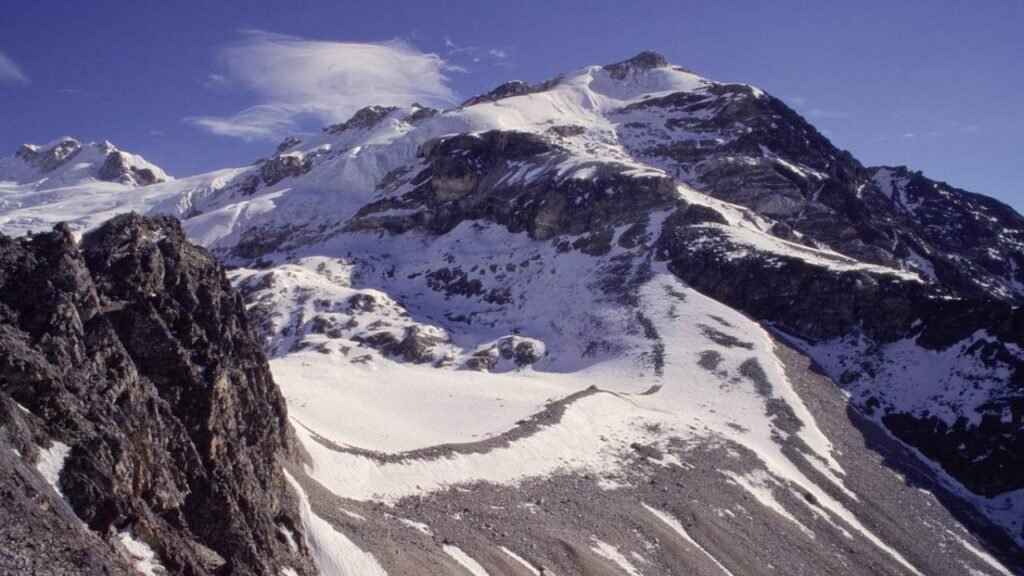
Yala Peak has long been regarded as Nepal’s easiest introduction to Himalayan climbing. At around 5,500 meters, it is lower than the other peaks on this list, making acclimatization easier while still providing valuable experience in a high-altitude environment.
The climb begins from Syabrubesi and follows the Langtang Valley through Lama Hotel, Langtang Village, and Kyanjin Gompa before reaching Yala Peak Base Camp. The route is relatively short, making it an excellent option for travelers with limited time.
Unlike Island Peak or Lobuche East, Yala Peak involves minimal technical climbing. Many guided trips focus on teaching the fundamentals of using crampons, an ice axe, and a harness in a less demanding setting, making it a popular choice for first-time mountaineers and mountaineering courses.
Pros
- Lower altitude than most trekking peaks.
- Short itinerary.
- Great learning environment.
- Accessible from Kathmandu by road.
Cons
- Less physically demanding than other peaks.
- Fewer technical challenges.
- Summit views, while excellent, are not as extensive as Mera Peak.
Lobuche East (6,119 m / 20,075 ft): Best for Fit Beginners
Quick Facts
| Elevation | 6,119 m (20,075 ft) |
| Region | Everest |
| Typical Duration | 16–19 days |
| Difficulty | Challenging |
| Technical Level | Moderate to High |
| Best Season | March–May, September–November |
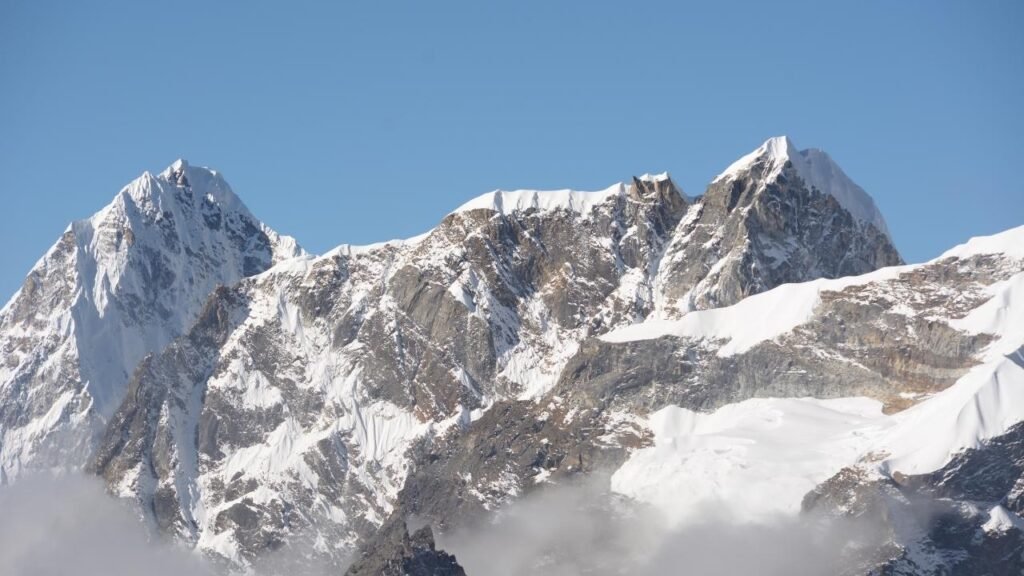
Lobuche East is often recommended for strong hikers who want their first climbing experience to be more demanding than Mera or Island Peak. Although officially classified as a trekking peak, it requires greater confidence on exposed terrain and fixed ropes.
The approach follows the Everest Base Camp route before branching toward Lobuche High Camp. The summit climb includes glacier travel, snow slopes, and a steeper summit ridge that requires careful footwork and rope management.
One of the biggest rewards is the scenery. Few beginner peaks offer such close views of Everest, Lhotse, Nuptse, Pumori, Ama Dablam, and the Khumbu Glacier from the summit.
Pros
- Excellent preparation for more technical mountains.
- Less crowded than Island Peak.
- Spectacular Everest panorama.
Cons
- Steeper summit section.
- Requires good physical fitness.
- Greater exposure than most beginner peaks.
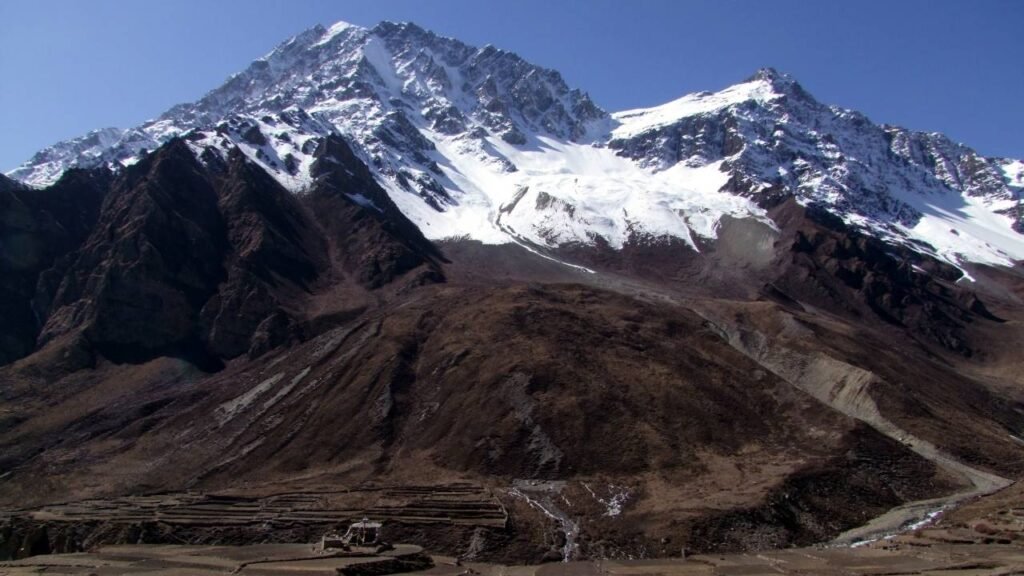
Pisang Peak (6,091 m / 19,984 ft): Best with the Annapurna Circuit
Quick Facts
| Elevation | 6,091 m (19,984 ft) |
| Region | Annapurna Conservation Area |
| Typical Duration | 16–20 days |
| Difficulty | Challenging |
| Technical Level | Moderate |
| Best Season | March–May, September–November |
Pisang Peak is an excellent choice if you want to combine a mountain climb with one of Nepal’s most famous trekking routes the Annapurna Circuit.
The climb begins from Upper Pisang, where the trail gradually ascends to base camp and high camp before tackling mixed rock, snow, and ice terrain on summit day. The final ridge is steeper than many first-time climbers expect, requiring fixed ropes in typical conditions.
Because the expedition naturally includes several days on the Annapurna Circuit, climbers benefit from gradual acclimatization before attempting the summit.
Pros
- Combines trekking and climbing in one expedition.
- Excellent acclimatization profile.
- Beautiful Annapurna and Manaslu views.
Cons
- Longer itinerary.
- Steeper final ridge.
- More physically demanding than Mera Peak.
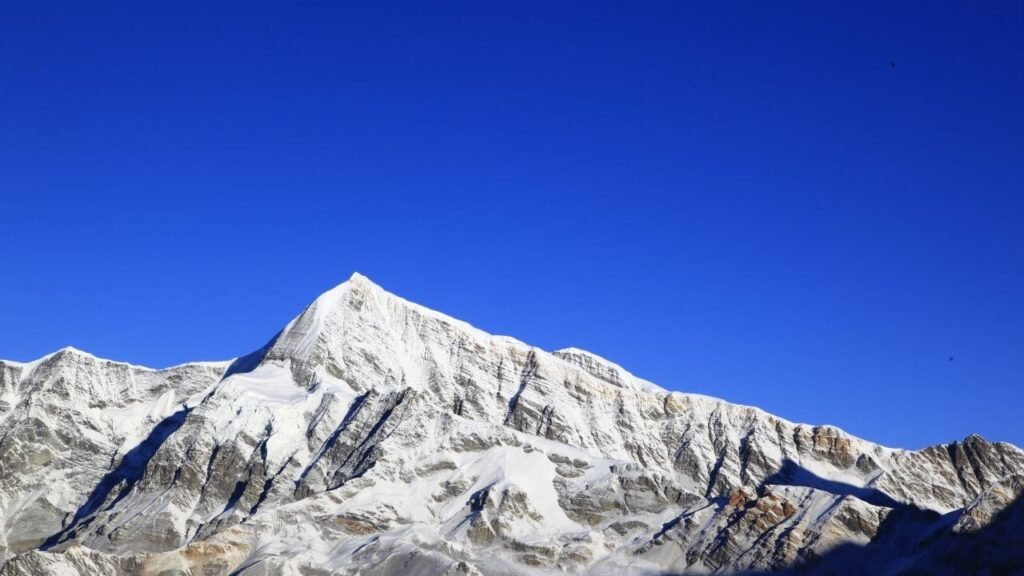
Chulu East (6,584 m / 21,601 ft): Best Next Step After Your First Peak
Quick Facts
| Elevation | 6,584 m (21,601 ft) |
| Region | Annapurna Conservation Area |
| Typical Duration | 18–21 days |
| Difficulty | Challenging |
| Technical Level | Moderate to High |
| Best Season | March–May, September–November |
Chulu East is generally considered a step above the other peaks on this list. While still classified as a trekking peak, its greater altitude, longer glacier sections, and more demanding summit climb make it better suited to climbers who have already completed a first Himalayan peak or have prior mountaineering experience.
Most expeditions are combined with the Annapurna Circuit, allowing for excellent acclimatization before moving onto the glacier. Climbers can expect sustained snow travel, fixed ropes where needed, and a physically demanding summit day.
From the summit, you will enjoy sweeping views of the Annapurna range, Dhaulagiri, Manaslu, and the Tibetan Plateau, making the effort worthwhile.
Pros
- Outstanding progression after a first trekking peak.
- Longer glacier travel builds alpine experience.
- Less crowded than Everest-region climbs.
Cons
- Highest technical commitment on this list.
- Requires strong fitness and solid acclimatization.
- Longer expedition with more demanding summit conditions.
Best Time to Climb Beginner Peaks in Nepal
Choosing the right season is just as important as choosing the right peak. Stable weather improves summit success, makes glacier travel safer, and offers clearer mountain views. While some beginner peaks can be climbed outside the main seasons, spring and autumn remain the best time for almost every trekking peak in Nepal.
Spring (March–May)– Best Overall Season
Spring is widely considered the best season for beginner climbers. Warmer temperatures, longer daylight hours, and generally stable weather create ideal climbing conditions. Snow from winter usually remains on higher slopes, providing good traction for crampons while making glacier travel more predictable.
The mountains are also at their most colorful, with rhododendron forests blooming along many trekking routes.
Pros
- Stable climbing weather
- Comfortable daytime temperatures
- Reliable snow conditions on higher peaks
- Excellent visibility and mountain views
- High summit success rates
Cons
- Busiest climbing season
- Higher prices for flights and expeditions
- Popular routes can be crowded
Autumn (September–November)– Best for Clear Mountain Views
Autumn is another excellent climbing season, especially after the monsoon clears dust and moisture from the atmosphere. The result is exceptionally crisp visibility, making it one of the best times for photography and panoramic Himalayan views.
Temperatures become colder than in spring, particularly at high camps, but weather patterns are generally stable.
Pros
- Crystal-clear mountain views
- Stable weather
- Dry trails and comfortable trekking conditions
- Excellent visibility for summit days
Cons
- Colder nights, especially in November
- Busy trails on Everest and Annapurna routes
- Early snowfall is possible late in the season
Winter (December–February)– Possible, But More Challenging
Some beginner peaks, including Mera Peak, Island Peak, and Yala Peak, are climbed during winter, but conditions become significantly tougher. Temperatures at high camp can fall well below -20°C (-4°F), and heavy snowfall or strong winds may delay or cancel summit attempts.
Winter climbs reward experienced trekkers seeking quieter mountains, but they demand better cold-weather preparation and greater flexibility.
Pros
- Very few crowds
- Clear skies are common after storms
- Peaceful trekking experience
Cons
- Extreme cold
- Increased snow and ice
- Shorter daylight hours
- Higher chance of weather-related delays
Monsoon (June–August)– Generally Not Recommended
The summer monsoon brings heavy rainfall across much of Nepal, creating muddy trails, leeches, landslides, and frequent flight disruptions. Cloud cover also limits mountain views, while fresh snow at higher elevations can make summit routes less predictable.
Although some regions receive less rainfall than others, most beginner climbing expeditions avoid the monsoon season due to safety and logistics.
Pros
- Fewer trekkers
- Greener landscapes
- Lower prices on some services
Cons
- Heavy rain and poor visibility
- Flight delays and cancellations
- Slippery trails and landslide risk
- Less reliable summit conditions
Seasonal Comparison
| Season | Weather | Mountain Views | Typical High Camp Temperature | Summit Conditions | Recommendation |
| Spring (Mar–May) | Stable and mild | Excellent | -10°C to -15°C | Reliable snow, generally stable | ⭐⭐⭐⭐⭐ Best overall |
| Autumn (Sep–Nov) | Dry and stable | Outstanding | -10°C to -20°C | Excellent, though colder late season | ⭐⭐⭐⭐⭐ Best for visibility |
| Winter (Dec–Feb) | Cold and variable | Very good on clear days | -20°C to -30°C | Snowier, colder, weather dependent | ⭐⭐⭐ Suitable for experienced beginners |
| Monsoon (Jun–Aug) | Wet and unstable | Poor to limited | Around -5°C to -15°C at altitude | Unpredictable, frequent weather disruptions | ⭐ Not recommended |
Temperatures are approximate and vary by peak, elevation, campsite, and weather conditions.
For most first-time climbers, spring and autumn offer the safest balance of weather, trail conditions, and summit success.
If you are aiming for your first Himalayan peak, planning your expedition during one of these two seasons will give you the best chance of reaching the summit while enjoying Nepal’s spectacular mountain scenery.