


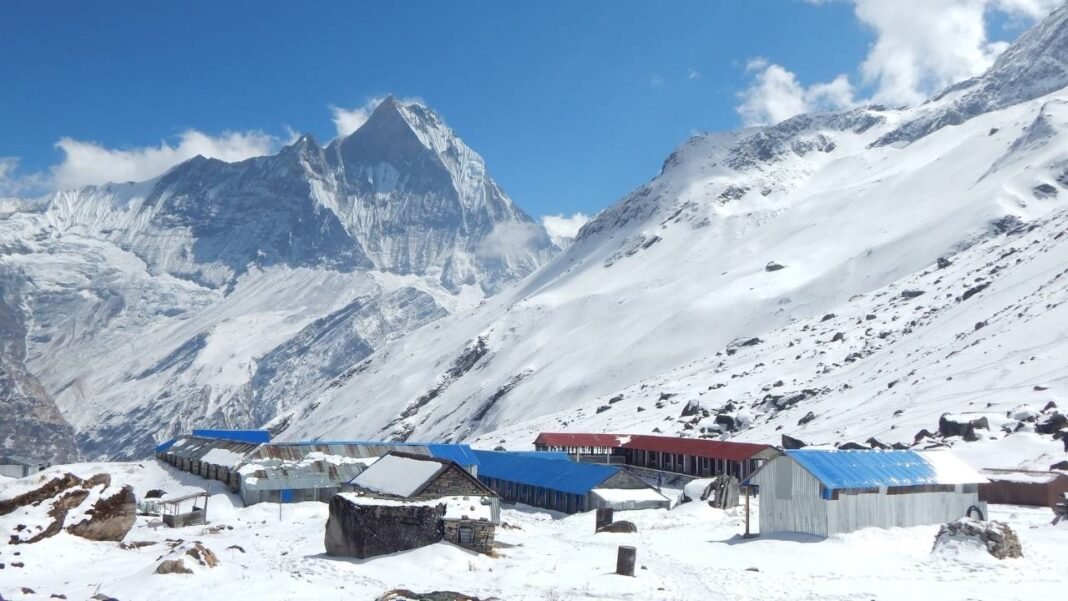

One of the biggest myths about Annapurna Base Camp is that you need to be exceptionally fit to reach it. Spend a few minutes on social media and you might think the trail is reserved for marathon runners, hardcore hikers, or people who spend every weekend climbing mountains. The reality is much less intimidating. Every year, thousands of ordinary travelers successfully complete the trek. Many have never done a high-altitude trek before. Some are office workers, students, retirees, or first-time visitors to Nepal.
That doesn’t mean Annapurna Base Camp is easy. While the trek isn’t a technical climb and requires no mountaineering skills, it can be surprisingly demanding. Long days of walking, endless stone staircases, changing weather, and the effects of altitude have a way of exposing weak preparation. Many trekkers discover that the challenge isn’t reaching the mountains, it’s maintaining your energy day after day while climbing higher into thinner air.
So how fit do you actually need to be? Can an average person complete the Annapurna Base Camp trek, or do you need months of serious training beforehand? In this guide, you’ll learn what level of fitness is realistically required, how altitude changes the equation, common mistakes that make the trek harder than it needs to be, and simple ways to determine whether you’re physically ready for one of Nepal’s most popular trekking adventures.
How Difficult Is the Annapurna Base Camp Trek Really?
The Annapurna Base Camp trek is generally considered a moderate trek, but that label can be misleading. For some people, it feels like a challenging yet rewarding adventure. For others, especially those who arrive unprepared, it can be far tougher than expected. On paper, the numbers don’t look extreme. The trail reaches a maximum altitude of 4,130 meters (13,550 feet), most itineraries take between 5 and 12 days, daily hiking usually lasts 5 to 8 hours, and the total trekking distance ranges from roughly 70 to 115 kilometers, depending on your route.
Compared to the Everest Base Camp trek, ABC is shorter, lower in altitude, and generally more accessible. However, it is still far from a casual walk in the mountains. One reason many first-time trekkers underestimate Annapurna Base Camp is that the challenge doesn’t come from a single difficult day. Instead, it comes from the cumulative effect of walking for hours every day. Your legs might feel fine on the first day, but after several consecutive days of climbing, descending, and repeating the process, fatigue begins to build.
The terrain itself can also be surprisingly demanding. Sections such as the famous Chhomrong staircases require you to climb and descend thousands of stone steps. Many trekkers discover that descending can be just as exhausting as climbing, placing constant stress on the knees and leg muscles. Altitude adds another layer of difficulty. As you gain elevation, the air becomes thinner and your body receives less oxygen with every breath.
Even simple uphill sections can leave you breathing harder than expected. You may find yourself walking much slower than you normally would at lower elevations. Weather conditions can make things even more challenging. A trek that starts in warm, humid conditions at lower elevations can quickly turn into cold mornings and chilly evenings higher up the valley. Rain, mud, and slippery trails can also increase the physical effort required.
The most important thing to understand is that success on the Annapurna Base Camp trek isn’t determined by fitness alone. Endurance, pacing, recovery, altitude adaptation, and mental resilience all play a major role. Many moderately fit trekkers reach Base Camp successfully, while some highly athletic travelers struggle because they underestimate the demands of trekking day after day in the Himalayas.
Can an Average Person Trek to Annapurna Base Camp?
For most people researching this trek, the biggest concern is simple: Am I fit enough to do it?
The good news is that Annapurna Base Camp is absolutely achievable for the average healthy adult. You do not need a background in trekking, mountaineering, or endurance sports. In fact, many people who reach Base Camp each year are ordinary travelers with regular jobs and no previous high-altitude trekking experience.
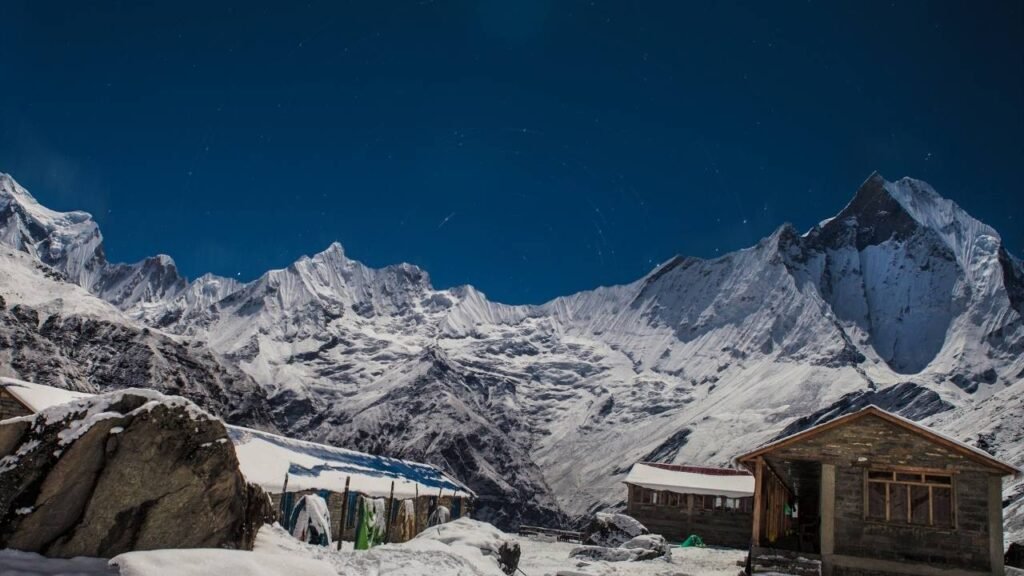
The key requirement is not exceptional fitness but reasonable endurance. If you can comfortably walk for several hours, have no major mobility issues, and spend some time preparing before your trip, you already have a strong foundation. Consider two common scenarios. An office worker who exercises occasionally and spends 6 to 8 weeks building stamina through walking, hiking, or stair climbing will usually adapt well to the trek. On the other hand, someone with a completely sedentary lifestyle who rarely exercises and arrives without any preparation is likely to find the experience much harder than expected.
A useful way to judge your readiness is through practical benchmarks rather than gym numbers. Before starting the trek, you should ideally be able to:
- Walk 10 to 15 kilometers in a day without excessive fatigue
- Climb stairs continuously for 30 to 45 minutes
- Hike for 4 tp 6 hours while still having energy left at the end
These benchmarks matter because the Annapurna Base Camp trek is less about speed and more about sustaining effort day after day. You may spend an entire week walking uphill, downhill, and across uneven trails while carrying a daypack.
If you’re unsure whether you’re ready, try this simple self-assessment. Ask yourself:
- Can you comfortably walk 15 kilometers in a day?
- Can you climb 20 to 30 floors of stairs without needing frequent breaks?
- Can you complete two days of hiking or long walks back-to-back?
If your answer is yes to all three, you’re likely capable of completing Annapurna Base Camp with proper pacing and acclimatization. If not, don’t panic—it doesn’t mean the trek is out of reach. It simply means you’ll benefit from a few weeks of focused preparation before heading into the mountains.
The most important takeaway is that Annapurna Base Camp rewards consistency more than athleticism. You don’t need to be the fittest person on the trail; you simply need a fitness level that allows you to keep moving comfortably for several days in a row.
Fitness vs Altitude: Which Matters More on the Annapurna Base Camp Trek?
Many first-time trekkers assume that being fit automatically means they’ll have no problems on the trail. In reality, some of the strongest people on the mountain are often surprised by how much altitude changes the game. Marathon runners get altitude sickness. Athletes develop Acute Mountain Sickness (AMS). Even people who spend hours in the gym can struggle above 3,000 meters. That’s because fitness and acclimatization are two completely different things.
As you climb toward Annapurna Base Camp, the amount of oxygen available in the air decreases. Your muscles may be strong, but your body still has to adapt to operating with less oxygen. This adaptation process takes time and cannot be rushed through fitness alone. Genetics also play a role, which is why two equally fit trekkers can have very different experiences at the same altitude. This doesn’t mean fitness isn’t important. Good fitness helps you handle long hiking days, recover faster, and enjoy the trek more comfortably. However, fitness cannot prevent altitude sickness.
If you compare the two challenges, fitness is something you can improve before your trip through training. Altitude is much harder to control. While both can cause fatigue, altitude introduces additional problems such as headaches, breathlessness, poor sleep, nausea, and AMS symptoms that physical fitness cannot eliminate. For most trekkers, altitude ends up being the bigger obstacle than fitness. The person who reaches Base Camp successfully is often not the strongest hiker, but the one who paces themselves properly, stays hydrated, and allows their body enough time to acclimatize.
The takeaway is simple: train for the trek, but respect the altitude. A moderate level of fitness combined with good acclimatization habits is usually far more valuable than elite athletic ability alone.
What Type of Fitness Matters Most for Annapurna Base Camp?
When preparing for Annapurna Base Camp, many people focus on whether they can run fast or lift heavy weights. In reality, the trek rewards a different kind of fitness: the ability to keep moving steadily for several hours day after day. Cardiovascular fitness is the foundation. You don’t need the endurance of a marathon runner, but you should have enough aerobic capacity to walk uphill for extended periods without becoming exhausted.
Activities such as hiking, fast walking, running, cycling, and swimming are all effective ways to build the type of stamina needed for the trail. Leg strength is equally important because much of the trek involves climbing and descending stone staircases. Sections around Chhomrong are particularly notorious for testing your legs. Your quadriceps, glutes, and calves do most of the work, especially on long descent days when tired muscles must continue absorbing impact.

Simple exercises like squats, lunges, and step-ups closely mimic the movements you’ll perform on the trail and can make a noticeable difference in comfort and endurance. Another factor many trekkers overlook is backpack weight. If you’re trekking with porter support, you’ll typically carry only a daypack weighing around 5–8 kilograms, making the trek considerably easier. Independent trekkers carrying all their gear may add 10–15 kilograms or more to their load, which increases fatigue, slows climbing speed, and places additional stress on the knees and lower back.
The goal isn’t to become an elite athlete before your trek. Instead, focus on building enough stamina to hike for hours, enough leg strength to handle thousands of stone steps, and enough endurance to repeat the effort several days in a row. That’s the type of fitness that matters most on the way to Annapurna Base Camp.
How to Train for Annapurna Base Camp: A Practical 8-Week Plan
The good news about Annapurna Base Camp is that you don’t need months of intense training. For most people, 6 to 8 weeks of consistent preparation is enough to build the fitness needed for the trek. During Weeks 1 to 2, focus on building a routine. Aim for regular walks, light hikes, or cycling sessions several times per week. The goal is simply to get your body used to moving consistently.
In Weeks 3 to 4, gradually increase your endurance. Extend the duration of your walks and hikes, add more elevation where possible, and start spending longer periods on your feet. By this stage, you should be comfortable exercising for at least an hour at a time.
During Weeks 5 to 6, shift your attention to the type of terrain you’ll encounter on the trek. Stair climbing becomes especially valuable since ABC is famous for its endless stone steps. Add hill walks, longer hikes, and exercises that strengthen your legs and improve uphill endurance.
For Weeks 7 to 8, try to simulate trekking conditions. Complete longer hikes on consecutive days, carry a loaded daypack, and spend several hours walking at a steady pace. This helps prepare your body for the reality of trekking multiple days in a row.
As for exercises, you don’t need a complicated training program. A few key movements provide most of the benefits:
- Cardio: Walking, hiking, and cycling improve the endurance needed for long days on the trail.
- Strength: Squats, lunges, and step-ups strengthen the quads, glutes, and calves that power you uphill and protect your knees on descents.
- Mobility: Stretching along with hip and ankle mobility work can improve comfort on uneven terrain and reduce stiffness after long hiking days.
- Core: Exercises such as planks and farmer carries help with balance, posture, and carrying a backpack efficiently.
Remember, the goal isn’t peak athletic performance. You’re preparing to walk for several hours a day in the mountains, not compete in a race. Consistent training, even at a moderate level, is usually more effective than a few intense workouts right before your trek.
So, How Much Fitness Do You Really Need for Annapurna Base Camp?
After completing the Annapurna Base Camp trek, many trekkers come away with the same realization: the challenge is different from what they expected. The endless stone staircases are often harder than anticipated, descents can leave your legs more sore than the climbs, and the people moving slowly and steadily frequently perform better than those trying to push the pace.
This is why success on the trail is rarely about being exceptionally fit. Most people who struggle do so because they arrive unprepared, carry too much weight, start too aggressively in the first few days, or underestimate the effects of altitude.
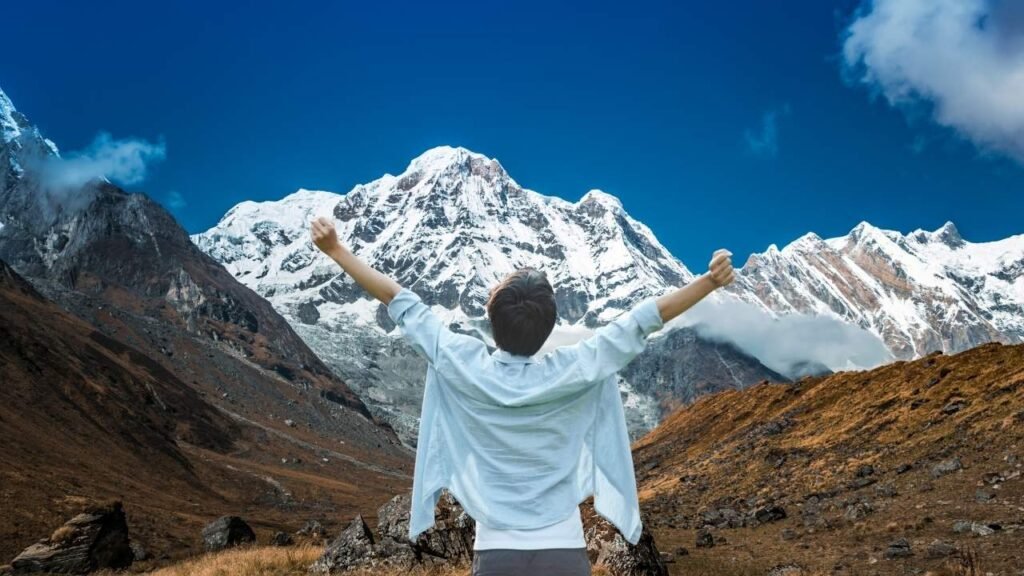
In contrast, trekkers who pace themselves, acclimatize properly, and maintain a consistent rhythm usually have a much more enjoyable experience. The good news is that Annapurna Base Camp does not require elite fitness. You do not need to be an athlete, a runner, or an experienced trekker. Thousands of first-time trekkers successfully reach Base Camp every year.
What you do need is enough endurance to walk for several hours a day over multiple consecutive days, along with the discipline to prepare beforehand.
A moderate level of fitness, some stair and hiking practice, and a few weeks of consistent training are usually enough for the average healthy adult. Perhaps the most important lesson is that altitude often matters more than fitness. Even highly trained athletes can struggle in thin air, while moderately fit trekkers who respect acclimatization frequently reach Base Camp without major issues.
If you can comfortably hike for several hours, handle long stair climbs, and prepare consistently for a few weeks before your trip, Annapurna Base Camp is likely far more achievable than you think. The goal isn’t to be the strongest person on the mountain; it’s to arrive prepared enough to enjoy every step of the journey.