
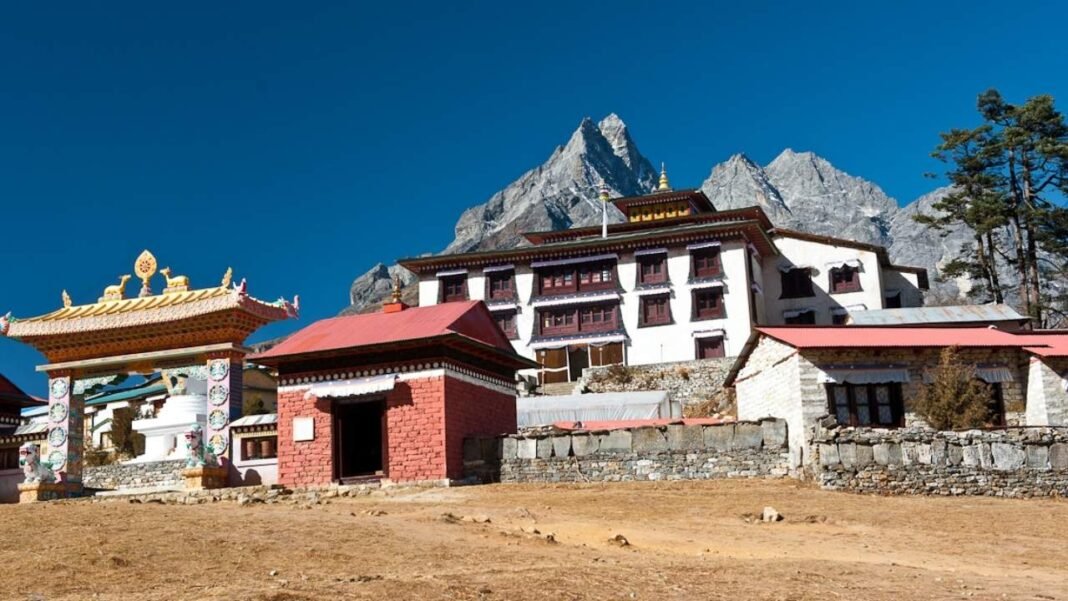
, Tengboche Monastery is the largest and most important Buddhist monastery in the Khumbu region of Nepal)
When you think of the Everest region, your mind probably jumps straight to towering peaks, suspension bridges, and the challenge of reaching Everest Base Camp. Yet, somewhere between the steep climbs and breathtaking mountain views lies a place that leaves just as lasting an impression, not because of its altitude, but because of its atmosphere.
Perched at 3,867 meters (12,687 feet) above sea level, Tengboche Monastery is the largest and most important Buddhist monastery in the Khumbu region of Nepal. Surrounded by giants like Everest, Ama Dablam, Lhotse, and Nuptse, it has welcomed trekkers, climbers, and Buddhist pilgrims for more than a century. Long before the Everest Base Camp trek became one of the world’s most famous adventures, this monastery was already the spiritual heart of the Himalayas.
Almost every Everest Base Camp itinerary passes through Tengboche, making it one of the most visited villages along the trail. For many trekkers, however, it becomes much more than a convenient overnight stop. The sound of monks chanting during morning prayers, colorful prayer flags fluttering in the mountain wind, and the sight of snow-covered peaks rising behind the monastery create a moment of calm that is difficult to find elsewhere on the trek.
Located inside Sagarmatha National Park, Tengboche Monastery was originally established in 1916 and has remained a cornerstone of Sherpa Buddhist culture despite surviving earthquakes and a devastating fire over the years. Today, it continues to serve as an active monastery where religious ceremonies, festivals, and daily prayers are part of everyday life, offering visitors a rare opportunity to experience the cultural side of the Everest region alongside its spectacular scenery.
The mountains may be what brings you to the Khumbu, but Tengboche is often what stays with you long after the trek ends. Spending even an hour here offers a glimpse into the culture and beliefs that have shaped life beneath the world’s highest peaks for generations.
Where is Tengboche Monastery?
Tengboche Monastery is located in Nepal’s Solukhumbu District, within Sagarmatha National Park, a UNESCO World Heritage Site that protects much of the Everest region. Sitting at an elevation of 3,867 meters (12,687 feet), the monastery occupies a forested ridge with panoramic views of some of the Himalaya’s most famous peaks.
If you are trekking to Everest Base Camp, reaching Tengboche usually takes two days from Lukla after passing through Phakding and Namche Bazaar. The village also marks a noticeable gain in altitude, making it a popular place to rest before continuing toward higher settlements like Dingboche and Lobuche. From Tengboche, Everest Base Camp is still around 3 to 4 trekking days away, depending on your itinerary and acclimatization schedule.
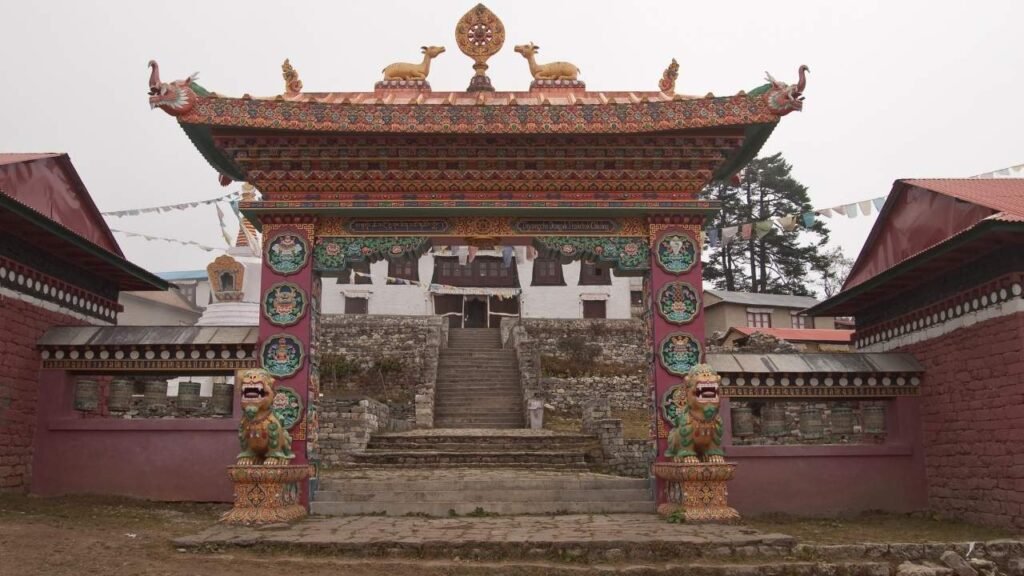
On a map, Tengboche sits almost halfway between Lukla and Everest Base Camp, making it one of the most recognizable landmarks along the classic Everest trekking route. Nearly every standard Everest Base Camp itinerary includes an overnight stay here, giving trekkers time to visit the monastery before continuing deeper into the Khumbu Valley.
If the table is meant to show the progression of the trek, it should explicitly say Distance from Lukla:
| Trek Destination | Elevation | Approx. Distance from Lukla | Typical Arrival |
| Lukla | 2,860 m | 0 km | Day 1 |
| Phakding | 2,610 m | 8 km | Day 1 |
| Namche Bazaar | 3,440 m | 18 km | Day 2 |
| Tengboche Monastery | 3,867 m | 28 km | Day 3 |
| Dingboche | 4,410 m | 39 km | Day 4 |
| Lobuche | 4,940 m | 51 km | Day 5 |
| Gorak Shep | 5,164 m | 56 km | Day 6 |
| Everest Base Camp | 5,364 m | 65 km | Day 6 to 7 |
Why is Tengboche Monastery So Famous?
Tengboche Monastery is more than just a landmark on the Everest Base Camp trek, it is the cultural and spiritual heart of the Khumbu. Founded in 1916, it is the largest and most important Buddhist monastery in the Everest region, serving as a center of worship for the local Sherpa community and the head monastery for many smaller gompas scattered across the Khumbu Valley.
Its location is another reason for its worldwide reputation. Perched on a ridge at 3,867 meters (12,687 feet), the monastery is surrounded by some of the Himalaya’s most iconic peaks, including Ama Dablam, Everest, Lhotse, Nuptse, Thamserku, and Kangtega. Few religious sites anywhere in the world offer such a dramatic natural setting, making Tengboche one of the most photographed places on the Everest Base Camp route.
Almost every trekker heading to Everest Base Camp passes through Tengboche. After the demanding climb from Phunki Tenga, the monastery offers a natural place to rest, explore, and acclimatize before continuing toward higher-altitude villages like Dingboche and Lobuche. Many trekkers also attend the monk’s evening or morning prayers, adding a cultural experience to a journey that is often focused on reaching Everest Base Camp.
Today, the Everest region welcomes more than 50,000 trekkers each year, and the vast majority pass through Tengboche. For some, it is simply another stop along the trail. For many others, it is the place where the Everest trek feels connected to the history, religion, and traditions that have shaped life in the Khumbu for generations.
History of Tengboche Monastery
Although Tengboche Monastery was established in 1916, its story begins much earlier with the spread of Tibetan Buddhism into the Khumbu Valley. The region had long been influenced by the Nyingma tradition, the oldest school of Tibetan Buddhism, and local legend holds that the Buddhist master Lama Sangwa Dorje identified Tengboche as a sacred site centuries before a monastery was ever built.
The monastery itself was founded in 1916 by Lama Gulu (Chatang Chotar), who received the blessing of Ngawang Tenzin Norbu, the head of Rongbuk Monastery in Tibet. From the beginning, Tengboche served not only as a place of worship but also as the spiritual center for Sherpa communities throughout the Khumbu. It became the region’s first celibate monastery of the Nyingma tradition, helping preserve Buddhist teachings, religious ceremonies, and festivals that continue today.
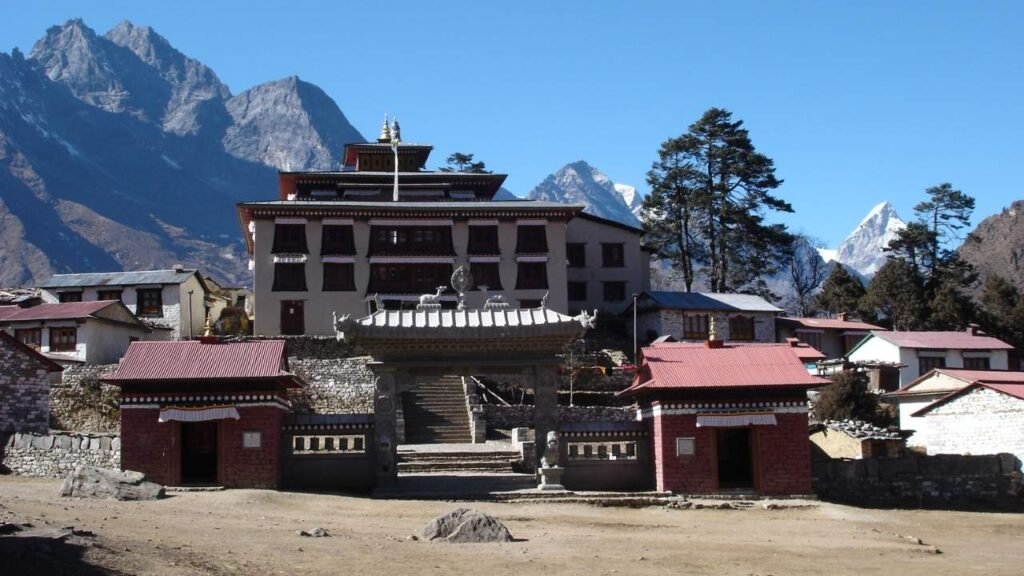
Its history, however, has not been without hardship. The original monastery suffered severe damage during the 1934 Nepal–Bihar earthquake and was rebuilt through donations and voluntary labor from Sherpa villages across the Khumbu. More than five decades later, on 19 January 1989, an electrical fire destroyed much of the monastery, including priceless murals, statues, wood carvings, and centuries-old religious manuscripts.
The loss drew support from far beyond the Everest region. Sherpa communities, mountaineers, trekkers, international donors, and Buddhist organizations all contributed to rebuilding the monastery while preserving its traditional architecture and religious significance. The Tengboche Monastery you see today is the result of that collective effort, a living monastery that continues to host daily prayers, train young monks, and celebrate important festivals such as Mani Rimdu, ensuring its spiritual legacy lives on more than a century after its founding.
What Makes Tengboche Monastery Special?
Unlike many famous landmarks that have become tourist attractions, Tengboche Monastery remains a living monastery. Every prayer ceremony, religious festival, and daily ritual still serves the local Sherpa community, meaning visitors are stepping into an active place of worship rather than an open-air museum. That living heritage is what makes Tengboche one of the most meaningful stops on the Everest Base Camp trek.
- The spiritual heart of the Khumbu: Tengboche has been the religious center of the Everest region for more than a century. Sherpa families visit the monastery to receive blessings, celebrate religious festivals, and mark important life events. Before major climbing expeditions, it is also common for mountaineers and guides to seek a blessing from the resident monks, asking for a safe journey in the mountains.
- A window into Sherpa culture: While many visitors associate Sherpas with mountaineering, their identity is deeply rooted in Tibetan Buddhism. Tengboche offers a chance to experience that side of Sherpa life through its ceremonies, architecture, artwork, and traditions. It reminds trekkers that the Khumbu is not just home to the world’s highest mountains but also to a community with centuries of cultural heritage.
- A monastery of the Nyingma tradition: Tengboche belongs to the Nyingma school, the oldest tradition of Tibetan Buddhism. The monastery preserves Buddhist teachings through daily rituals, meditation, scripture recitation, and annual festivals, with experienced monks passing these traditions on to younger generations.
- Daily prayers and chanting: One of the highlights for many visitors is attending the monastery’s morning or evening prayer sessions. During these ceremonies, monks chant ancient Buddhist scriptures while horns, cymbals, drums, and long trumpets accompany the rituals. Visitors are usually welcome to observe quietly, provided they respect monastery rules and avoid disrupting the service.
- Home to a community of monks: Tengboche is home to dozens of resident monks and novice monks who live, study, and practice Buddhism throughout the year. Their daily routine includes meditation, prayers, religious study, and maintaining the monastery, ensuring it remains an active spiritual institution rather than a historical monument.
- Prayer wheels, mani stones, and prayer flags: As you approach the monastery, you will notice large prayer wheels, intricately carved mani stones, and colorful prayer flags lining the trail. Prayer wheels are traditionally spun clockwise while walking past, and mani stones are engraved with sacred Buddhist mantras such as Om Mani Padme Hum. The prayer flags, stretched across ridges and rooftops, are believed to carry prayers and blessings into the wind, symbolizing peace, compassion, and good fortune for all beings.
More than 50,000 trekkers pass through the Everest region each year, yet Tengboche has retained the character that made it special long before trekking became popular. Monks continue their daily routines, local families continue their religious traditions, and festivals such as Mani Rimdu are still celebrated as community events. For visitors, that means you are not simply touring a famous monastery; you are witnessing a tradition that continues to shape life in the Khumbu today.
Best Time to Visit Tengboche Monastery
Tengboche Monastery can be visited throughout the year, but your experience changes significantly with the seasons. Weather, mountain visibility, trail conditions, and visitor numbers all vary, so the “best” time depends on whether you are looking for perfect trekking conditions, quieter trails, or the chance to experience Sherpa culture during the Mani Rimdu Festival.
For most travelers, October and November offer the best overall experience. The monsoon has cleared the dust and haze from the atmosphere, leaving crisp mountain views, stable weather, and comfortable daytime temperatures. This is also when the Everest region is at its busiest, with tea houses filling quickly and the trails becoming noticeably more crowded.
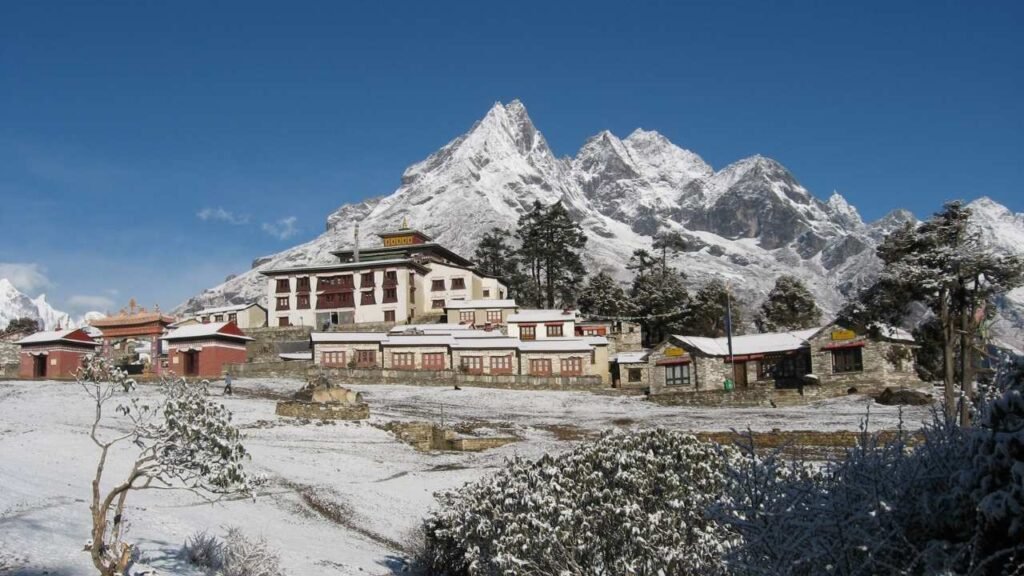
Spring (March to May) is another excellent season. Rhododendron forests around Tengboche burst into bloom, temperatures become milder, and Everest Base Camp expeditions begin arriving in the Khumbu. Afternoon clouds are slightly more common than in autumn, but visibility is generally excellent during the morning.
Winter (December to February) transforms Tengboche into a much quieter destination. Snow often blankets the monastery and surrounding forests, creating spectacular scenery with far fewer trekkers on the trail. The trade-off is that cold, nighttime temperatures frequently fall well below freezing, and heavy snowfall can occasionally disrupt trekking.
The monsoon season (June to early September) is the least popular time to visit. Frequent rain, muddy trails, leeches at lower elevations, and cloud-covered mountains reduce visibility. However, the surrounding forests become incredibly lush, and those willing to accept unpredictable weather are rewarded with peaceful trails and fewer visitors.
| Season | Weather | Mountain Views | Crowds | Photography | Trekking Conditions |
| Spring (Mar to May) | Mild and gradually warmer | Excellent, especially mornings | Moderate to High | Rhododendrons and clear peaks | Excellent |
| Autumn (Sep to Nov) | Dry, stable, and cool | Outstanding | High | Best overall season | Excellent |
| Winter (Dec to Feb) | Cold with possible snowfall | Excellent on clear days | Low | Snow-covered landscapes | Good but challenging |
| Monsoon (Jun to Aug) | Wet and humid | Limited due to cloud cover | Very Low | Lush forests, fewer mountain views | Moderate to Difficult |
If your schedule is flexible, try to plan your visit during late October or early November, when stable autumn weather often coincides with the Mani Rimdu Festival, the monastery’s most important annual celebration.
Mani Rimdu Festival at Tengboche Monastery
If there is one time when Tengboche Monastery truly comes alive, it is during Mani Rimdu. More than a cultural performance, Mani Rimdu is the most important religious festival in the Khumbu and has been celebrated at Tengboche for generations. The festival commemorates the establishment of Buddhism in the Everest region and symbolizes the triumph of wisdom and compassion over negative forces.
Preparations begin well before the public celebrations. Monks spend days constructing an intricate sand mandala, performing prayers, and chanting sacred texts to invoke blessings. The public portion of the festival usually lasts three days, although the religious preparations extend for nearly three weeks. The dates follow the Tibetan lunar calendar, so the festival typically falls in October or November, making it easy to combine with an autumn Everest Base Camp trek.
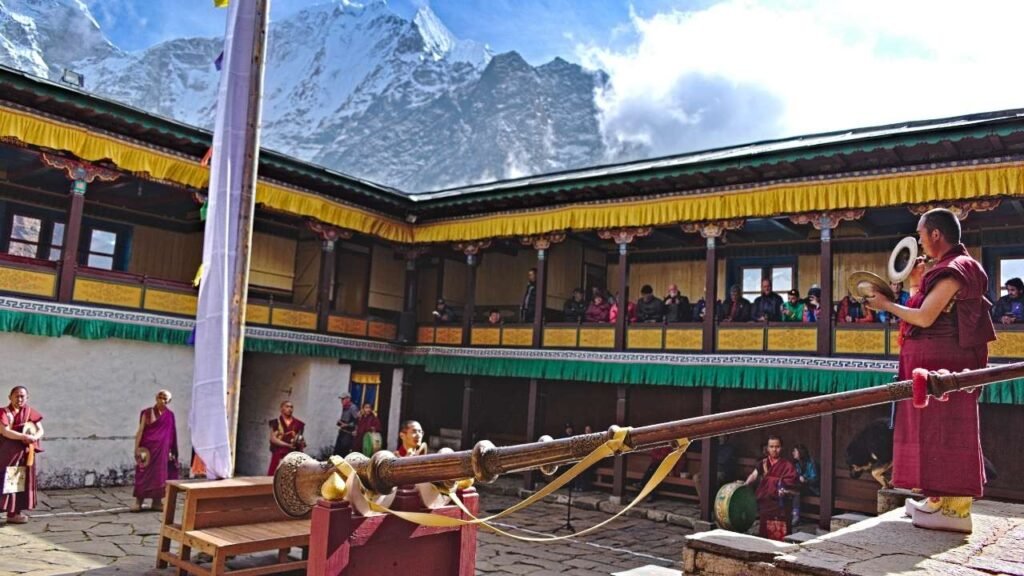
One of the festival’s highlights is the Cham dances, where monks wear elaborate silk robes and handcrafted masks representing Buddhist deities and protective spirits. These dances are not staged for entertainment, they tell stories of Buddhist teachings and are believed to bring blessings while symbolically overcoming ignorance and harmful influences.
Visitors are welcome to attend, and many trekkers adjust their itineraries specifically to witness the festival. Accommodation in Tengboche is limited during this period, so booking your trek well in advance is highly recommended.
If you plan to photograph the festival, remember that you are attending a religious ceremony, not a performance. Follow these simple guidelines:
- Dress modestly and behave respectfully.
- Never use flash during ceremonies.
- Photography is generally permitted during the outdoor mask dances, but always follow instructions from monks or monastery staff.
- Ask for permission before photographing monks or local worshippers up close.
- Keep noise to a minimum and avoid blocking the view of people attending the ceremonies.
For many trekkers, Mani Rimdu becomes one of the most memorable moments of the Everest journey. It offers a rare opportunity to experience living Sherpa Buddhist traditions against the backdrop of the world’s highest mountains, something few trekking destinations can match.
Photography and Travel Tips for Visiting Tengboche Monastery
Whether you are visiting Tengboche for its spiritual atmosphere, Himalayan scenery, or photography opportunities, a little planning can make your experience much more rewarding. Keep these practical tips in mind before you arrive.
- Stay overnight if your itinerary allows. Most trekkers pass through Tengboche around midday, but spending the night lets you experience the monastery in a much quieter setting. You will also have the chance to photograph both sunset and sunrise without rushing to the next village.
- Wake up early for the best mountain views. Mornings usually offer the clearest skies in the Everest region. Sunrise lights up Ama Dablam, Everest, and the surrounding peaks while the monastery remains relatively peaceful before most trekkers begin hiking.
- Don’t overlook sunset. Clear evenings often produce warm golden light on the monastery and surrounding forests. While Everest is partially hidden from the village itself, nearby viewpoints offer beautiful compositions with the monastery and Ama Dablam dominating the skyline.
- Capture the classic Tengboche photograph. One of the most iconic images is the monastery framed by Ama Dablam rising directly behind it. A standard zoom lens (24 to 70 mm) works well for landscapes, while a telephoto lens (70 to 200 mm or longer) helps isolate the monastery against the surrounding Himalayan peaks.
- Visit during autumn or spring. October and November usually provide the clearest mountain views of the year, while March and April combine stable weather with blooming rhododendron forests. During the monsoon, clouds frequently hide the mountains, and winter may bring snow and icy trails.
- Expect changing mountain weather. Conditions can change quickly at nearly 3,900 meters. Even on clear mornings, clouds often develop later in the day, so avoid leaving your best photography until the afternoon.
- Respect monastery rules when taking photographs. Outdoor photography is generally welcome, but always check before photographing inside the prayer hall or during religious ceremonies. Avoid using flash, keep noise to a minimum, and never interrupt prayers to get a better shot.
- Leave the drone at home unless you have official permission. Flying drones inside Sagarmatha National Park and around Tengboche Monastery is restricted. Operating one may require permits from the Civil Aviation Authority of Nepal, the national park authorities, and local permission, so most trekkers should assume recreational drone flights are not permitted.
- Give yourself time to acclimatize. At 3,867 meters (12,687 feet), some trekkers begin to notice the effects of altitude. Walk at a comfortable pace, stay hydrated, and don’t ignore symptoms such as persistent headaches, nausea, or dizziness.
- Carry enough cash. Tengboche has a handful of lodges and basic services, but there are no ATMs. Bring enough Nepalese Rupees from Lukla or Namche Bazaar to cover accommodation, meals, charging devices, and any donations you wish to make.
- Pack for changing temperatures. Even during peak trekking seasons, mornings and evenings can be cold. A warm insulating layer, waterproof jacket, gloves, and hat will make your visit far more comfortable.
- Attend the morning prayers if visitors are welcome. Listening quietly to the monks’ chanting offers a very different experience from simply walking through the monastery grounds. Follow any instructions given by monastery staff and remember that worship always takes priority over tourism.
- Leave no trace. Carry your rubbish to the next disposal point, stay on marked trails, avoid touching religious objects unnecessarily, and help preserve both the natural environment and the cultural heritage that make Tengboche such a special place.