
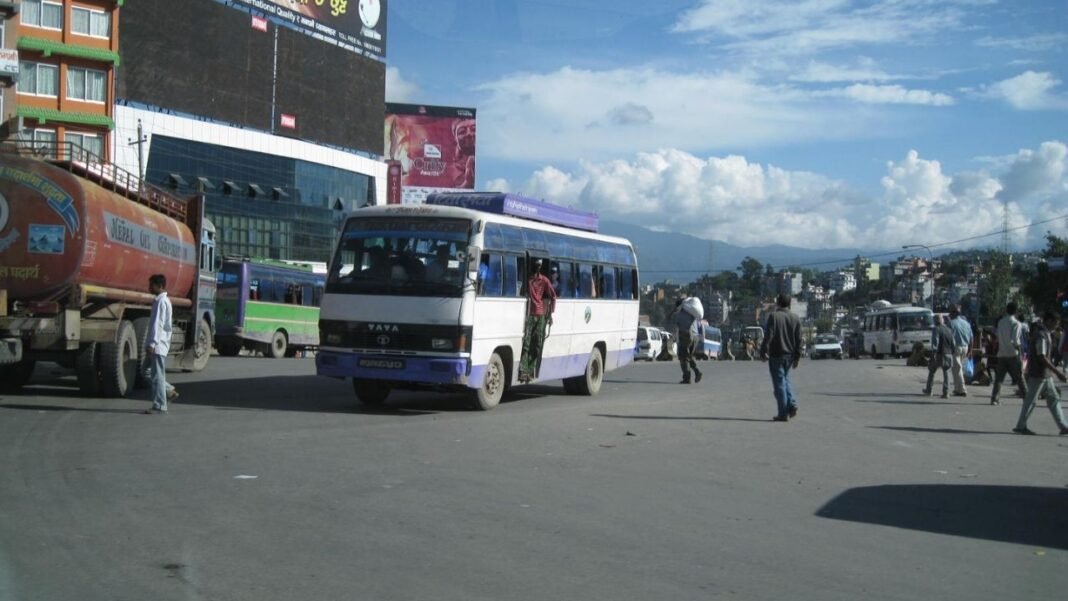
 by road via the Prithvi Highway. The journey usually takes 6 to 9 hours)
The distance from Kathmandu to Pokhara is about 200 km (124 miles) by road via the Prithvi Highway. The journey usually takes 6 to 9 hours by bus or car, while a direct flight covers about 146 km (91 miles) in 25 to 30 minutes.
Kathmandu and Pokhara are Nepal’s two most popular tourist destinations, and although they are separated by only about 200 km (124 miles) by road, the journey often takes 6 to 9 hours and sometimes even longer. For many first-time visitors, this comes as a surprise. In many countries, a 200 km drive is relatively quick, but Nepal’s rugged geography tells a different story.
The route follows the Prithvi Highway, winding through hills, river valleys, small towns, and mountain roads rather than flat, high-speed expressways. Heavy traffic leaving Kathmandu, ongoing highway upgrades, road construction, and seasonal weather conditions can all add significant time to the trip. During the monsoon, landslides and road closures may cause further delays, while peak holiday periods can lead to long traffic jams.
Despite the travel time, the journey itself is part of the experience. Along the way, you will pass the Trishuli River, terraced hillsides, traditional villages, and, on clear days, distant Himalayan views. If you are heading to Pokhara for trekking, adventure sports, or a relaxing lakeside escape, the route offers a glimpse into Nepal beyond its major cities.
Choosing the right way to travel can make a noticeable difference to your trip. A short domestic flight gets you to Pokhara in under 30 minutes, while tourist buses, private cars, and local buses each offer different balances of cost, comfort, flexibility, and travel time. Understanding these options before you leave helps you avoid unnecessary delays and choose the journey that best fits your budget, schedule, and travel style.
Kathmandu to Pokhara Distance: Quick Answer
The road distance from Kathmandu to Pokhara is approximately 200 to 210 km (124 to 130 miles), depending on your starting point in Kathmandu and final destination in Pokhara. Traveling by road usually takes 6 to 9 hours, although heavy traffic, road construction, bad weather, or landslides can extend the journey.
If you travel by air, the straight-line distance is about 146 km (91 miles). Direct domestic flights typically take 25 to 30 minutes, making flying the fastest way to travel between Nepal’s two largest tourist hubs.
| Information | Details |
| Road Distance | Approx. 200 to 210 km (124 to 130 miles) |
| Air Distance | Approx. 146 km (91 miles) |
| Driving Time | 6 to 9 hours (can be longer during traffic or monsoon) |
| Flight Time | 25 to 30 minutes |
| Main Highway | Prithvi Highway |
| Starting Elevation | Kathmandu: 1,400m (4,593ft) |
| Destination Elevation | Pokhara: 822m (2,697ft) |
| Best Transport | Depends on your budget, schedule, and comfort preferences |
Why Are the Road and Air Distances Different?
The difference comes down to how the distance is measured. The air distance (also called the straight-line or “as-the-crow-flies” distance) measures the shortest path between Kathmandu and Pokhara, which is about 146 km (91 miles).
The road distance, however, follows the Prithvi Highway, which winds through hills, river valleys, and mountain terrain. Instead of traveling in a straight line, the road curves around steep landscapes, passes through towns and bridges, and follows the natural contours of the Himalayas. As a result, the driving distance increases to around 200 to 210 km, and the journey takes several hours longer than the short flight.
Why Does It Take So Long?
For many first-time visitors, it is surprising that a journey of just 200 km (124 miles) can take 6 to 9 hours or even longer. In most countries, that distance can be covered in just a few hours. In Nepal, however, the travel time is shaped more by geography and road conditions than by distance itself.
- Mountain Roads
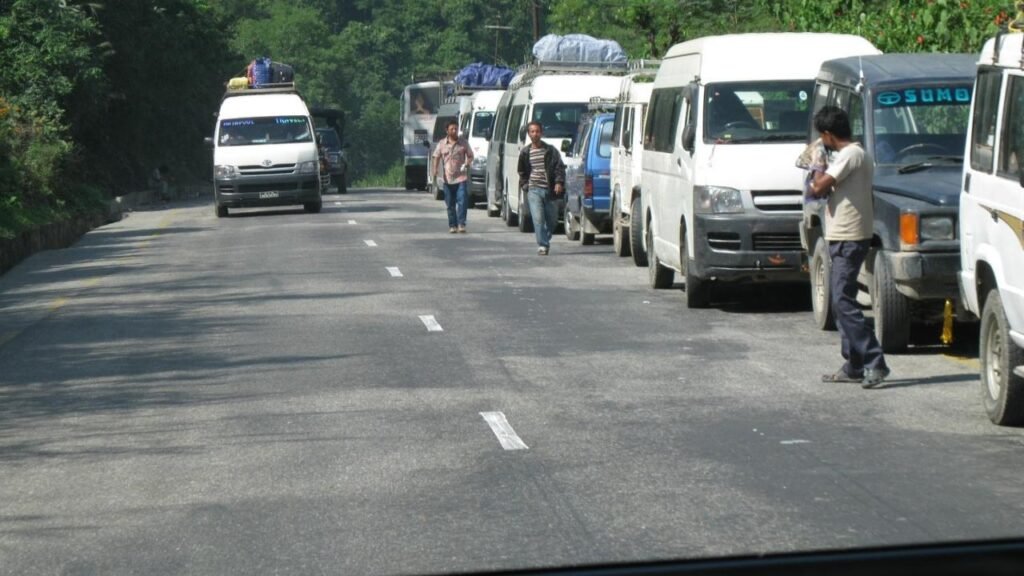
The route between Kathmandu and Pokhara follows the Prithvi Highway, which cuts through Nepal’s hilly landscape instead of crossing flat terrain. Long uphill climbs, steep descents, narrow sections, and frequent elevation changes naturally reduce average driving speeds.
- Sharp Bends and Winding Sections
Rather than running in a straight line, the highway winds around hillsides and follows river valleys. Drivers must slow down at hundreds of sharp curves and blind corners, especially when passing oncoming trucks or buses. Even experienced drivers cannot maintain highway speeds for long stretches.
- Heavy Traffic Leaving Kathmandu
The first part of the journey is often the slowest. Roads leading out of Kathmandu regularly experience congestion, particularly during morning rush hour, weekends, and major holidays. Freight trucks, local buses, motorcycles, and private vehicles all share the same highway, creating bottlenecks before traffic gradually eases outside the valley.
- Ongoing Road Widening Projects
Several sections of the Prithvi Highway are undergoing upgrades to improve long-term travel. While these projects will eventually make the route faster and safer, they currently cause temporary lane closures, construction zones, uneven surfaces, and traffic delays. Depending on the progress of the work, waiting times can range from a few minutes to over an hour.
- Landslides During the Monsoon
From June to September, heavy rainfall increases the risk of landslides, rockfalls, and mudslides along the highway. Even small landslides can slow traffic significantly, while larger ones may temporarily close parts of the road until debris is cleared.
- Frequent Stops on Tourist and Local Buses
If you are traveling by bus, the total journey is longer than the actual driving time. Tourist buses usually stop 2 to 3 times for meals, tea, or restroom breaks, while local buses make additional stops to pick up and drop off passengers along the route.
- Speed Limits and Road Safety
Although some sections of the highway are relatively smooth, vehicles cannot travel at motorway speeds. Speed limits, winding roads, mixed traffic, villages, pedestrian crossings, and occasional livestock on the road all require drivers to slow down. Safety is generally prioritized over speed, especially on mountain roads where overtaking opportunities are limited.
Kathmandu to Pokhara by Tourist Bus
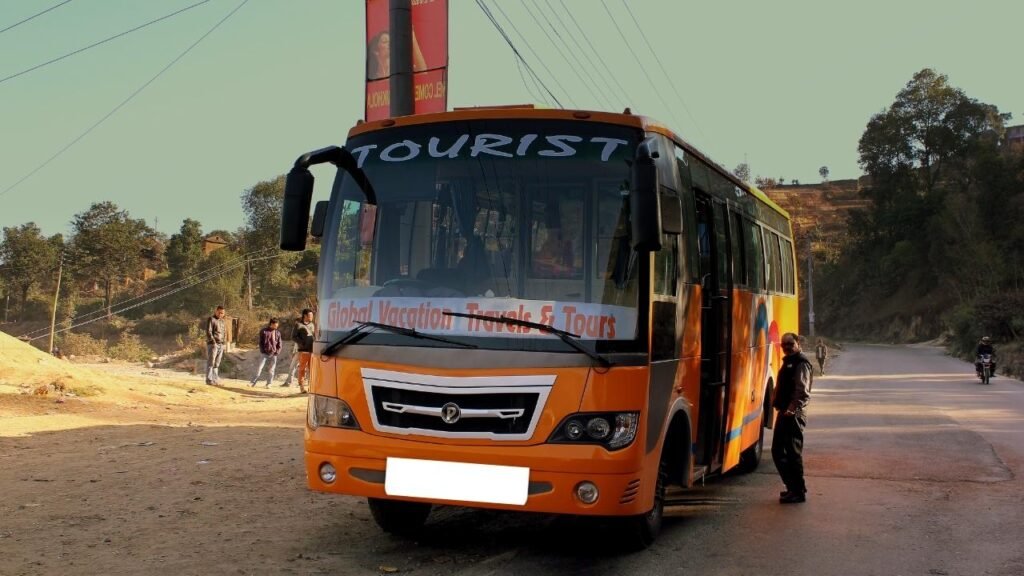
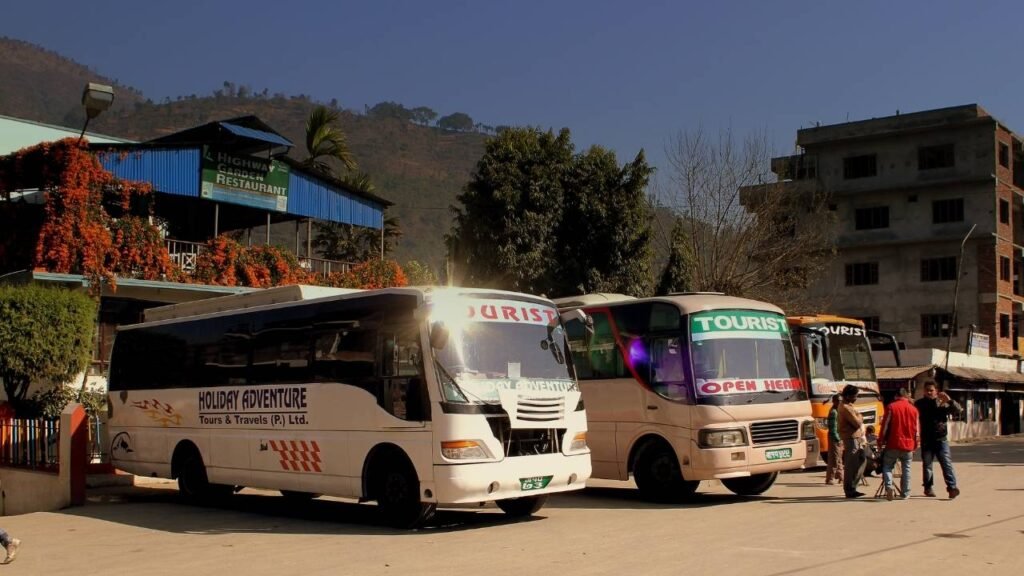
For most travelers, the tourist bus offers the best balance of affordability, comfort, and convenience. It is significantly cheaper than flying while providing a more comfortable experience than local buses. If you don’t mind spending most of the day on the road, it’s the most popular way to travel between Kathmandu and Pokhara.
- How Tourist Buses Work
Tourist buses operate daily between Kathmandu and Pokhara throughout the year. Unlike local buses, they run on fixed schedules, offer reserved seating, and cater mainly to tourists and domestic travelers seeking a more comfortable journey. Most buses depart in the morning to avoid afternoon traffic and reach Pokhara before sunset.
- Departure Point
Most tourist buses leave from Sorhakhutte (Tourist Bus Park) in Kathmandu, although some operators offer hotel pick-up services within the Thamel area.
- Departure and Arrival Time
- Typical Departure: 7:00 to 7:30 AM
- Typical Arrival: 2:00 to 4:00 PM
- Travel Time: 6 to 9 hours (depending on traffic and road conditions)
Delays are common during weekends, festivals, and the monsoon season.
- Rest Stops
Most tourist buses stop 2 to 3 times during the journey. These usually include:
- Breakfast or tea break
- Lunch stop
- Short restroom break
The stops generally last 15 to 30 minutes, giving passengers enough time to eat, stretch, and use the facilities.
- Wi-Fi and Air Conditioning
Many deluxe and luxury buses advertise Wi-Fi, USB charging ports, and air conditioning. However, internet connectivity is often inconsistent once the bus enters remote mountain areas, so it is best not to rely on it for work or streaming. Air conditioning is common on higher-end buses, though some operators may reduce or switch it off in cooler weather.
- Seat Comfort
Comfort varies depending on the bus category.
Standard tourist buses usually have reclining seats with reasonable legroom, while deluxe, sofa, and VIP buses provide wider seats, greater recline, and a smoother ride.
- Luggage Handling
Large luggage is stored securely in the compartment beneath the bus, while small backpacks and valuables should be kept with you inside the cabin. It is a good idea to label your luggage and keep passports, electronics, and important documents in your daypack.
- What Is the Journey Like?
The drive follows the scenic Prithvi Highway, passing rivers, terraced hillsides, forests, small towns, and mountain villages. Although road construction and traffic can make parts of the trip slow, many travelers enjoy the changing landscapes, especially on clear days.
Tourist Bus Comparison
| Bus Type | Travel Time | Comfort | Typical Price | Best For |
| Standard Tourist Bus | 7 to 9 hours | Good | Budget-friendly | Backpackers and budget travelers |
| Deluxe Bus | 6.5 to 8.5 hours | Very Good | Moderate | Most travelers |
| Sofa Bus | 6.5 to 8.5 hours | Excellent | Higher | Couples and families |
| VIP/Luxury Bus | 6 to 8 hours | Premium | Higher | Travelers seeking maximum comfort |
Tip: Booking your ticket at least a day in advance is recommended during Nepal’s peak trekking seasons (March to May and September to November).
Kathmandu to Pokhara by Local Bus
If your priority is saving money, the local bus is the cheapest way to travel between Kathmandu and Pokhara. However, the lower fare comes with trade-offs in comfort, travel time, and convenience.
- Advantages
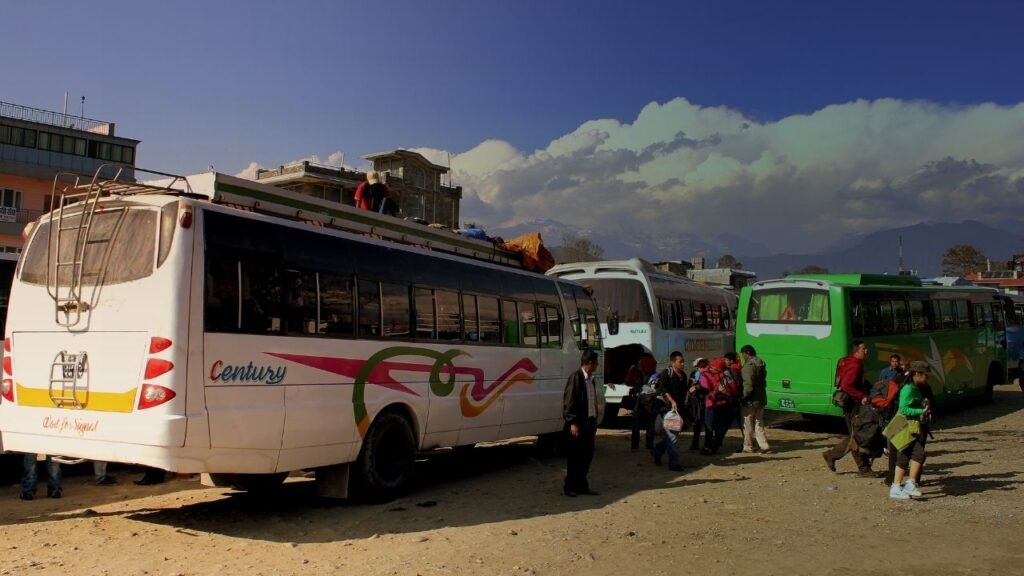
The biggest advantage is cost. Local buses are considerably cheaper than tourist buses and run frequently throughout the day, giving travelers more flexibility if they miss a scheduled departure. They are also a great way to experience everyday life in Nepal, as you will be traveling alongside local commuters rather than tourists.
- Disadvantages
Local buses generally take longer because they make frequent stops to pick up and drop off passengers. Seating is more basic, legroom is limited, and buses can become crowded, particularly during weekends and public holidays. English-speaking staff may also be limited, making the experience less straightforward for first-time visitors.
- Crowded Conditions
During busy periods, passengers may need to stand for parts of the journey, especially on shorter sections near major towns. Even when seats are available, buses can feel cramped compared to tourist coaches.
- Flexibility
Unlike tourist buses that leave at fixed times, local buses depart throughout the day once enough passengers have boarded. This flexibility is useful if you are traveling without a strict schedule.
- Ticket Purchasing
Tickets are usually purchased directly at the bus station or sometimes onboard. Advance booking is generally unnecessary except during major festivals when buses fill quickly.
- Who Should Choose a Local Bus?
A local bus is best suited for:
- Budget travelers
- Backpackers with flexible schedules
- Travelers who want a more authentic local experience
If comfort, speed, or reliability is important, a tourist bus or domestic flight is usually the better option.
Kathmandu to Pokhara by Flight
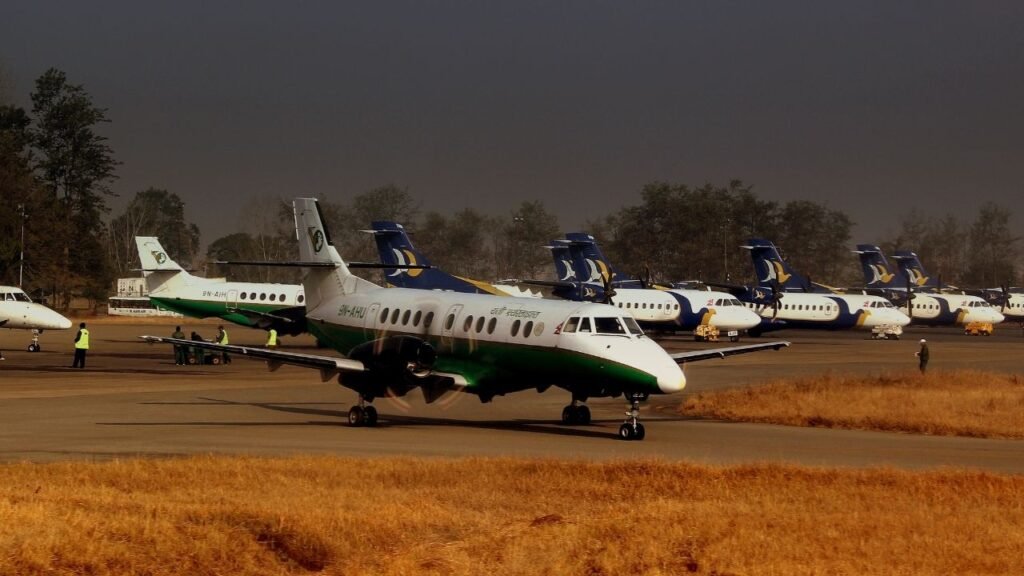
Flying is the fastest way to travel between Kathmandu and Pokhara. Although the flight itself lasts only about 25 to 30 minutes, it is important to consider airport procedures and potential weather delays when planning your trip.
- Flight Duration
Direct flights operate daily between Tribhuvan International Airport (Kathmandu) and Pokhara International Airport. The actual flight time is usually 25 to 30 minutes, covering approximately 146 km (91 miles).
- Airport Procedures
Domestic airlines typically recommend arriving at the airport 1 to 2 hours before departure for check-in, baggage screening, and boarding. While domestic procedures are simpler than international flights, peak travel periods can still lead to queues.
- Actual Total Travel Time
Once airport transfers, check-in, boarding, baggage collection, and travel from Pokhara Airport to Lakeside are included, the entire journey usually takes around 3 to 5 hours. Even so, flying still saves several hours compared to traveling by road.
- Weather Delays
Weather is the biggest drawback of flying in Nepal. Low clouds, fog, poor visibility, and strong winds can delay or occasionally cancel flights, particularly during the monsoon season and winter mornings. Scheduling your flight earlier in the day generally offers the best chance of departing on time.
- Baggage Allowance
Most domestic airlines include a checked baggage allowance of around 15 to 20 kg and 5 to 7 kg of hand luggage, although this varies by airline and ticket type. Excess baggage charges apply if you exceed the limit.
- Mountain Views
On clear days, flights between Kathmandu and Pokhara offer spectacular aerial views of the Himalayas, including parts of the Langtang, Ganesh Himal, Manaslu, and Annapurna ranges. Window seats on the appropriate side of the aircraft often provide the best scenery.
- When Does Flying Make Sense?
Flying is worth considering if you:
- Have limited time in Nepal.
- Want to avoid a full day on the road.
- Are connecting to a trek or another domestic destination.
- Prefer convenience over saving money.
Flight at a Glance
| Category | Flight |
| Flight Time | 25 to 30 minutes |
| Airport Time | 1 to 2 hours before departure |
| Total Journey | Around 3 to 4 hours (including transfers) |
| Typical Price | Higher than bus travel |
| Reliability | High in good weather; delays possible during poor weather |
Kathmandu to Pokhara by Private Car or Jeep
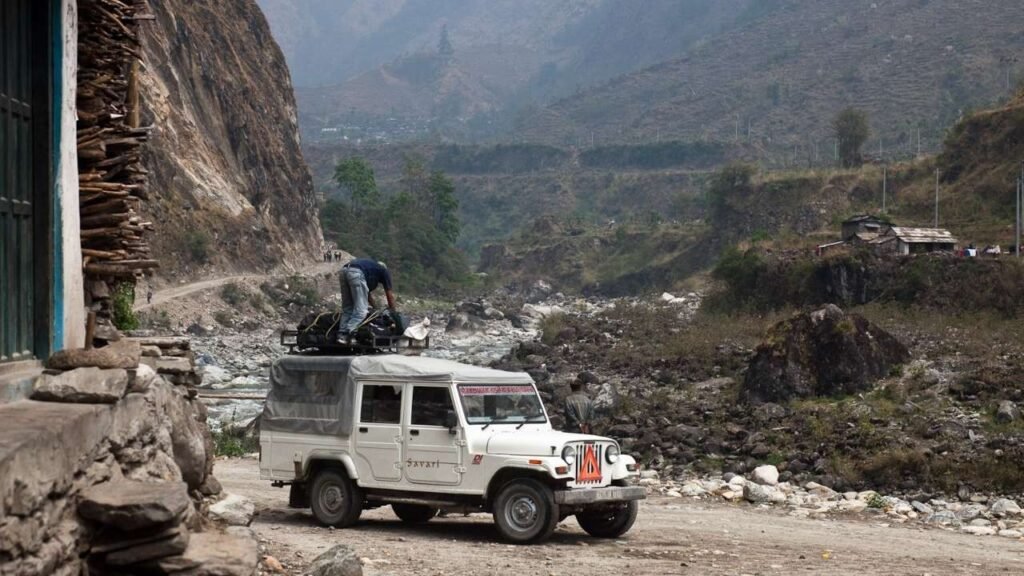
Hiring a private vehicle gives you the greatest flexibility. Instead of following a fixed bus schedule, you can leave when you want, stop whenever you like, and travel at your own pace.
It is the preferred option for families, small groups, photographers, and travelers who value comfort and convenience.
- Hiring a Driver
Most visitors hire a private car or jeep with an experienced local driver. This is the safest and most common option, as Nepali drivers are familiar with mountain roads, local traffic patterns, and changing road conditions.
- Self-Drive
Self-driving is possible for travelers who hold a valid driving licence that is recognized in Nepal and meet local rental requirements. However, it is generally recommended only for experienced drivers who are comfortable navigating narrow mountain roads, unpredictable traffic, and local driving conditions.
- Private Jeep and SUV
Private jeeps and SUVs offer higher ground clearance and better suspension than standard cars, making them more comfortable on rough or uneven sections of the highway. They are especially useful during the monsoon or for groups carrying trekking gear.
- Taxi
Taxis can also be hired for the journey, although they are usually more practical for smaller groups or travelers looking for a direct door-to-door transfer without making multiple stops.
- Who Benefits Most?
A private vehicle is ideal for:
- Families with children
- Groups of friends sharing the cost
- Travelers carrying lots of luggage
- Photographers wanting scenic stops
- Anyone seeking the fastest and most flexible road journey
| Vehicle | Capacity | Comfort | Approx. Cost | Best For |
| Private Car | 2 to 3 passengers | High | NPR 14,000 to 18,000 | Couples and solo travelers |
| SUV | 4 to 6 passengers | Very High | NPR 16,000 to 22,000 | Families and small groups |
| Private Jeep | 5 to 7 passengers | Excellent | NPR 18,000 to 24,000 | Trekking groups and rougher road conditions |
| Taxi | 2 to 3 passengers | High | NPR 14,000 to 18,000 | Direct point-to-point trave |
Tip: For groups of three or more, hiring a private car or jeep often provides much better value per person than many travelers expect, while offering a far more comfortable and flexible journey than public transport.
Which Transport Option Is Best?
There is no single “best” way to travel from Kathmandu to Pokhara it depends on what matters most to you. Some travelers want the cheapest option, others want to save time, while many simply want a comfortable journey with great scenery. The table below can help you choose the transport that best matches your travel style.
| Travel Style | Best Option | Why It’s the Best Choice |
| Budget Traveler | Local Bus | The lowest fares available, ideal if you are prioritizing saving money over comfort and travel time. |
| Backpacker | Standard or Deluxe Tourist Bus | Affordable, comfortable enough for a full-day journey, and easy to book from Kathmandu. |
| Families | Private Car or SUV | Door-to-door convenience, flexible stops, and a much more comfortable experience for children and luggage. |
| Luxury Travelers | Flight or VIP/Luxury Bus | Flying saves valuable time, while luxury buses provide premium comfort at a lower cost than private transport. |
| Short Vacation | Flight | The fastest option, allowing you to spend more time exploring Pokhara instead of traveling. |
| Photography Enthusiasts | Private Car or Jeep | Freedom to stop at scenic viewpoints, rivers, and mountain landscapes whenever you like. |
| Groups | Private Jeep or SUV | Splitting the cost between several travelers makes private transport comfortable, flexible, and often better value than expected. |
Ultimately, the right choice comes down to balancing time, budget, and comfort. If you are on a tight schedule, a 25 to 30 minute flight is hard to beat. If you want to save money while still enjoying a comfortable trip, a tourist bus remains the best all-around option.
For families, groups, or travelers who value flexibility, a private car or jeep offers the most enjoyable road journey. And if you are traveling on a shoestring budget with a flexible itinerary, the local bus gets you to Pokhara for the lowest cost.
No matter which option you choose, the journey between Kathmandu and Pokhara is more than just a transfer; it is one of Nepal’s most scenic travel routes, offering river valleys, terraced hills, mountain landscapes, and a glimpse into everyday life beyond the country’s major cities.