

The Tamang people are one of Nepal’s largest and oldest Indigenous communities, known for their rich Himalayan heritage, vibrant traditions, and deep-rooted Buddhist culture. For centuries, they have lived across the mid-hills and mountain regions of central Nepal, where their villages, monasteries, languages, and customs have become an integral part of the country’s cultural landscape. Their history is closely tied to the Himalayas, shaping a way of life that reflects both the challenges and opportunities of living in some of Nepal’s most breathtaking mountain environments.
Today, the Tamang community numbers over 1.5 million people according to Nepal’s national census, making them one of the country’s largest ethnic groups. While many Tamangs continue to live in districts such as Rasuwa, Nuwakot, Dhading, Sindhupalchok, and Kavrepalanchok, increasing numbers have also settled in cities like Kathmandu and Pokhara for education, employment, and business. Despite these changes, many families continue to preserve their language, traditions, festivals, and close-knit community values.
One of the defining features of Tamang identity is their strong connection to Tibetan Buddhism. Prayer flags fluttering above villages, centuries-old monasteries, colorful religious festivals, and the guidance of Buddhist lamas remain central to everyday life in many Tamang communities. Alongside these Buddhist practices, many families also maintain older local customs and ancestral traditions, creating a cultural heritage that has evolved over generations while retaining its distinct identity.
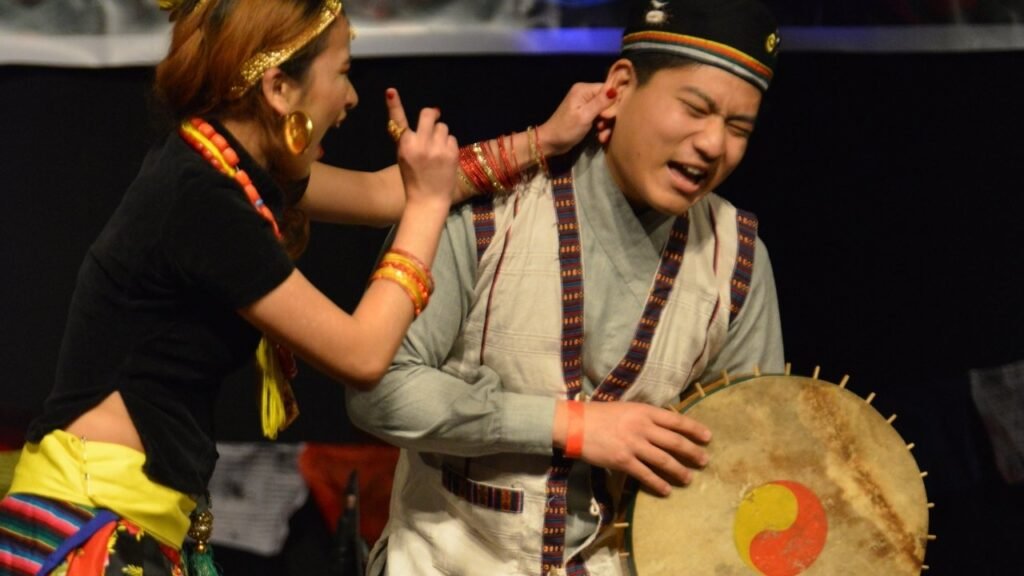
The Tamang people are also widely recognized for their traditional music, the iconic Damphu drum, lively folk dances, intricate clothing and jewelry, and warm hospitality. Festivals such as Sonam Lhosar, the Tamang New Year, showcase a rich blend of religious devotion, music, dance, and communal celebration that continues to bring families and communities together each year.
As Nepal modernizes, the Tamang community continues to play an important role in the country’s cultural, social, and economic life. Their traditions attract travelers seeking authentic Himalayan experiences, while ongoing efforts to preserve the Tamang language, arts, and customs help ensure that this remarkable heritage is passed on to future generations. Learning about the Tamang people offers a deeper understanding of Nepal beyond its famous mountains, revealing the diverse cultures that have shaped the nation for centuries.
Quick Facts About the Tamang People
The Tamang are one of Nepal’s largest Indigenous ethnic communities, with their historical heartland concentrated in the hills surrounding the Kathmandu Valley and extending north toward the Himalayan borderlands. The 2021 National Population and Housing Census recorded 1,639,866 Tamang people, representing about 5.62% of Nepal’s population.
Their cultural identity is closely connected with the Tamang language, Buddhist religious traditions, distinctive music and dance, festivals, and generations of life in Nepal’s middle hills and mountain environments.
The 2021 census also provides unusually strong statistical evidence of this Buddhist connection: 1,391,866 Tamangs identified as Buddhist, equivalent to 84.9% of the Tamang population.
| Fact | Verified Information |
| Ethnic Group | Tamang, an Indigenous/Janajati community of Nepal |
| Population | 1,639,866 (2021 Census), about 5.62% of Nepal’s population |
| Native Language | Tamang |
| Language Family | Sino-Tibetan, commonly classified within the Tamangic/Tibeto-Burman grouping |
| Main Religion | Buddhism, 84.9% of Tamangs according to the 2021 Census |
| Cultural Religious Tradition | Tibetan-influenced Buddhism alongside older local, ancestral, and shamanic practices |
| Historical Heartland | Central Nepal, particularly the hills surrounding Kathmandu Valley and areas extending north toward the Himalayas |
| Major Areas | Rasuwa, Nuwakot, Dhading, Sindhupalchok, Kavrepalanchok, Makwanpur and surrounding districts |
| Strongest Provincial Presence | Bagmati Province; Tamang is also one of its major mother tongues, spoken by about 18% of the province’s population in the 2021 census. |
| Traditional Livelihoods | Agriculture, livestock raising, trade, craftwork, and other locally adapted livelihoods |
| Major Festival | Sonam Lhosar, the Tamang New Year |
| Signature Instrument | Damphu, a traditional frame drum |
| Traditional Music and Dance | Tamang folk songs and dances performed with the Damphu; Tamang Selo is particularly associated with Tamang musical culture |
| Cultural Identity | Strong traditions of community life, music, oral heritage, Buddhist practice, festivals, dress, and Himalayan/mid-hill village culture |
Who Are the Tamang People?
The Tamang are one of Nepal’s largest Indigenous nationalities (Janajati), with a history that stretches back centuries across the country’s central hills and Himalayan foothills. They are best known for their distinct language, Buddhist traditions, rich oral heritage, vibrant music, and close relationship with the mountain landscapes surrounding the Kathmandu Valley. Although modernization has transformed many aspects of daily life, the Tamang remain one of the strongest cultural communities in Nepal, preserving traditions that continue to shape the country’s diverse identity.
What Does “Tamang” Mean?
The exact origin of the word “Tamang” is still debated among historians and linguists, and there is no universally accepted explanation. This is important because many websites present a single theory as fact, when the evidence is far less certain.
One of the oldest and most widely known interpretations derives the name from Tibetan words often translated as “horse” (ta) and “warrior” or “rider” (mag/mang), leading to the popular meaning of “horse rider” or “horse warrior.” This interpretation is linked to historical traditions about horse-mounted people living along the Himalayan frontier. However, many modern Tamang scholars question this explanation and argue that it is based more on legend than verifiable history.
Alternative interpretations suggest that the name may instead refer to people living at the frontier or gateway of Tibet, while other Tamang scholars connect the word to their own language and cultural identity rather than horses. Because no single theory has been conclusively proven, it is more accurate to say that the origin of the name “Tamang” remains a subject of scholarly debate.
An Indigenous People of Nepal
The Tamang are officially recognized by the Government of Nepal as one of the country’s Indigenous Nationalities (Adivasi Janajati). They have lived in the central Himalayan region for generations, developing a distinct language, social structure, customs, and belief system that differ from those of neighboring communities.
Historically, Tamang settlements formed a broad cultural region surrounding the Kathmandu Valley, particularly across present-day districts such as Rasuwa, Nuwakot, Dhading, Sindhupalchok, Kavrepalanchok, Makwanpur, and Dolakha. This homeland is often referred to as Tamsaling, a cultural and historical term used to describe the traditional Tamang region rather than an official administrative area.
Origins and Historical Background
The early history of the Tamang people is not fully documented, and much of it comes from oral traditions, historical chronicles, and linguistic research rather than extensive written records. Most scholars agree that the Tamang belong to the Sino-Tibetan linguistic family and have long inhabited the Himalayan region between present-day Nepal and the Tibetan Plateau. Their culture developed through centuries of interaction with neighboring Himalayan communities while maintaining its own distinct identity.
For much of Nepal’s history, the Tamang lived in mountain villages where agriculture, livestock raising, forest resources, and trade provided the foundation of daily life. Their settlements were strategically located along traditional routes linking Nepal with Tibet, allowing many communities to participate in cross-Himalayan trade while adapting to the demanding conditions of the mid-hills and high mountains.
Like many Indigenous communities, the Tamang also experienced periods of political and social marginalization, particularly during the centralized state-building of the eighteenth and nineteenth centuries. In recent decades, however, greater recognition of Indigenous rights, cultural preservation, and language revitalization has strengthened efforts to celebrate and protect Tamang heritage.
Tibetan Influence Without Being Tibetan
Because the Tamang language belongs to the Sino-Tibetan family and many religious practices are closely associated with Tibetan Buddhism, people sometimes assume that the Tamang are simply Tibetans living in Nepal. This is a common misconception.
The Tamang are a distinct Indigenous people of Nepal, with their own language, customs, clan system, folklore, music, and cultural traditions. While centuries of trade, religious exchange, and geographic proximity brought strong Tibetan influences, particularly in Buddhism, monastery traditions, architecture, and ceremonial practices, the Tamang developed their own unique identity within Nepal’s Himalayan landscape.
How Are the Tamang Different From Neighboring Ethnic Groups?
Nepal is home to more than a hundred ethnic communities, many of which share the Himalayan region but maintain distinct identities. The Tamang are often compared with groups such as the Sherpa, Gurung, Hyolmo, and Newar because they live in nearby areas and share certain cultural influences. However, each community has its own history and traditions.
The Tamang are distinguished by their own language, clan structure, traditional music, especially the Damphu drum and Tamang Selo songs, the celebration of Sonam Lhosar as their New Year, and a rich oral tradition preserved through storytelling and ritual specialists. Their historical settlements are concentrated in the hills surrounding the Kathmandu Valley rather than the higher Everest region associated with the Sherpa or the western hill regions where many Gurung communities traditionally live.
These differences highlight Nepal’s remarkable cultural diversity. Although neighboring communities have influenced one another for centuries through trade, migration, and shared mountain environments, the Tamang have preserved a unique heritage that continues to be celebrated across Nepal today.
Where Do the Tamang People Live?
The Tamang people are primarily concentrated in central Nepal, where generations of families have lived in the hills surrounding the Kathmandu Valley and along the southern slopes of the Himalayas. Their traditional homeland forms a broad belt stretching from the Langtang region in the north through the mid-hills of Bagmati Province, an area historically known as Tamsaling. While Tamang communities can now be found across all seven provinces of Nepal, their largest population remains in the country’s central hill districts.
Many of these settlements are located between 1,000 and 3,000 meters (3,280 to 9,840 feet) above sea level, where the terrain supports terrace farming, livestock rearing, and close-knit mountain villages. Their location also placed them along historic trade routes connecting Nepal with Tibet, influencing their economy, culture, and religious traditions for centuries.
Major Districts Where Tamang People Live
Although Tamangs live throughout Nepal today, several districts continue to serve as the cultural heartland of the community.
| District | Why It Is Important |
| Rasuwa | Home to some of Nepal’s most traditional Tamang villages, including Briddim, Gatlang, Goljung, and Thuman. The district is also the center of the Tamang Heritage Trail, where visitors can experience Tamang culture, monasteries, and traditional hospitality. |
| Nuwakot | One of the largest Tamang population centers, with numerous villages preserving traditional farming lifestyles, Buddhist practices, and local festivals. |
| Dhading | Tamang communities occupy many of the northern hill areas, where agriculture, livestock, and community traditions remain central to daily life. |
| Sindhupalchok | Known for its diverse mountain communities, Sindhupalchok has a significant Tamang population, particularly in the northern parts of the district near the Tibetan border. |
| Kavrepalanchok (Kavre) | Many Tamang villages are found throughout the district’s hills, contributing to its rich cultural diversity and Buddhist heritage. |
| Makwanpur | Northern Makwanpur contains long-established Tamang settlements, while many residents today also work in nearby urban centers. |
| Dolakha | The district’s mountainous terrain supports numerous Tamang communities that maintain traditional customs, farming practices, and religious festivals. |
| Kathmandu Valley Outskirts | Hills surrounding Kathmandu, including areas such as Sankhu, Gokarneshwar, Tokha, Shivapuri foothills, and parts of Nagarjun, have long been home to Tamang settlements, many of which have gradually become integrated into the expanding metropolitan area. |
The Traditional Tamang Homeland
The historical Tamang homeland lies largely within today’s Bagmati Province, where the Tamang language remains one of the province’s most widely spoken mother tongues. This region is often referred to as Tamsaling, a cultural and historical term used by many Tamangs to describe their ancestral homeland rather than an official administrative province.
The landscape of Tamsaling ranges from fertile river valleys to rugged mountain ridges, creating diverse environments where Tamang communities developed unique architectural styles, farming systems, and cultural traditions while remaining closely connected through trade, kinship, and Buddhist institutions.
Migration to Nepal’s Cities
Like many Indigenous communities in Nepal, the Tamang population has become increasingly urbanized over the past few decades. Improved education, employment opportunities, business, and access to healthcare have encouraged many families to move from rural villages to larger towns and cities.
Kathmandu has become the largest urban center for Tamangs, with many families now living throughout the metropolitan area while maintaining strong ties to their ancestral villages. Tamang cultural organizations, monasteries, and community associations play an important role in preserving language, festivals, and traditions within the capital.
Pokhara has also attracted a growing Tamang population due to opportunities in tourism, hospitality, education, and business. Smaller but well-established Tamang communities can also be found in cities such as Hetauda, Bharatpur, Butwal, Dharan, and Biratnagar, reflecting broader patterns of internal migration across Nepal.
Despite this movement toward urban areas, many Tamang families continue to return to their home villages during major festivals such as Sonam Lhosar, religious ceremonies, weddings, and other important community events. These regular visits help preserve strong family networks and ensure that cultural traditions continue to be passed from one generation to the next.
Where Are Most Tamang People Found?
While Tamang communities now live throughout Nepal and abroad, their cultural and demographic center remains firmly rooted in central Nepal. Districts such as Rasuwa, Nuwakot, Dhading, Sindhupalchok, Kavrepalanchok, Makwanpur, and Dolakha continue to preserve many of the customs, languages, festivals, and Buddhist traditions that have defined Tamang identity for centuries, making this region the best place to experience Tamang culture in its traditional setting.
Traditional Tamang Clothing, Traditional Dress, and Jewelry
Traditional Tamang clothing and cuisine developed around life in Nepal’s central hills and Himalayan foothills. Climate, agriculture, Buddhist traditions, local craftsmanship, and centuries of interaction with neighboring Himalayan communities all influenced what Tamang people wore and ate.
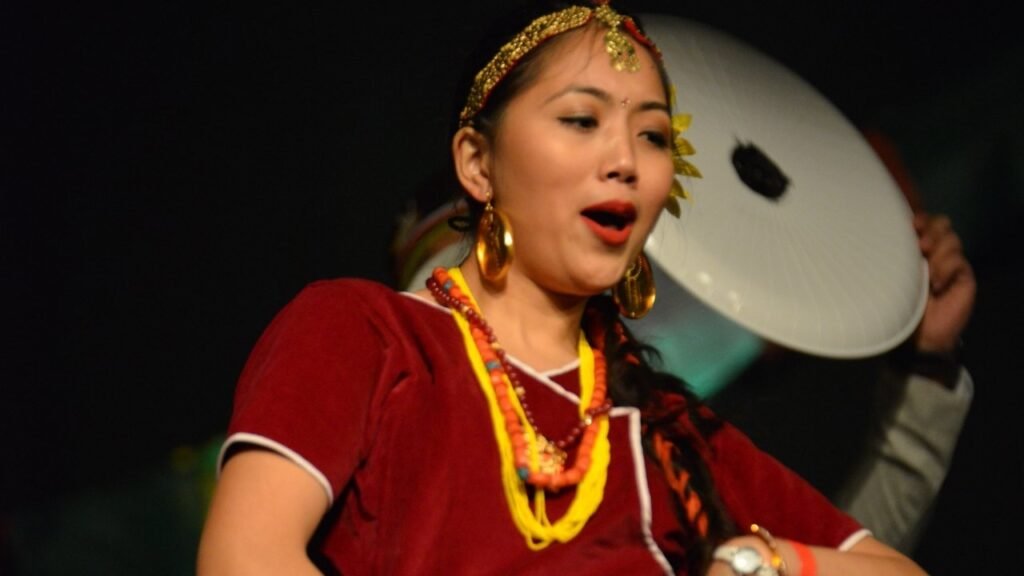
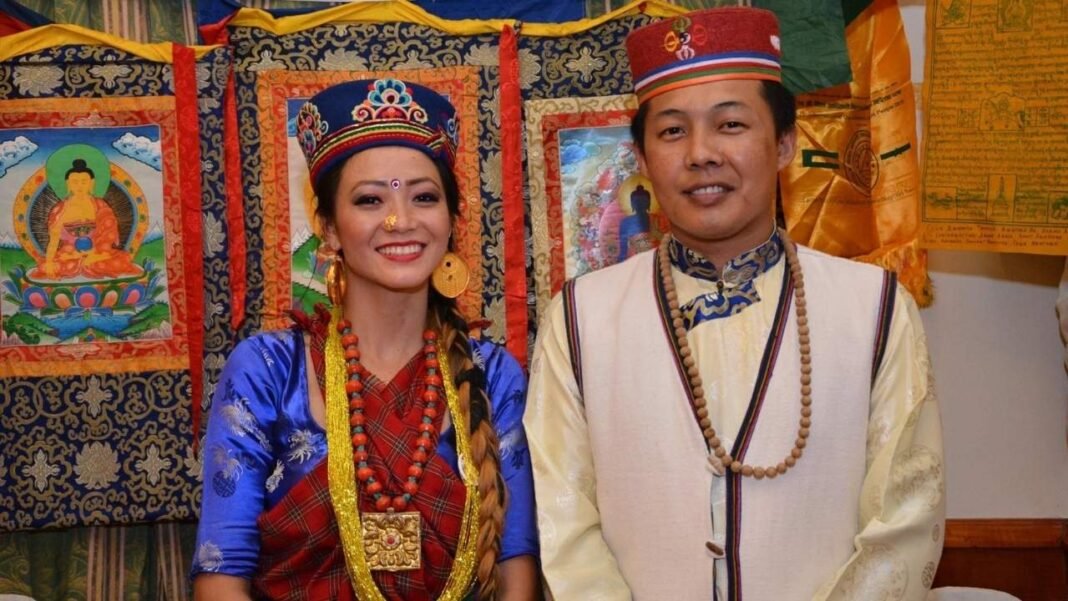
There is no single standardized Tamang costume worn identically across every community. Clothing differs between regions, and traditional garments have also changed as modern clothing has become common. Nevertheless, traditional dress remains especially important during Sonam Lhosar, weddings, religious ceremonies, cultural performances, and other community celebrations.
Traditional Tamang Clothing
Traditional Tamang clothing has its own terminology, although spellings and names can vary between communities. The Tamang Buddhist Federation Nepal documents several traditional garments and ornaments, while ethnographic research from Tamang communities such as Gatlang also records additional local terms. This regional variation is an important part of understanding Tamang dress rather than treating it as one fixed costume.
Men’s Traditional Dress
Among the documented traditional men’s garments is the Ghyiwa, also called Doma, a long shirt-like upper garment. It is worn with Gyaba, also known as Docha, a loose-fitting traditional trouser. A Patuki, or Khadi, is worn around the waist as a cloth sash. Traditional men’s clothing may also include a cap and other locally produced garments, with the exact style depending on the community and climate.
These clothes were practical as well as cultural. Tamang communities traditionally lived in hilly and mountainous environments where clothing needed to provide freedom of movement while also protecting the body from cooler temperatures.
Women’s Traditional Dress
Women’s traditional clothing is generally more elaborate and includes several named garments.
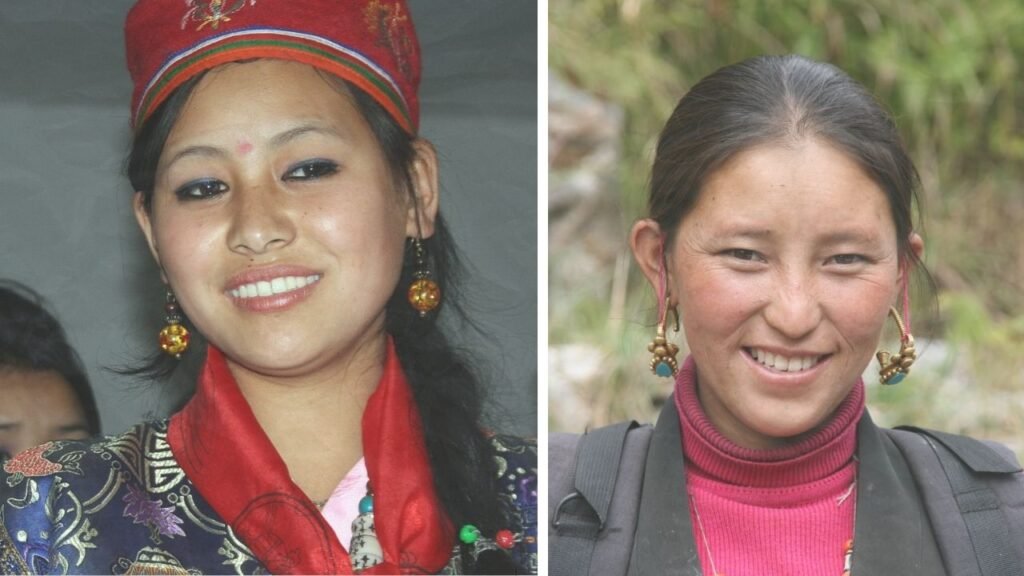
The Singa, also referred to as Tunga, is described as a long, draped, gunyu-like garment. Takto is used as an upper or inner garment, while Hangpa is a traditional shawl or wrap worn around the shoulders.
The exact combination, fabric, color, and style can differ between villages. Some communities use additional garments and regional terminology, which is why it is better to describe these as documented Tamang traditional garments rather than claim that every Tamang woman historically wore exactly the same outfit.
Traditional Tamang Jewelry
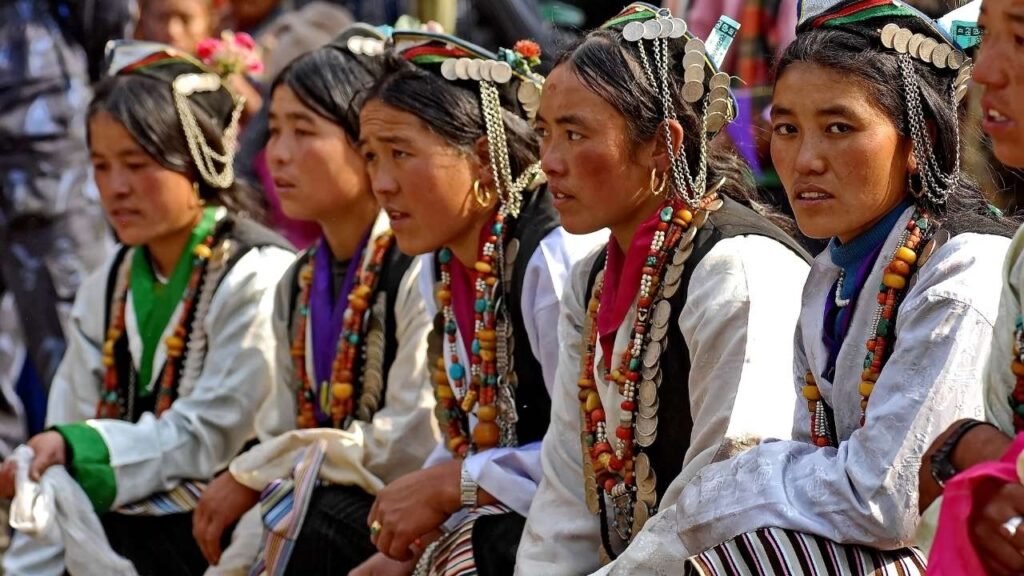
Jewelry is particularly important in women’s ceremonial dress. Traditional ornaments documented in Tamang sources include Pyakchi, a head ornament, and Gyesupa, a coin necklace. Other forms of jewelry include earrings, bracelets, bangles, necklaces, and decorative pieces worn with traditional clothing.
The materials and designs vary according to locality and family tradition. Jewelry may be especially prominent during weddings, Sonam Lhosar, religious ceremonies, and other important celebrations. Some traditional ornaments are also valued as family possessions and may be passed between generations, giving them significance beyond simple decoration.
Children’s Traditional Clothing
Children generally wear modern clothes in everyday life, particularly for school and urban living. Traditional clothing becomes more visible during Sonam Lhosar, weddings, cultural programs, religious events, and community celebrations.
Dressing children in traditional garments during these occasions also serves a cultural purpose: it introduces younger generations to the clothing, terminology, and visual identity associated with their heritage.
Traditional Tamang Food and Cuisine
Tamang cuisine is built around simple, nutritious meals prepared from ingredients grown or raised in the hills of central Nepal. Maize, millet, barley, buckwheat, potatoes, vegetables, dairy products, and locally produced grains have traditionally formed the foundation of the Tamang diet. Meals are designed to provide energy for farming, herding, and daily work in mountainous terrain.
Because the Tamang have lived for centuries near important Himalayan trade routes, their cuisine also reflects influences from both the Nepali hills and Tibetan Plateau. As a result, many dishes are shared with neighboring communities, although local recipes and preparation methods often differ from one village to another.
Everyday Meals
A typical Tamang household meal often consists of seasonal vegetables, leafy greens, lentils, pickles, and grain-based staples. Dal Bhat (lentil soup with rice) is widely eaten today, particularly in lower hill areas, although historically many Tamang communities relied more heavily on maize, millet, barley, and buckwheat before rice became more accessible.
Popular Traditional Foods
- Dhindo
A thick, soft porridge traditionally prepared from millet, buckwheat, maize, or other local flours. It is commonly served with vegetable curries, meat, or fermented leafy greens and remains a staple in many hill communities.
- Gundruk
A fermented leafy vegetable made from mustard, radish, or cauliflower leaves. Gundruk is widely eaten across Nepal, including in many Tamang households, and is valued for its distinctive flavor and long shelf life.
- Thukpa
A hearty noodle soup influenced by Himalayan and Tibetan culinary traditions. It is especially popular in colder mountain regions, where it is prepared with vegetables, meat, or eggs.
- Tsampa
Roasted barley flour that has long been an important food in Himalayan communities. It may be mixed with tea, butter, or water to create a simple, energy-rich meal, particularly in higher-altitude areas with stronger Tibetan cultural influences.
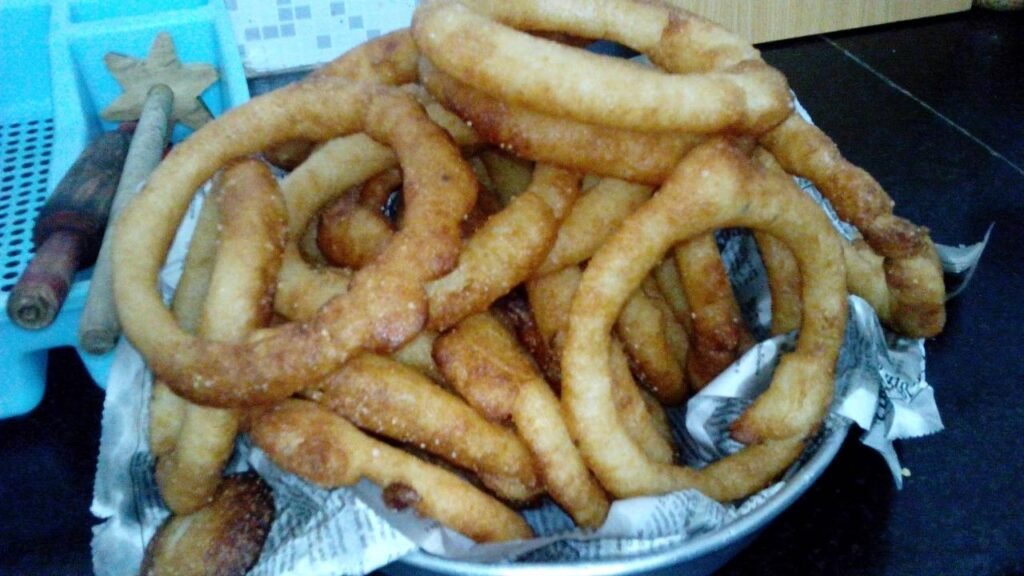
- Sel Roti
A ring-shaped rice bread commonly prepared during major festivals, weddings, and family celebrations. Although Sel Roti is enjoyed by many ethnic groups throughout Nepal, it is also a familiar festive food in Tamang households.
Traditional Drinks
- Butter Tea (Su Cha)
Made from tea, butter, and salt, butter tea remains more common among northern Tamang communities living closer to the Tibetan border, where it provides warmth and energy during cold weather.
- Millet-Based Beverages
Some Tamang communities traditionally prepare fermented drinks from millet, particularly during festivals, weddings, and community gatherings. Recipes vary between regions, and these beverages are shared with several other Indigenous groups in Nepal rather than being unique to the Tamang alone.
Food as a Cultural Tradition
For the Tamang people, food is more than nourishment; it is an expression of family, hospitality, and cultural identity. Preparing traditional dishes during Sonam Lhosar, weddings, religious ceremonies, and community festivals helps preserve recipes that have been passed down for generations. Even as modern lifestyles continue to change eating habits, these foods remain an important connection to the Tamang community’s Himalayan heritage and enduring traditions.
Famous Tamang Villages You Can Visit
One of the best ways to experience Tamang culture is by visiting the traditional villages that have preserved their language, Buddhist heritage, architecture, and community lifestyle for generations. Most of these settlements lie in Rasuwa District within the Langtang region, where the Tamang Heritage Trail was developed to promote community-based tourism after years of economic isolation. Rather than focusing only on mountain scenery, these villages offer visitors the opportunity to stay in family-run homestays, visit centuries-old monasteries, enjoy traditional Tamang cuisine, and learn about everyday life in Nepal’s Himalayan foothills.
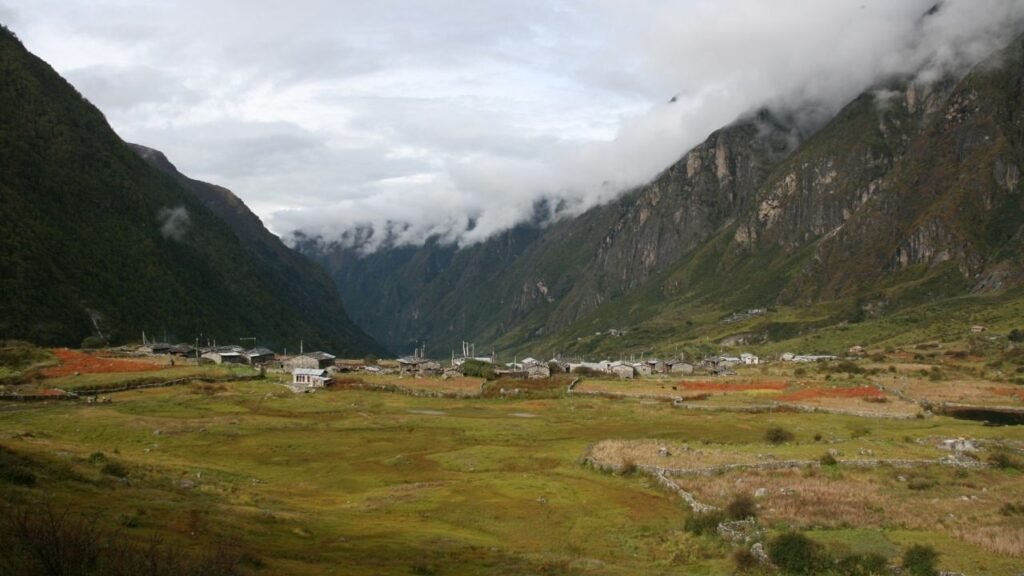
It’s worth noting that not every culturally significant Tamang village is located on the Tamang Heritage Trail. Villages such as Tarke Ghyang and the wider Helambu region represent a fascinating blend of Tamang and Hyolmo (Yolmo) traditions, making them equally rewarding destinations for travelers interested in Nepal’s cultural diversity.
Briddim
Nestled at about 2,230 meters (7,316 feet) in Rasuwa District, Briddim is widely regarded as one of Nepal’s finest examples of community-based tourism. The village is known for its traditional stone houses, family-operated homestays, Buddhist monasteries, and warm Tamang hospitality. Instead of staying in commercial hotels, visitors are welcomed into local homes, providing an authentic insight into Tamang customs, cuisine, and daily life.
Why Visit?
- Community-run homestays
- Traditional Tamang architecture
- Buddhist monasteries
- Cultural performances during festivals
- Views of the Langtang Himal
Best Season: March to May and September to November
Accessibility: Usually reached on foot as part of the Tamang Heritage Trail from Syabrubesi or by combining it with the Langtang Valley Trek.
Gatlang
Often considered the cultural heart of the Tamang Heritage Trail, Gatlang is a picturesque hillside village surrounded by terraced fields and panoramic Himalayan scenery. The village is famous for its traditional stone houses, Buddhist monastery, and nearby Parvatikunda Lake, an important local pilgrimage site.
Gatlang provides one of the best opportunities to observe traditional Tamang village life, from farming practices to local festivals and handicrafts.
Why Visit?
- Traditional Tamang settlement
- Parvatikunda Lake
- Ancient monastery
- Mountain views of Ganesh Himal and Langtang ranges
- Rich cultural experiences
Best Season: Spring and autumn
Accessibility: Approximately a day’s trek from Syabrubesi, the usual starting point of the Tamang Heritage Trail.
Thuman
Located close to the Nepal to China (Tibet) border, Thuman reflects centuries of cultural exchange between Himalayan communities. Historically connected to cross-border trade, the village is known for its Buddhist traditions, local music, dances, and welcoming atmosphere.
Nearby Nagthali Hill (3,165 m) offers one of the finest panoramic viewpoints on the Tamang Heritage Trail, overlooking the Langtang, Ganesh Himal, Sanjen, and Kerung mountain ranges.
Why Visit?
- Strong Buddhist traditions
- Traditional Tamang songs and dances
- Nagthali viewpoint
- Historic trade-route heritage
Best Season: March to May and September to November
Accessibility: Reached on foot from Tatopani or Briddim along the Tamang Heritage Trail.
Goljung
Less visited than Gatlang or Briddim, Goljung offers a quieter and more intimate cultural experience. The village is home to an ancient monastery and preserves many traditional aspects of Tamang village life, including farming, Buddhist rituals, and stone-built homes.
Its peaceful setting and lower visitor numbers make it an excellent destination for travelers seeking a more authentic experience away from Nepal’s busier trekking routes.
Why Visit?
- Ancient Buddhist monastery
- Traditional village lifestyle
- Excellent Himalayan scenery
- Peaceful atmosphere
Best Season: Spring and autumn
Accessibility: Usually visited together with Gatlang on the Tamang Heritage Trail.
Tarke Ghyang
Situated in Sindhupalchok District, Tarke Ghyang is one of the largest and most culturally significant villages in the Helambu region. While many residents identify as Hyolmo (Yolmo), the surrounding area has long been home to both Hyolmo and Tamang communities, creating a unique blend of Himalayan Buddhist traditions.
The village is particularly known for its historic monasteries, beautifully carved wooden houses, apple orchards, and peaceful mountain setting.
Why Visit?
- Ancient Buddhist monasteries
- Traditional Himalayan architecture
- Hyolmo and Tamang cultural influences
- Excellent Helambu trekking experience
Best Season: March to May and September to November
Accessibility: Reached via the Helambu Trek from Sundarijal or Melamchi Pul Bazaar rather than the Tamang Heritage Trail.
Helambu Region
Although Helambu is a region rather than a single village, it deserves mention because it offers one of Nepal’s richest cultural landscapes. The area is primarily associated with the Hyolmo (Yolmo) people, but Tamang communities also live throughout the region, particularly in its western and southern settlements.
Visitors encounter ancient monasteries, prayer walls, terraced farmland, forests, and welcoming mountain villages while experiencing the close cultural connections and distinct identities of both Hyolmo and Tamang communities.
Why Visit?
- Rich Buddhist heritage
- Traditional mountain villages
- Scenic trekking close to Kathmandu
- Blend of Tamang and Hyolmo cultures
Best Season: Spring and autumn
Accessibility: Accessible via the Helambu Trek, typically beginning from Sundarijal or Melamchi Pul Bazaar.
Syabrubesi
Although Syabrubesi itself is not a traditional Tamang cultural village in the same sense as Gatlang or Briddim, it is the main gateway to the Tamang Heritage Trail and the Langtang region. Nearly every trek through the Tamang heartland begins here, making it an ideal base before exploring nearby villages.
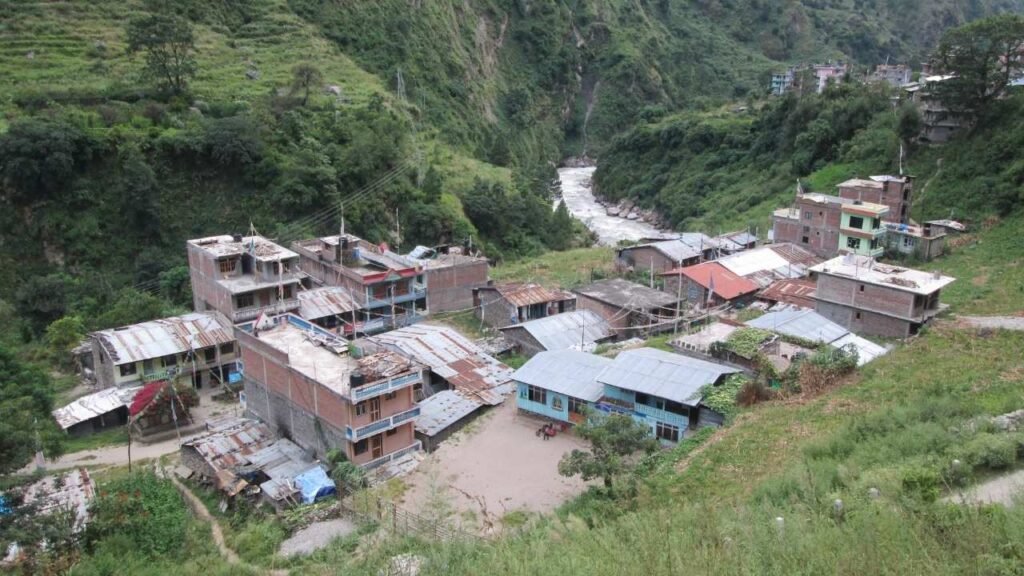
The town offers lodges, restaurants, transport connections from Kathmandu, and easy access to the cultural trail.
Why Visit?
- Starting point for the Tamang Heritage Trail
- Gateway to Langtang National Park
- Convenient trekking services and accommodation
Best Season: Year-round, with spring and autumn offering the best trekking conditions.
Accessibility: Approximately 122 km north of Kathmandu, typically a 6–8 hour drive, depending on road conditions.
Which Village Should You Visit?
If your goal is to experience traditional Tamang culture, Gatlang, Briddim, and Thuman are the standout destinations. Together, they form the cultural core of the Tamang Heritage Trail, where visitors can stay in local homestays, explore centuries-old monasteries, enjoy Tamang cuisine, and learn about daily life from the communities themselves.
For travelers interested in a broader Himalayan cultural experience, Tarke Ghyang and the Helambu region provide a fascinating opportunity to explore the close historical relationship between Tamang and Hyolmo communities, while Syabrubesi serves as the natural starting point for discovering this remarkable part of Nepal.