
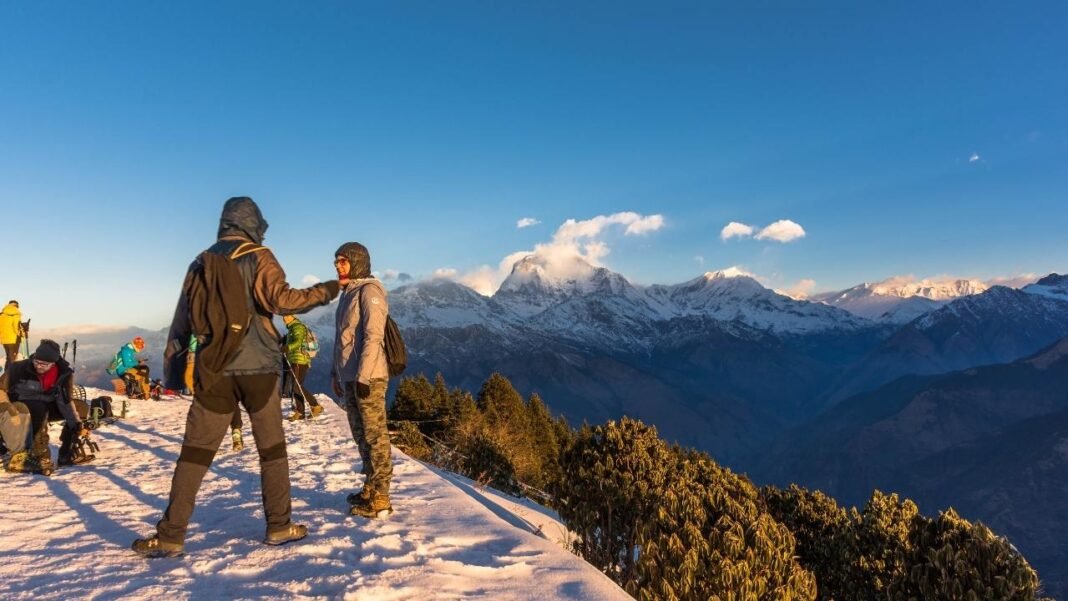

Luxury trekking in Nepal is not about replacing the Himalayan experience with five-star hotels. It is about making a demanding trek more comfortable, private, and professionally managed without taking away the adventure.
A luxury trek typically includes premium accommodation where available, a private or small-group itinerary, experienced local guides, porter or luggage support, and private transportation. Depending on the route, you may also have better dining, hot showers, attached bathrooms, flexible walking schedules, and high-quality hotels in Kathmandu or Pokhara before and after the trek. Some itineraries can also incorporate helicopter transfers to reduce long road journeys or provide access to otherwise difficult sections.
The biggest difference is often the level of service. Instead of following a fixed group schedule, you can have a more flexible itinerary built around your walking pace, acclimatization needs, interests, and comfort. Your guide and support team also handle much of the logistics, allowing you to concentrate on the landscape and experience rather than arranging every detail yourself.
But there is an important limitation: you cannot turn the high Himalayas into a five-star resort.
Once you reach 4,000 to 5,000 meters and beyond, even the best trekking routes have physical and logistical constraints. Accommodation becomes more basic, supplies are harder to transport, and facilities vary significantly between villages. At high altitude, luxury often means a warm private room, good food, reliable luggage transfers, a hot shower when available, an experienced guide, and a well-planned acclimatization schedule, not marble bathrooms and room service.
That is what makes luxury trekking in Nepal different from a conventional luxury holiday: you are still trekking through the Himalayas, but with significantly better comfort and support along the way.
What Makes a Trek “Luxury” in Nepal?
Luxury trekking is really about what happens around the walking. The trail itself may be the same one used by ordinary trekkers, but the accommodation, support, transportation, food, and flexibility can be dramatically different.
Luxury accommodation
Accommodation is usually the most visible difference. On established routes, you may move from a standard teahouse with basic rooms and shared facilities to a premium lodge offering better beds, private bathrooms, hot showers, dining areas, and more reliable heating. In places such as Mustang, luxury can go a step further with genuine high-end resort accommodation.
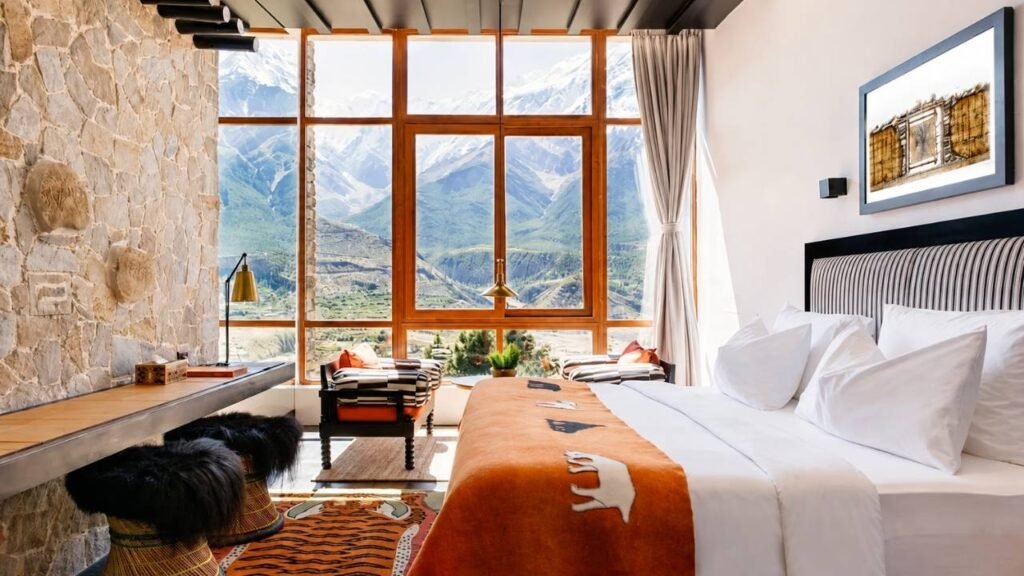
The important catch is that standards vary enormously by altitude and region. A “luxury lodge” at 3,000 meters is not necessarily comparable to a luxury hotel in Kathmandu. Higher on routes such as Everest or Annapurna, even the best available property may offer only a comfortable private room and basic modern facilities.
Private guiding and support
Luxury usually means having more personal attention throughout the trek. There is a significant difference between joining a large group, booking a private trek, hiring a private guide and porter, and taking a fully supported luxury expedition with a dedicated logistics team.
With a private itinerary, your walking pace, rest stops, meals, and daily schedule can be adjusted more easily. Porter and luggage services also mean you do not have to carry your main baggage from village to village.
Premium transportation
Transportation is another major part of the luxury experience. Instead of shared airport transfers or tourist buses, you may have private vehicles and airport transfers, upgraded domestic flight arrangements, or helicopter transportation on suitable routes.
Helicopters need one important distinction: a helicopter transfer or sightseeing flight is not the same thing as helicopter evacuation coverage. A luxury itinerary may include or offer a helicopter flight as part of the travel experience, while emergency evacuation is a separate safety provision that depends on your insurance, medical circumstances, weather, and operator arrangements.
Better food and dining
Luxury trekking does not necessarily mean gourmet cuisine at 4,500 meters, but it can mean better-quality meals and more choice. Premium operators may provide broader menus, dietary customization, better food hygiene, snacks and trail food, quality drinks, and more comfortable dining environments.
Some high-end experiences even turn meals into part of the journey. Shinta Mani Mustang, for example, offers guided wilderness trekking with a prepared picnic rather than simply treating food as something to grab at the next teahouse.
Wellness and recovery
Wellness is another area where luxury trekking can go beyond accommodation. Depending on the property and itinerary, you may have access to massage, spa treatments, yoga, meditation, hot showers, wellness sessions, and additional rest days.
This is particularly valuable after several consecutive days of walking. In Mustang, Shinta Mani offers personalized wellness programs alongside its trekking experiences, showing how luxury trekking can combine physical adventure with recovery.
Personalization
Perhaps the biggest luxury of all is not having to follow someone else’s itinerary.
A premium trek can be designed around your walking ability, preferred daily distance, acclimatization requirements, rest days, private rooms, photography interests, cultural experiences, family needs, and even helicopter transfers where practical.
Shinta Mani Mustang is a good real-world example: its trekking programs can be customized by itinerary, length, and difficulty according to a guest’s fitness, experience, and requirements.
So when comparing luxury treks in Nepal, don’t look only at the hotel. The real upgrade is the entire system of support around you from the person guiding you on the trail to the vehicle waiting at the airport and the room waiting for you at the end of the day.
Best Luxury Treks in Nepal
Luxury trekking in Nepal does not follow one formula. On one route, luxury might mean staying in one of the best available lodges and having a private guide; on another, it may mean combining a high-end resort with guided day hikes and private transportation. The difference becomes especially noticeable when you compare established trekking corridors such as Everest and Annapurna with more remote destinations such as Upper Mustang or Manaslu.
Here are the luxury trekking experiences that make the most sense, depending on what you actually want from the journey.
Luxury Everest Base Camp Trek
Best for: First-time luxury trekkers and Everest bucket-list travelers
For many travelers, Everest Base Camp is the ultimate Himalayan experience, and the luxury version allows you to reach one of the world’s most famous trekking destinations with a significantly higher level of comfort and support.
The journey begins with the dramatic flight to Lukla before following the classic Everest trail through Phakding, Namche Bazaar, Tengboche or Deboche, Dingboche or Pheriche, Lobuche, and Gorak Shep. From there, trekkers continue to Everest Base Camp (5,364 m) and often climb Kala Patthar (5,545 m) for arguably the best close-up views of Mount Everest.
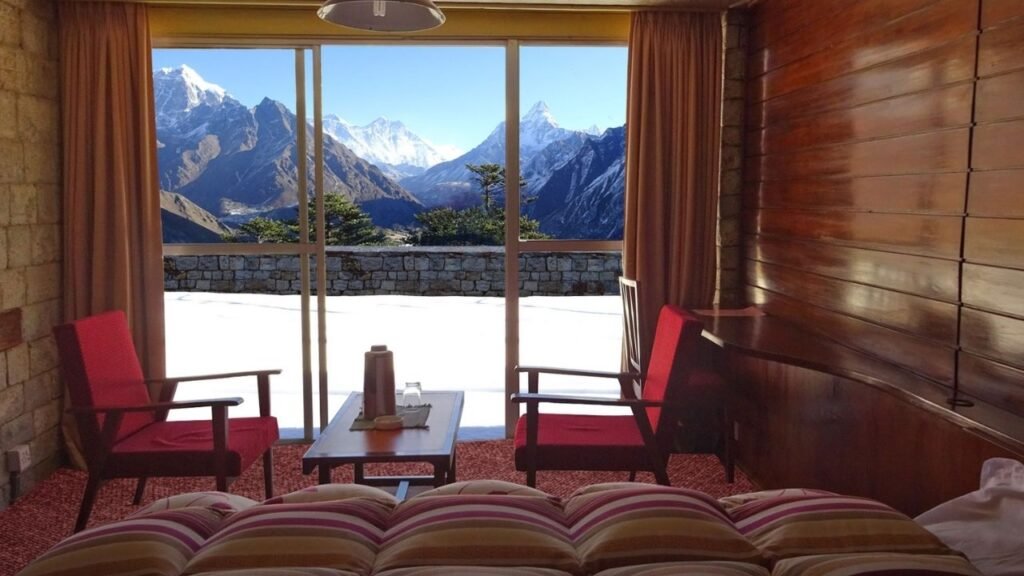
What makes the trek luxurious is not the route itself but the experience surrounding it.
Luxury operators typically provide private guides, porter support, upgraded lodges where available, premium hotels in Kathmandu, better meal options, flexible itineraries, and additional acclimatization support. Some high-end itineraries even include helicopter transfers or specialized accommodation experiences.
However, it is important to have realistic expectations. Even on the most expensive Everest Base Camp itinerary, you will still spend long days walking at high altitude. Once you move beyond Namche Bazaar and into the upper Khumbu region, accommodation options become more limited. Luxury at 5,000 meters usually means a comfortable private room, reliable logistics, warm meals, and expert guidance rather than five-star hotel facilities.
For travelers who have always dreamed of standing beneath Everest while avoiding the rougher side of trekking logistics, this remains Nepal’s most iconic luxury trekking experience.
Luxury Everest View Trek
Best for: Travelers who want Everest scenery without committing to Everest Base Camp
Not everyone needs to reach Base Camp to enjoy the Everest region. The Everest View Trek focuses on the most scenic and culturally rich lower section of the Khumbu while avoiding much of the altitude and physical commitment required for EBC.
Most itineraries include the flight to Lukla and several days around Namche Bazaar, Khumjung, Khunde, and Everest View Hotel, offering stunning panoramas of Everest, Lhotse, Ama Dablam, and surrounding peaks. Because the trek remains at lower elevations, it is generally more comfortable and requires less acclimatization.
This route works particularly well as a luxury trek because the shorter duration allows travelers to spend more time enjoying premium accommodation, cultural experiences, and quality service rather than constantly moving higher into the mountains.
It is also an excellent option for older travelers, families, photographers, and anyone who values spectacular Himalayan views but has little interest in spending two weeks trekking to Base Camp. You still experience Sherpa culture, mountain villages, monasteries, and Everest itself, just with fewer physical demands.
Luxury Annapurna Trek
Best for: Travelers seeking mountain scenery, comfort, and flexibility
The Annapurna region arguably offers the greatest variety of luxury trekking experiences in Nepal. Unlike Everest, which revolves around a single famous destination, Annapurna gives travelers multiple ways to customize their trip based on fitness, available time, and comfort preferences.
Luxury Annapurna Base Camp Trek
For travelers who want dramatic mountain scenery without a lengthy expedition, Annapurna Base Camp is one of the strongest choices. The route passes through traditional Gurung villages, terraced farmland, bamboo forests, and rhododendron-covered hills before reaching the spectacular Annapurna Sanctuary. Surrounded by towering peaks including Annapurna I, Machhapuchhre, Hiunchuli, and Annapurna South, the base camp delivers one of Nepal’s most impressive mountain settings.
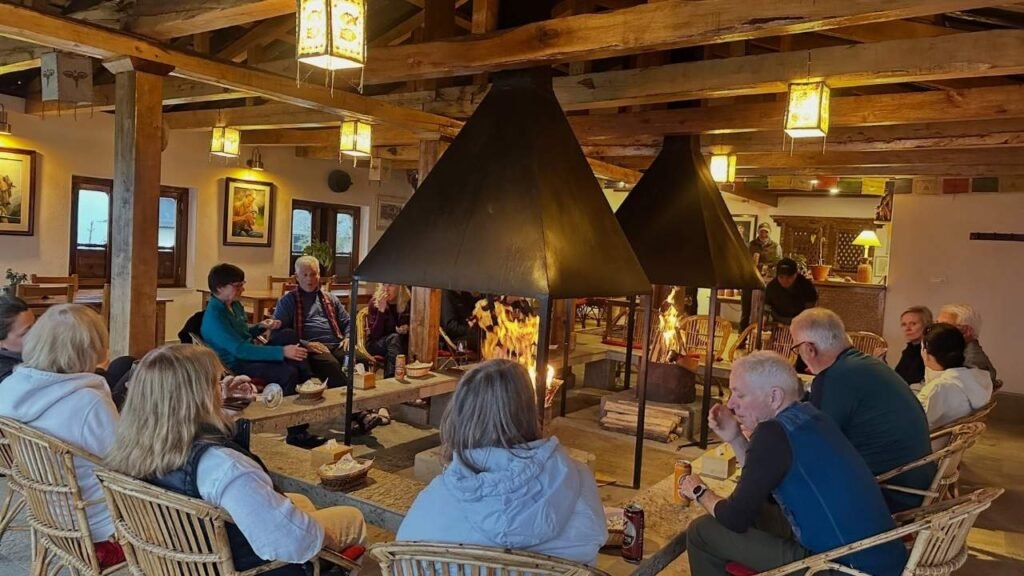
Luxury versions of the trek typically focus on comfortable lodges, private guides, porter support, and carefully paced itineraries. The route is challenging enough to feel like a genuine Himalayan adventure while remaining more accessible than Everest Base Camp.
Luxury Ghorepani–Poon Hill Experience
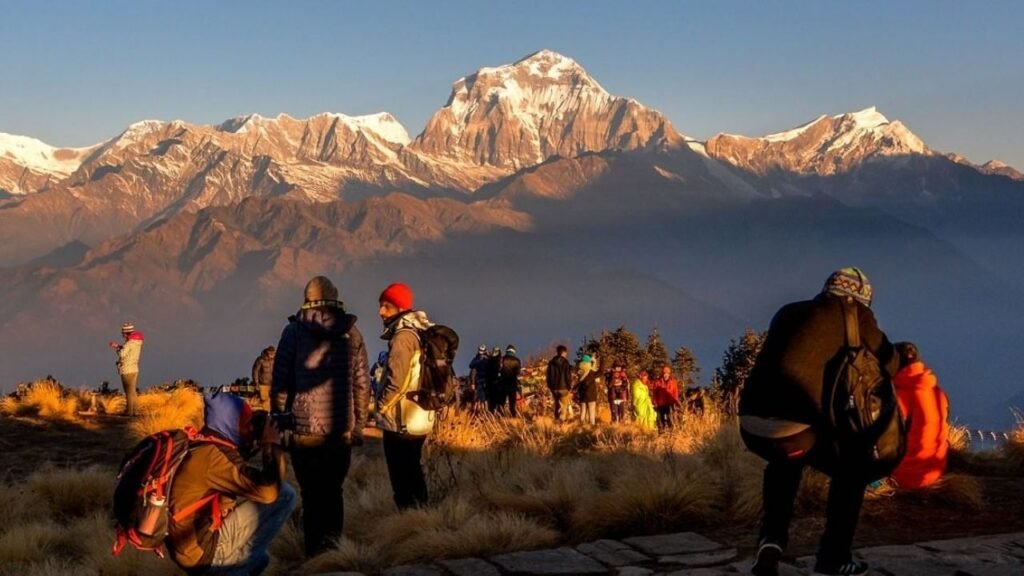
Travelers looking for a shorter and more comfortable trekking holiday often gravitate toward Poon Hill. The trek combines beautiful forests, traditional Gurung and Magar villages, and one of Nepal’s most famous sunrise viewpoints. From Poon Hill, you can see a vast panorama stretching across Annapurna, Dhaulagiri, Machhapuchhre, and several other major Himalayan peaks.
Because the route stays at relatively modest elevations, luxury operators can focus more on accommodation quality, dining experiences, and relaxed walking schedules. It is one of the best options for travelers who want impressive mountain scenery without committing to a demanding high-altitude expedition.
Luxury Annapurna Circuit Trek
For travelers who want a longer and more diverse adventure, the Annapurna Circuit remains one of the world’s classic trekking routes. The journey moves through multiple climate zones, from subtropical valleys and traditional villages to the high-altitude environment of Manang and the challenging crossing of Thorong La Pass (5,416 m). Beyond the pass, the scenery gradually transforms into the drier landscapes associated with Mustang.
Luxury here is less about luxury lodges throughout the route and more about enhanced logistics, private guiding, comfortable accommodation where available, and a carefully designed itinerary. The reward is one of the most varied trekking experiences anywhere in the Himalayas.
Luxury Mustang Trek
Best for: High-end travelers seeking culture, exclusivity, and unique landscapes
Among all luxury treks in Nepal, Mustang arguably comes closest to combining genuine luxury travel with Himalayan adventure.
Located in Nepal’s trans-Himalayan region, Upper Mustang offers a landscape unlike the greener trekking areas of Everest and Annapurna. The terrain is dominated by wind-carved cliffs, desert-like valleys, dramatic rock formations, and centuries-old settlements influenced by Tibetan culture.
The highlight for many visitors is Lo Manthang, the ancient walled capital of the former Kingdom of Mustang. Along the way, travelers encounter ancient monasteries, cave complexes, prayer walls, and villages that preserve traditions largely unchanged for generations.
The region’s restricted-area status naturally limits visitor numbers, creating a sense of exclusivity that few other trekking destinations can match. The special permit requirement also helps maintain a quieter and less crowded experience.
Mustang is further distinguished by the presence of high-end accommodation options such as Shinta Mani Mustang, allowing travelers to combine guided trekking, cultural exploration, wellness experiences, and luxury hospitality in a way that is difficult to replicate elsewhere in Nepal.
For travelers who prioritize culture and exclusivity as much as mountain scenery, Mustang is arguably Nepal’s most complete luxury trekking destination.
Luxury Lower Mustang and Jomsom Trek
Best for: Travelers wanting Mustang’s landscapes without a full Upper Mustang expedition
Lower Mustang provides many of the cultural and geographical highlights that attract travelers to Mustang while requiring less time, fewer permits, and simpler logistics.
The journey typically includes destinations such as Jomsom, Marpha, Tukuche, Kagbeni, and Muktinath, each offering a unique perspective on the Kali Gandaki Valley. The region is famous for its apple orchards, traditional stone villages, Tibetan-influenced culture, and dramatic mountain scenery.
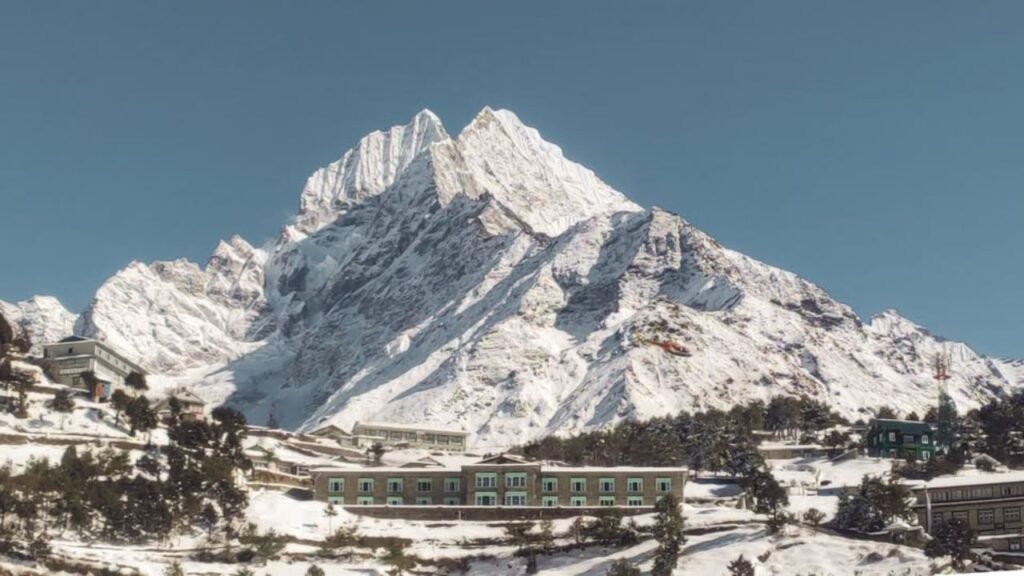
One of the biggest advantages of Lower Mustang is flexibility. Travelers can base themselves in comfortable accommodation around Jomsom while exploring surrounding villages through guided walks and excursions rather than constantly changing accommodation each night.
This combination of accessibility, culture, scenery, and upgraded accommodation makes Lower Mustang one of Nepal’s most underrated luxury trekking experiences.
Luxury Ghorepani–Poon Hill Trek
Best for: Short luxury Himalayan escapes
If your goal is to enjoy Nepal’s mountains without dedicating two weeks to trekking, the Ghorepani–Poon Hill Trek deserves serious consideration. Most itineraries can be completed in less than a week, making it ideal for travelers with limited time. Despite its shorter duration, the route delivers exceptional scenery, especially during spring when rhododendron forests burst into bloom.
The famous sunrise from Poon Hill remains the highlight. On clear mornings, the panorama stretches across both the Annapurna and Dhaulagiri ranges, creating one of the most rewarding viewpoints in Nepal relative to the effort required.
Because the route stays below extreme altitudes, travelers can focus more on comfort and enjoyment rather than acclimatization concerns. This makes it one of the most approachable luxury trekking options for couples, families, and first-time visitors to Nepal.
Luxury Helambu Trek
Best for: Cultural trekking close to Kathmandu
Helambu offers something many luxury travelers value: convenience. Located north of Kathmandu, the region can be reached without domestic flights or lengthy transfers, allowing visitors to move from the capital to the trail relatively quickly. Despite its proximity to Kathmandu, the area still provides beautiful mountain scenery, traditional villages, Buddhist monasteries, and rich cultural experiences.
The trek passes through communities associated with both Sherpa and Tamang heritage, offering opportunities to experience local culture without venturing deep into Nepal’s more remote trekking regions.
Luxury in Helambu is less about high-end mountain lodges and more about a well-organized, personalized experience. Private guides, comfortable transportation, quality accommodation, and flexible itineraries can transform a relatively simple trek into a highly rewarding cultural journey. For travelers who want a short Himalayan adventure without extensive travel commitments, Helambu is an excellent option.
Luxury Manaslu Trek
Best for: Experienced trekkers seeking exclusivity and remoteness
The Manaslu Circuit is one of Nepal’s finest trekking routes, but it is important to understand that it is not a traditional luxury trek in the same way as Everest or Mustang.
The route circles Mount Manaslu (8,163 m) through remote valleys, traditional villages, and high mountain terrain before crossing Larke Pass (5,106 m). Compared to Everest and Annapurna, visitor numbers remain relatively low, giving the region a more isolated and authentic atmosphere.
Luxury here comes primarily from logistics rather than accommodation. Many villages still offer relatively basic lodging, especially at higher elevations. Even premium operators cannot completely overcome the limitations of the region’s infrastructure.
Instead, the value comes from private guides, porter support, carefully planned itineraries, private transportation, customized services, and expert management of permits and logistics. These upgrades allow travelers to focus on the experience itself rather than the challenges of organizing a trek through one of Nepal’s more remote regions.
For experienced trekkers who value solitude, wilderness, and cultural authenticity, Manaslu may actually feel more exclusive than some of Nepal’s better-known luxury trekking destinations even if the accommodation is considerably simpler.
What Is Included in a Luxury Trek Package?
A luxury trekking package can look comprehensive on paper, but “luxury” does not automatically mean all-inclusive. Two operators can advertise similar luxury treks while including very different hotels, transportation, meals, equipment, and services. The safest approach is to check exactly what the quoted price covers before booking.
Usually Included
Most well-designed luxury trekking packages will cover the major logistics needed to complete the trek comfortably. Airport transfers: Private pickup and drop-off at Tribhuvan International Airport are commonly included, often with a private vehicle rather than a shared transfer.
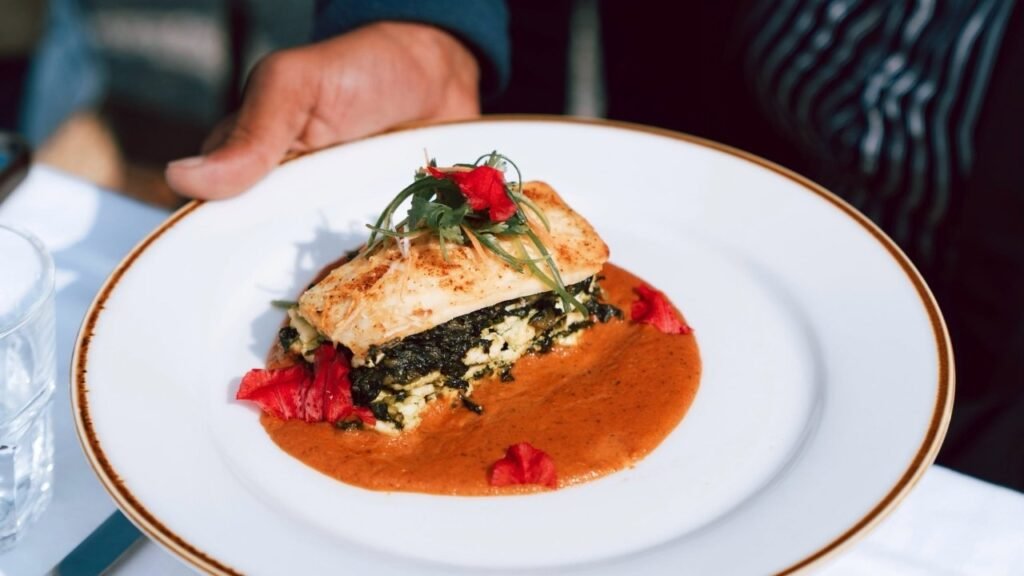
- Hotels Before and After the Trek: Luxury itineraries generally include higher-end accommodation in Kathmandu and, when relevant, Pokhara. The exact hotel category should be checked rather than assuming that every night is five-star.
- Domestic Flights: On routes requiring flights, such as Everest, the standard itinerary may include the domestic airfare. However, the departure airport, baggage allowance, flight changes, and weather-related delays should be confirmed.
- Trekking Permits and Fees: Required trekking permits, national park fees, and other mandatory government charges are normally included. Restricted regions such as Upper Mustang can carry substantially higher permit costs.
- Private Guide: A dedicated, experienced guide is one of the most important upgrades in a luxury trek. Your guide can adjust the pace, help with acclimatization, manage local logistics, and provide a more personalized experience.
- Porter and Luggage Support: Your main luggage is generally transported between overnight stops, allowing you to walk with only a daypack. Some luxury operators may provide a more generous luggage allowance or additional support.
- Accommodation During the Trek: The package should specify the actual lodges or accommodation category wherever possible. This is particularly important because “luxury lodge” means something very different in Kathmandu, Namche, and a remote village at 4,500 meters.
- Meals: Breakfast, lunch, and dinner are commonly included during the trekking portion. Premium packages may offer broader menus, snacks, drinks, and dietary customization, but alcoholic beverages are often separate.
- Ground Transportation: Private vehicles for airport transfers, road journeys, and route connections are frequently included, particularly in premium itineraries.
- Trekking Equipment: This varies considerably. Some operators provide items such as sleeping bags, down jackets, trekking poles, or duffel bags, while others expect you to bring your own equipment. Never assume equipment is included simply because the trek is marketed as luxury.
Often Optional or Charged Separately
Some of the most expensive elements of a luxury trek are not necessarily part of the advertised package price.
- Helicopter Flights: A helicopter sightseeing flight, transfer, or return from a trekking destination can add substantially to the cost and is usually an optional upgrade.
- Helicopter Evacuation: This is primarily an emergency service, not a luxury amenity. Whether evacuation costs are covered depends on your travel insurance, the policy conditions, the medical situation, weather, and the operator’s arrangements. A helicopter evacuation should never be confused with a scheduled helicopter transfer.
- Premium Alcoholic Beverages: Wine, spirits, cocktails, and other premium drinks are commonly excluded from standard meal packages, particularly at higher-end lodges where transportation costs make them expensive.
- Spa and Wellness Treatments: Massages, spa treatments, yoga sessions, and specialized wellness experiences may be available at luxury hotels or resorts but are often charged separately.
- Private Helicopter Charter: A scheduled helicopter transfer is one thing; chartering an entire helicopter for your group is another. Private charters can significantly increase the overall cost.
- Extra Hotel Nights: If you want additional nights in Kathmandu or Pokhara before or after the trek, these may not be included in the standard itinerary.
- Personal Trekking Gear: Boots, clothing layers, gloves, sunglasses, backpacks, personal medication, and other individual equipment are normally the traveler’s responsibility unless specifically stated otherwise.
What You Should Check Before Booking
The most useful question is not simply “Is this a luxury trek?” but “Exactly what does the price include?” Before paying a deposit, ask for a written breakdown covering:
- Accommodation names and room category
- Meals and drinks
- Domestic flights and baggage allowance
- Private transportation
- Guide and porter services
- Permits and entrance fees
- Equipment provided
- Helicopter arrangements, if any
- Insurance and evacuation provisions
- Extra hotel nights
- Taxes and service charges
- What happens if flights are delayed or weather disrupts the itinerary
This matters because a package advertised at a higher price is not necessarily better value. True luxury is not just paying more; it is knowing exactly what that extra money is buying.