


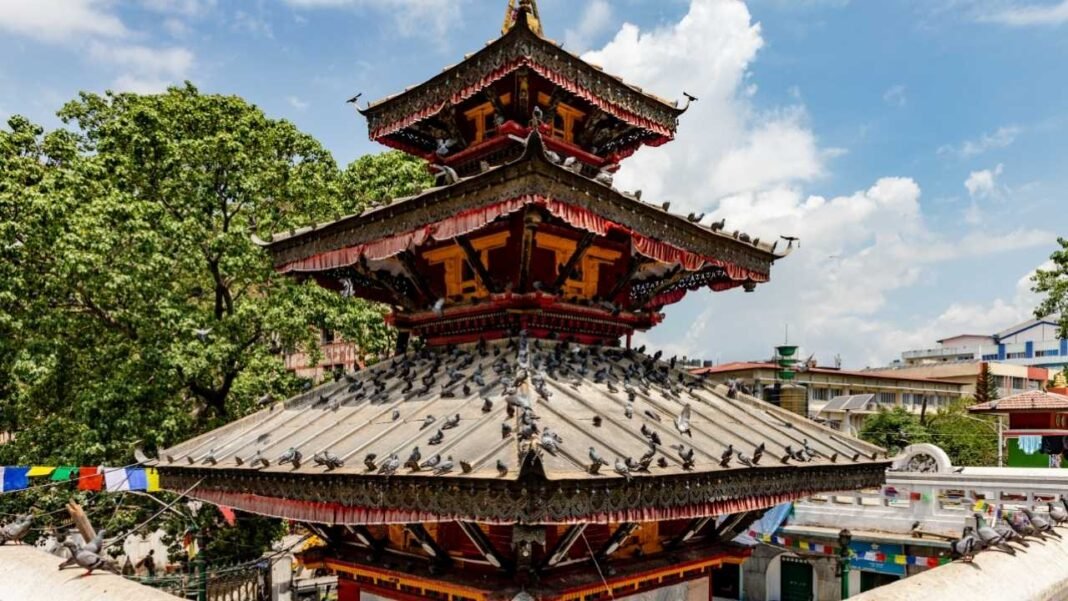

Kathmandu Valley is one of the richest concentrations of religious and historic architecture in Nepal. Temples, shrines, stupas, monasteries, and palace courtyards are not confined to isolated monuments; they are woven into the historic neighborhoods of Kathmandu, Patan (Lalitpur), and Bhaktapur, where religious life continues alongside everyday city life.
The valley’s temples were shaped over centuries by the Newar communities, whose craftsmen developed highly refined traditions of brickwork, wood carving, stone sculpture, and metalwork. Hindu and Buddhist traditions also developed side by side, creating a distinctive religious landscape in which Hindu temples, Buddhist stupas, monasteries, and smaller shrines can stand within the same historic quarter. Vajrayana Buddhism, particularly the Newar Buddhist tradition, adds another important layer to this architectural and cultural heritage.
Kathmandu is home to major pilgrimage sites such as Pashupatinath and Swayambhunath, while Patan is especially renowned for its dense collection of Newar temples and courtyards. Bhaktapur preserves perhaps the most atmospheric medieval urban setting, with monumental pagodas and temples surrounding its historic squares.
Together, these three cities form the cultural core of Kathmandu Valley’s sacred architecture. Their temples are not simply preserved relics of Nepal’s past, they remain active places of worship, festivals, ritual, and community life, making the valley’s religious heritage something you can experience rather than merely observe.
Kathmandu Valley Temples at a Glance
Kathmandu Valley’s religious heritage is much broader than a collection of individual temples. The valley contains historic temple complexes, Buddhist stupas, monasteries, shrines, and palace squares spread across its three historic cities Kathmandu, Patan (Lalitpur), and Bhaktapur. Nepal Tourism Board notes that the valley contains hundreds of monuments and artistic temples, while UNESCO recognizes seven historic monument zones as a single World Heritage property.
| Fact | Details |
| Location | Kathmandu Valley, central Nepal |
| Main Historic Cities | Kathmandu, Patan (Lalitpur), and Bhaktapur |
| Major Religious Traditions | Hinduism and Buddhism, including Newar Vajrayana Buddhism |
| Architectural Tradition | Predominantly Newar craftsmanship, expressed through pagoda and shikhara forms, carved wood, brick, stone, and metalwork |
| UNESCO World Heritage Property | Kathmandu Valley |
| Seven UNESCO Monument Zones | Kathmandu Durbar Square, Patan Durbar Square, Bhaktapur Durbar Square, Swayambhu, Bauddhanath (Boudhanath), Pashupatinath, and Changu Narayan |
| Best General Time to Visit | October to April (particularly the drier months) |
| Best Time of Day | Early morning for cooler temperatures, active worship, and a more atmospheric experience |
| Most Famous Hindu Temple | Pashupatinath |
| Important Buddhist Sites | Swayambhunath and Boudhanath |
| Historically Significant Ancient Temple | Changu Narayan, associated with some of the valley’s earliest surviving temple traditions and a 5th-century inscription |
A Note About the UNESCO Sites
One important distinction is that the seven UNESCO-listed sites are not seven individual temples. UNESCO lists Kathmandu Valley as one World Heritage property divided into seven monument zones. Three are historic urban centers, Kathmandu, Patan, and Bhaktapur Durbar Squares, while the other four are religious ensembles: Swayambhu, Bauddhanath, Pashupati, and Changu Narayan.
The Durbar Square zones themselves contain numerous temples, shrines, palaces, and other historic structures. Likewise, calling Changu Narayan simply “the oldest temple in Nepal” is a little too absolute. It is widely described as one of the oldest Hindu temples in the Kathmandu Valley, and UNESCO highlights the site’s 5th-century inscription as one of the valley’s earliest inscriptions.
The present temple structure has undergone rebuilding over the centuries, so it is more accurate to discuss its ancient history and continuous sacred tradition than to imply that the current building has stood unchanged since antiquity. For visitors, October through April is a good general window because the valley is largely outside the summer monsoon period.
However, there is no single month that is mandatory for temple visits; festivals can make particular times much more interesting. For example, Maha Shivaratri brings exceptionally large crowds to Pashupatinath, while other temples become especially lively during their own annual festivals.
The most important takeaway is that Kathmandu Valley’s temple heritage cannot really be separated from its wider urban and religious landscape. A visit to Pashupatinath, for example, is an encounter with a large sacred complex on the Bagmati River, while exploring Patan or Bhaktapur means encountering temples embedded within historic squares, courtyards, streets, and living communities.
The Most Important Temples in Kathmandu Valley
Kathmandu Valley’s temples are not all important for the same reason. Pashupatinath is one of the most significant Hindu pilgrimage centers in Nepal; Swayambhunath represents the valley’s long Buddhist tradition; Changu Narayan preserves exceptionally early evidence of Nepalese religious history; while temples such as Nyatapola, Krishna Mandir, and Kumbheshwar demonstrate the extraordinary architectural achievements of the Malla period.
Together, they show why the valley’s religious heritage cannot be understood through a single architectural style or religious tradition. Hindu, Buddhist, and Newar traditions developed alongside one another, producing a distinctive sacred landscape that UNESCO describes as a powerful artistic and architectural fusion.
Pashupatinath Temple
Pashupatinath Temple is the most important Hindu temple complex in Kathmandu Valley and one of the most revered Shiva pilgrimage sites in Nepal. It stands on the banks of the Bagmati River, where the river and its ghats form an integral part of the sacred landscape rather than merely a backdrop to the temple.
The principal deity is Shiva in his form as Pashupati, meaning “Lord of Animals.” The main shrine is a two-storey pagoda built on a square platform, with silver-plated doors and an elaborately decorated exterior. Inside is the sacred Shiva linga, traditionally understood as a manifestation of Pashupati. But the building itself is only one part of a much larger sacred precinct.
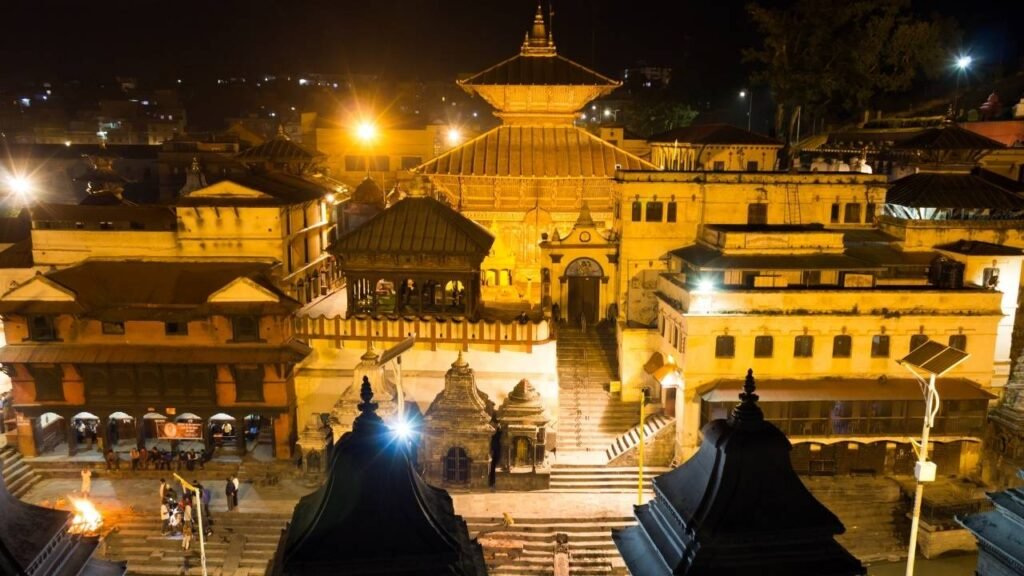
Pashupati area contains numerous smaller temples, shrines, sculptures, ashrams, ghats, and ritual spaces extending toward Guhyeshwari. Nepal Tourism Board describes the wider Pashupatinath area as a major destination for both religious pilgrims and students of art and architecture.
The Bagmati ghats are another defining feature. Cremation ceremonies take place along the river, particularly at the Aryaghat and other cremation areas within the Pashupatinath precinct. These ceremonies are part of Hindu funerary practice and are an important reason visitors should treat the riverfront as a sacred space rather than a conventional sightseeing area.
The temple becomes exceptionally busy during Maha Shivaratri, when large numbers of devotees, pilgrims, sadhus, and ascetics gather for worship and darshan of the Shiva linga. Teej is another major occasion, particularly associated with Hindu women, and the complex also receives heavy pilgrimage traffic during important Ekadashi observances.
One practical point matters enormously: the main Pashupatinath temple is open only to Hindus. Non-Hindu visitors cannot enter the principal shrine, but they can observe the temple from designated viewpoints across the Bagmati and explore other areas of the wider precinct where access is permitted. Photography is also restricted in the temple complex.
Pashupatinath Temple Facts
| Detail | Information |
| Location | Banks of the Bagmati River, Kathmandu |
| Main Deity | Shiva as Pashupati |
| Religious Tradition | Hinduism, particularly Shaivism |
| Architecture | Two-storey pagoda-style main temple |
| Main Sacred Object | Shiva linga |
| Wider Complex | Temples, shrines, ghats, ashrams and sculptures |
| Major Festival | Maha Shivaratri |
| Other Major Occasion | Teej |
| UNESCO Status | Part of the Kathmandu Valley World Heritage property |
| Main Temple Access | Restricted to Hindus |
| River | Bagmati |
The significance of Pashupatinath therefore goes far beyond its famous pagoda roof. It is a living pilgrimage landscape, where worship, cremation, festivals, architecture, and the Bagmati River remain closely connected.
Swayambhunath Temple and Stupa
Swayambhunath is one of the most important Buddhist pilgrimage sites in Kathmandu Valley, located on a hilltop about 3 km west of central Kathmandu. The elevated position gives the complex a commanding view over Kathmandu, and the climb to the main stupa is an important part of the experience. On clear days, the hilltop also provides views toward the mountains surrounding the valley.
At the center of the complex is the large Buddhist stupa, recognized by its white dome, gilded structure, and the famous Buddha eyes painted on all four sides. Swayambhunath is fundamentally a Buddhist stupa complex, but the wider site also contains numerous Hindu and Buddhist shrines, statues, temples, and chaityas. This combination reflects the long history of religious coexistence and shared sacred spaces in Kathmandu Valley.
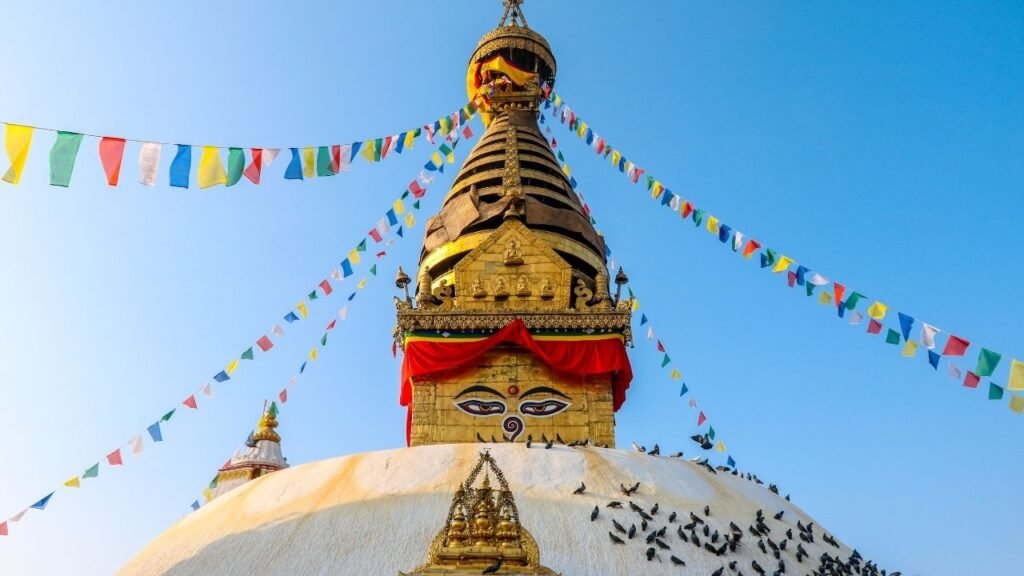
Prayer wheels are found throughout the complex, particularly along the routes used by pilgrims approaching and circumambulating the stupa. Devotees commonly walk clockwise around the stupa while turning the prayer wheels and making offerings. Smaller shrines and religious images are spread across the hill, including the Harati Temple, a Hindu-Buddhist sacred site associated with the goddess Harati, who is traditionally regarded as a protector of children.
The hill is also home to a large population of monkeys, which is why Swayambhunath is popularly known among visitors as the Monkey Temple. The nickname is particularly common in English-language tourism, while Swayambhunath remains the traditional and official name of the site. Visitors should avoid feeding the monkeys and should take care when carrying food around the complex.
The combination of its ancient Buddhist stupa, Hindu and Buddhist shrines, prayer wheels, hilltop setting, and views across Kathmandu makes Swayambhunath one of the valley’s most distinctive religious landmarks. It is also one of the clearest places to see how Buddhist and Hindu traditions have existed alongside each other within Kathmandu Valley’s sacred landscape.
Swayambhunath Temple and Stupa Facts
| Detail | Information |
| Location | Hill west of central Kathmandu |
| Primary Tradition | Buddhism |
| Site Type | Buddhist stupa complex |
| Religious Character | Buddhist with Hindu and Buddhist shrines |
| Famous Feature | Buddha eyes |
| Popular Name | Monkey Temple |
| Main Practices | Circumambulation, prayer and offerings |
| Major Feature | Views over Kathmandu Valley |
| UNESCO Status | Part of the Kathmandu Valley World Heritage property |
| Access | Open to visitors and pilgrims |
Swayambhunath’s importance therefore goes beyond its famous stupa. It is a living Buddhist pilgrimage complex that also preserves numerous Hindu and Buddhist shrines, making it an important example of Kathmandu Valley’s interconnected religious traditions.
Changu Narayan Temple
Changu Narayan is an ancient Hindu temple dedicated to Vishnu in his form as Narayan, located on a hill northeast of Bhaktapur. Its setting is different from the large urban temple complexes of Kathmandu, Patan, and Bhaktapur, as the temple sits within a traditional hilltop settlement surrounded by a more rural landscape. This gives Changu Narayan a quieter character while retaining considerable historical and religious importance.
The site’s history reaches back many centuries, and its most important historical evidence is a stone inscription dating to 464 CE, from the reign of Licchavi king Manadeva. The inscription is among the earliest known inscriptions in the Kathmandu Valley and provides valuable evidence about the region’s early political and religious history. For this reason, Changu Narayan is better described as one of the valley’s most historically important ancient Hindu temple sites rather than simply being labeled “the oldest temple.”
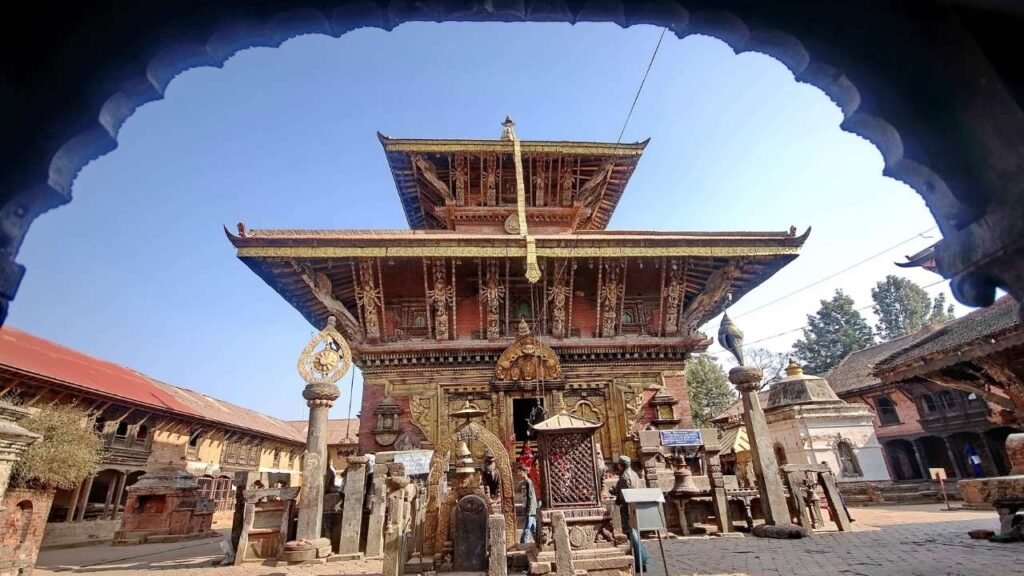
The main temple follows a two-tier pagoda design, with richly carved wooden struts, doors, and windows combined with stone sculptures and detailed metalwork. The surrounding complex contains numerous images associated with Vishnu, including representations of his incarnations and the mythical Garuda. These sculptures and architectural details demonstrate the long development of Nepal’s woodcarving, stone carving, and metalworking traditions.
Changu Narayan is one of the seven monument zones that together form the Kathmandu Valley UNESCO World Heritage property. Like many historic temples in Nepal, the present structure has undergone repairs and rebuilding over the centuries, so its importance should not be understood as a single unchanged building surviving from the Licchavi period. Instead, its significance comes from the ancient sacred tradition, early inscriptions, historic sculptures, and layers of craftsmanship preserved at the site.
The temple’s hilltop setting also makes it fundamentally different from the palace-centered complexes of the three historic cities. A visit to Changu Narayan combines ancient religious history, traditional Newar craftsmanship, and a historic settlement landscape, making it particularly valuable for understanding the earlier development of Kathmandu Valley’s sacred architecture.
Changu Narayan Temple Facts
| Detail | Information |
| Location | Hill northeast of Bhaktapur |
| Main Deity | Vishnu as Narayan |
| Religious Tradition | Hinduism, particularly Vaishnavism |
| Architecture | Two-tier pagoda |
| Historic Inscription | 464 CE, Licchavi period |
| King Associated with Inscription | Manadeva |
| Known For | Ancient inscription, Vishnu sculptures and craftsmanship |
| Main Materials | Brick, wood, stone, and metal |
| Setting | Hilltop traditional settlement |
| UNESCO Status | Part of the Kathmandu Valley World Heritage property |
Changu Narayan is therefore important not simply because of its age, but because it preserves some of the earliest surviving written and artistic evidence of Kathmandu Valley’s religious history within a living Hindu temple complex.
Taleju Temple
Taleju Temple is dedicated to Taleju Bhawani, a powerful goddess who became closely associated with the royal families of Kathmandu Valley. The goddess was regarded as a tutelary deity of the Malla kings, giving Taleju temples an unusual connection between religious worship, royal authority, and political power. This relationship explains why the temples were incorporated into the historic palace complexes of the valley.
Important Taleju temples are found in the historic cities of Kathmandu, Patan, and Bhaktapur, although their individual histories and present structures differ. The most prominent examples are associated with the former royal palace areas, including the Taleju Temple at Hanuman Dhoka in Kathmandu Durbar Square and the Taleju shrine within Bhaktapur’s historic palace complex. Their locations demonstrate how closely the goddess was connected with the Malla courts.
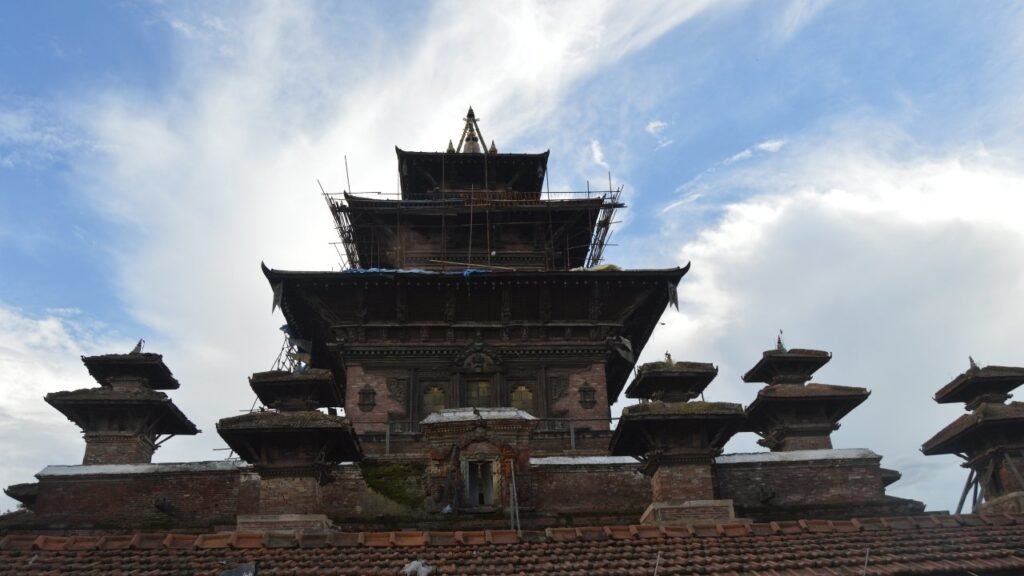
The Kathmandu Taleju Temple was built during the reign of King Mahendra Malla in the 16th century and is one of the most imposing structures within the former royal palace. Its multi-tiered pagoda architecture and elevated position reflect the importance given to Taleju by the Malla rulers. The goddess was not simply worshipped as a local deity; she was closely connected with royal rituals and the legitimacy of the ruling dynasty.
Unlike many temples that tourists can freely enter, Taleju has restricted access. The main temple in Kathmandu is generally closed to the public and is opened on particular religious occasions, especially during Dashain. These restrictions reflect the temple’s continuing religious function and should be respected by visitors rather than treated simply as a tourism limitation.
Taleju is therefore significant because it represents more than traditional Newar architecture. It shows how religion and kingship were intertwined in medieval Kathmandu Valley, while its restricted access demonstrates that some of the valley’s most historically important temples remain active sacred spaces rather than ordinary monuments.
Taleju Temple Facts
| Detail | Information |
| Main Deity | Taleju Bhawani |
| Religious Tradition | Hinduism, particularly Shakti worship |
| Royal Association | Malla kings |
| Major Locations | Kathmandu, Patan and Bhaktapur |
| Kathmandu Location | Hanuman Dhoka, Kathmandu Durbar Square |
| Architecture | Multi-tiered pagoda |
| Historical Role | Royal and state religious tradition |
| Major Festival | Dashain |
| Main Temple Access | Restricted |
| UNESCO Context | Located within historic monument zones of Kathmandu Valley |
Taleju’s importance ultimately lies in its connection between sacred worship, Newar architecture, and Malla royal power, making it one of the clearest examples of how religion shaped the political and architectural landscape of Kathmandu Valley.
Nyatapola Temple
Nyatapola Temple is one of the most recognizable landmarks in Bhaktapur, rising above Taumadhi Square in the historic city center. Built during the reign of King Bhupatindra Malla between 1701 and 1702, the temple is dedicated to the Tantric goddess Siddha Lakshmi. Its five-storey form, massive brick construction, and carefully proportioned vertical design make it one of the finest surviving examples of traditional Newar architecture in Nepal.
The temple’s name refers to its five-storey pagoda structure, with each level becoming progressively narrower toward the top. The long staircase leading to the entrance is guarded by pairs of monumental figures arranged in a symbolic hierarchy. The guardians include wrestlers, elephants, lions, griffins, and other powerful figures, with each successive pair representing greater strength and protection. Together, the staircase and guardians create a dramatic approach to the sacred upper levels.
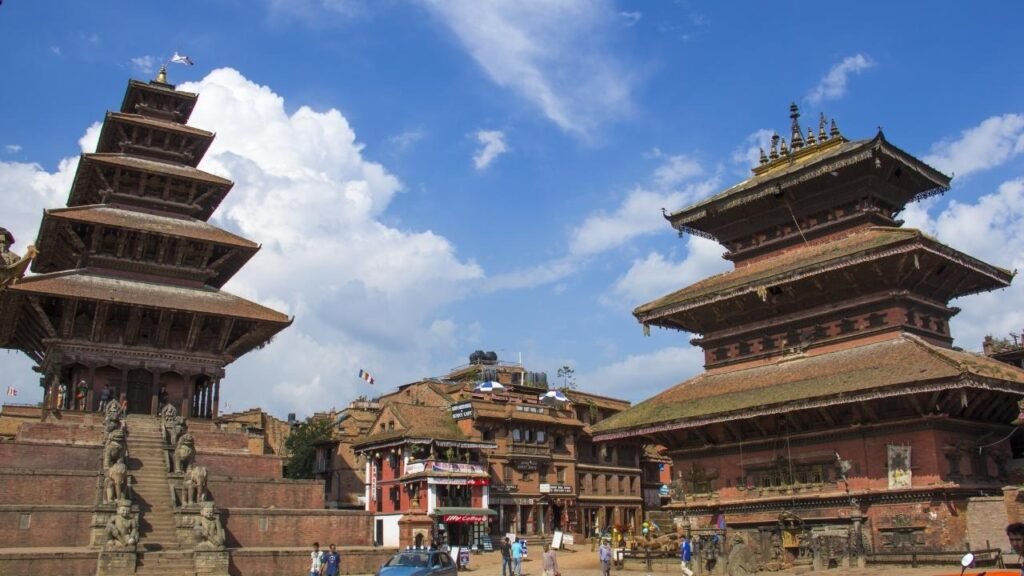
Nyatapola is also famous for its earthquake resilience. The temple survived the devastating 1934 earthquake, and although it suffered some damage during the 2015 earthquake, its principal structure remained standing. Its survival is often attributed to the massive brick walls, timber framework, strong foundations, and carefully balanced traditional construction. Restoration work has been carried out following earthquake damage, allowing the temple to continue functioning as an important landmark and religious site.
The temple’s importance goes beyond its height and durability. Its five-tiered roof system, brickwork, timber elements, monumental staircase, guardian sculptures, and relationship with Taumadhi Square demonstrate how Newar architects combined structural engineering, religious symbolism, and urban design. The building was designed to dominate its surroundings while remaining integrated into the historic square.
Nyatapola is therefore one of the best places in Nepal to understand the sophistication of Malla-period Newar architecture. It is not simply a tall temple; its proportions, construction techniques, sculpture, and symbolic layout represent an exceptionally accomplished architectural tradition.
Nyatapola Temple Facts
| Detail | Information |
| Location | Taumadhi Square, Bhaktapur |
| Main Deity | Siddha Lakshmi |
| Religious Tradition | Hindu Tantric tradition |
| Construction | 1701 to 1702 |
| Builder | King Bhupatindra Malla |
| Architecture | Five-storey pagoda |
| Main Feature | Monumental staircase and guardian figures |
| Major Materials | Brick and timber |
| Earthquake History | Survived major earthquakes, including 1933 and 2015 |
| UNESCO Context | Located within Bhaktapur Durbar Square monument zone |
Nyatapola’s significance comes from the way architecture, symbolism, engineering, and religious tradition come together in a single structure, making it one of the strongest surviving expressions of Newar architectural skill.
Krishna Mandir
Krishna Mandir stands at the heart of Patan Durbar Square in Lalitpur and is one of the most distinctive temples in Kathmandu Valley. Dedicated primarily to Lord Krishna, the temple was constructed during the reign of King Siddhi Narasimha Malla in 1637. Its position directly opposite the former royal palace also reflects the close relationship between Hindu worship and the Malla court.
Unlike the valley’s famous multi-tiered pagoda temples, Krishna Mandir was built in the shikhara style, with a vertically rising stone structure rather than multiple projecting wooden roofs. The temple is constructed primarily from stone, making it an important architectural contrast to the brick-and-timber pagodas that dominate much of Kathmandu Valley. Its three levels and carved stone details give the building a distinctly different appearance from temples such as Nyatapola and Kumbheshwar.
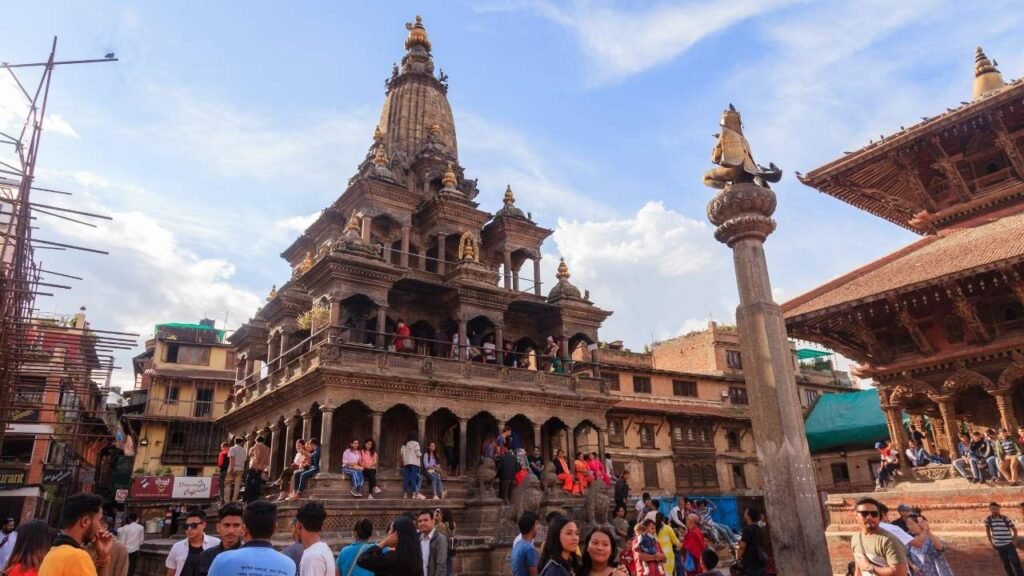
The stonework is particularly important because the temple’s exterior contains detailed carvings depicting scenes associated with the Mahabharata and Ramayana. These sculptures turn the temple into more than a place of worship; they also function as a visual record of Hindu religious stories and iconography. The combination of stone construction, sculptural detail, and shikhara form demonstrates the variety within the architectural traditions of the Kathmandu Valley.
Krishna Mandir becomes especially important during Krishna Janmashtami, the festival celebrating the birth of Lord Krishna. Large numbers of devotees gather at Patan Durbar Square for worship and religious observances, with the principal celebrations traditionally reaching their peak around midnight, when Krishna’s birth is commemorated.
Krishna Mandir is therefore particularly valuable for visitors interested in architecture because it provides a clear contrast with the valley’s better-known pagoda tradition. Its stone shikhara form, sculptural program, royal setting, and active Krishna worship demonstrate how diverse the architectural and religious traditions of the Malla period could be.
Krishna Mandir Facts
| Detail | Information |
| Location | Patan Durbar Square, Lalitpur |
| Main Deity | Lord Krishna |
| Religious Tradition | Hinduism, Vaishnavism |
| Construction | 1637 |
| Builder | King Siddhi Narasimha Malla |
| Architecture | Shikhara |
| Main Material | Stone |
| Known For | Mahabharata and Ramayana carvings |
| Major Festival | Krishna Janmashtami |
| UNESCO Context | Located within the Patan Durbar Square monument zone |
Krishna Mandir is one of the clearest examples of how stone architecture and shikhara design complement the predominantly pagoda-based architecture of Kathmandu Valley, making Patan’s historic center particularly rich for architectural study.
Kumbheshwar Temple
Kumbheshwar Temple is an important Shiva temple in Patan, located within the historic city of Lalitpur. The present temple dates to 1392, during the reign of King Jayasthiti Malla, and is traditionally regarded as one of the oldest surviving temples in Patan. Its five-storey pagoda makes it particularly prominent within the city’s historic religious landscape.
The temple’s main deity is Shiva, worshipped here as Kumbheshwar. Its five-tiered pagoda structure is one of the defining features of the complex, and the temple is accompanied by a sacred pond known as Kumbheshwar Kund. According to local religious tradition, the water in the pond is connected symbolically with the sacred lake of Gosainkunda, an important pilgrimage destination in the Langtang region.
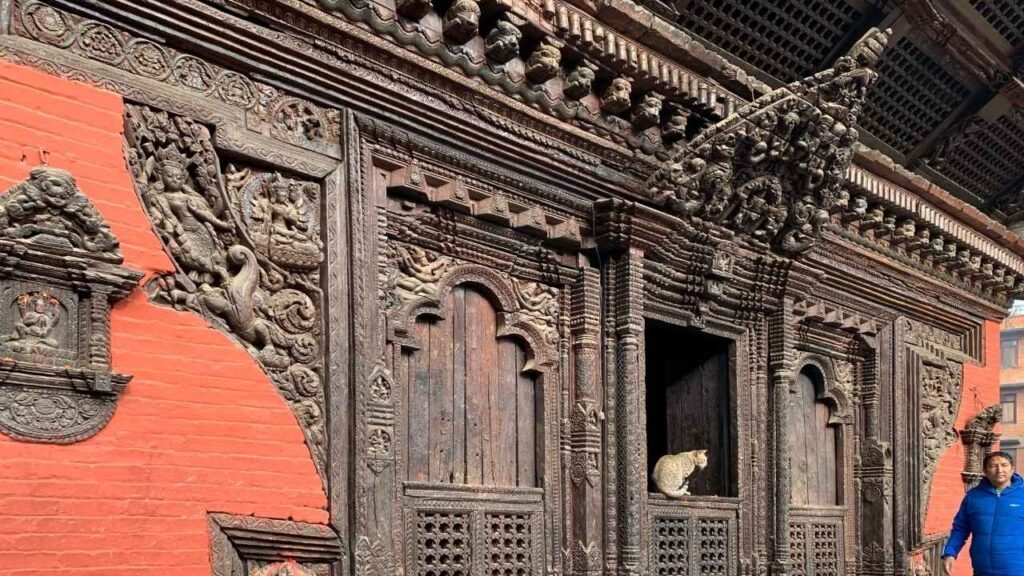
Kumbheshwar Kund becomes particularly significant during Janai Purnima, when Hindu devotees gather at the temple for ritual bathing and worship. During the festival, a Shiva lingam is placed in the pond, strengthening the religious connection between the temple, its sacred water, and the wider pilgrimage traditions associated with Shiva.
The temple also has an important place within Patan’s religious geography. Unlike a monument that is visited primarily for its architecture, Kumbheshwar continues to function as an active neighborhood and pilgrimage shrine, with worship and seasonal rituals remaining central to its identity. Its location near other important temples also makes this part of Patan particularly valuable for understanding the density of sacred sites within the historic city.
Kumbheshwar is therefore significant because it brings together Shiva worship, pagoda architecture, sacred water, and living Newar religious traditions. For visitors exploring Patan, it offers a different experience from the monumental Krishna Mandir in Durbar Square while demonstrating the same sophisticated architectural heritage.
Kumbheshwar Temple Facts
| Detail | Information |
| Location | Patan, Lalitpur |
| Main Deity | Shiva |
| Religious Tradition | Hinduism, Shaivism |
| Construction | 1392 |
| Architecture | Five-storey pagoda |
| Associated Sacred Site | Kumbheshwar Kund |
| Major Festival | Janai Purnima |
| Known For | Shiva worship and sacred pond |
| Historical Importance | One of the oldest surviving temples in Patan |
| UNESCO Context | Located within the historic Patan monument area |
Kumbheshwar’s importance lies in the fact that it remains a living religious center rather than simply a historic structure, with its temple, sacred water, festivals, and Shiva worship continuing to connect Patan’s present-day community with its medieval heritage.
Golden Temple (Hiranya Varna Mahavihar)
The Golden Temple, officially known as Hiranya Varna Mahavihar, is one of the most important Newar Buddhist monuments in Patan (Lalitpur). Unlike the large open temple squares of Kathmandu and Bhaktapur, the complex is organized around an enclosed courtyard monastery, or bahal, creating a more intimate religious environment. It belongs to the distinctive Newar Buddhist tradition that developed in the Kathmandu Valley over many centuries.
The monastery is traditionally associated with Newar Vajrayana Buddhism, and its central courtyard contains a richly decorated shrine surrounded by smaller religious structures, images, and ritual spaces. The extensive use of gilded metal gives the complex its popular name, while detailed repoussé work, wood carving, statues, and other metal ornaments demonstrate the exceptional craftsmanship for which Patan is renowned.
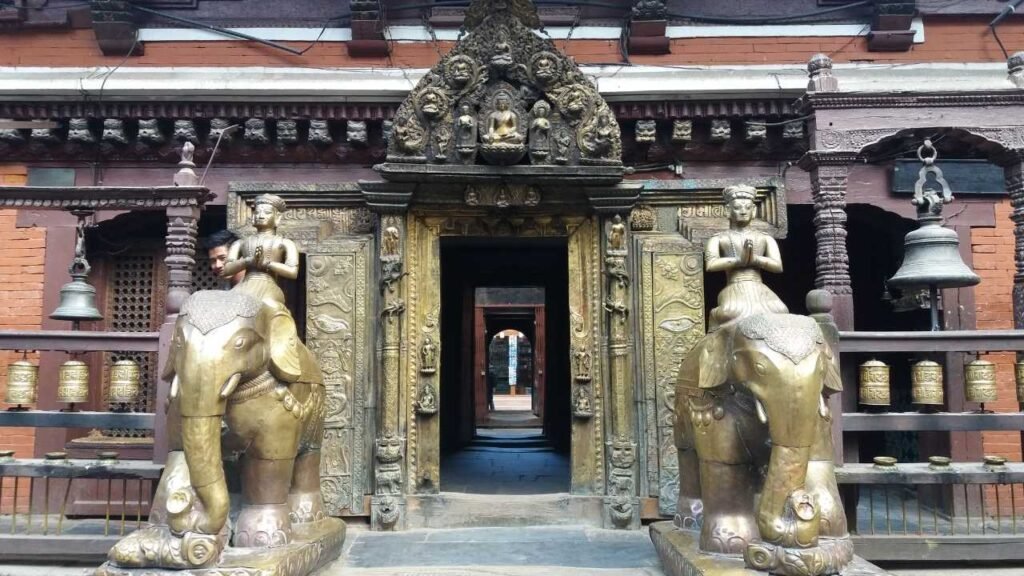
The bahal structure is particularly important for understanding Newar Buddhist architecture. These monasteries historically combined religious, residential, communal, and educational functions, with the courtyard serving as the central organizing space. Rather than being simply a temple building, Hiranya Varna Mahavihar represents a complete Buddhist monastic environment in which shrines and devotional spaces are integrated into the surrounding architecture.
The relationship between monastery and temple traditions is also important. Newar Buddhist bahals developed their own architectural and ritual traditions while sharing the wider artistic environment of Kathmandu Valley. The result is a complex where Buddhist images, ritual objects, courtyards, timber carving, and metalwork come together in a distinctly Newar form rather than following the architecture of Tibetan monasteries.
For visitors, the Golden Temple provides an essential counterpoint to the valley’s major Hindu temples. Its enclosed courtyard, gilded decoration, Buddhist imagery, and continuing religious use demonstrate that Patan’s heritage is deeply shaped by both Hindu and Buddhist traditions, not one tradition alone.
Golden Temple Facts
| Detail | Information |
| Traditional Name | Hiranya Varna Mahavihar |
| Popular Name | Golden Temple |
| Location | Patan, Lalitpur |
| Religious Tradition | Newar Vajrayana Buddhism |
| Site Type | Buddhist monastery and shrine complex |
| Architecture | Bahal courtyard architecture |
| Known For | Gilded metalwork and detailed craftsmanship |
| Main Materials | Gilded metal, wood, brick, and stone |
| Historic Tradition | Newar Buddhist monastic tradition |
| Main Feature | Enclosed central courtyard |
The Golden Temple is therefore more than a beautifully decorated Buddhist shrine. It is an example of Newar Buddhist bahal architecture, where monastic life, temple worship, craftsmanship, and community traditions developed together within Patan’s historic urban fabric.
Banglamukhi Temple
Banglamukhi Temple, also spelled Bagalamukhi, is an important Hindu temple in Patan dedicated to the goddess Banglamukhi, one of the powerful manifestations of the divine feminine in Hindu tradition. The temple is regarded as an important pilgrimage site in the city and continues to attract devotees who come to make offerings and seek the goddess’s blessings.
The shrine forms part of a wider temple complex containing additional shrines and sacred spaces, rather than functioning as an isolated building. This is characteristic of Kathmandu Valley’s religious architecture, where a principal deity is often surrounded by smaller temples, images, courtyards, and ritual spaces that have developed around the central shrine over generations.
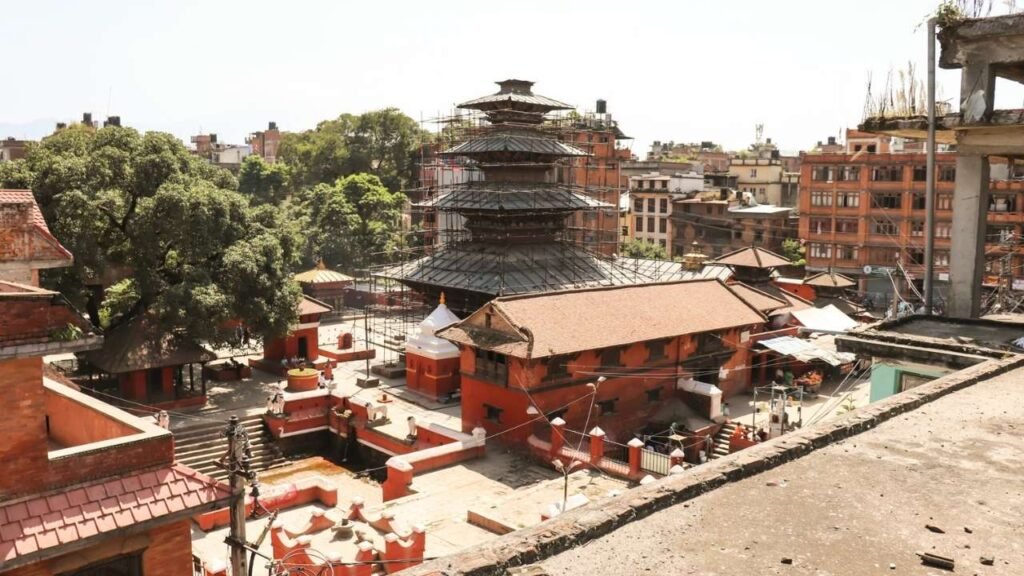
Banglamukhi has a particularly strong connection with local pilgrimage and devotional practice. The temple is especially busy on Thursdays, when devotees traditionally gather in large numbers, and it also attracts increased activity during major Hindu festivals and periods associated with goddess worship. These regular gatherings give the temple a distinctly active local character that differs from heritage sites visited mainly for their architecture.
The temple’s importance is also connected with the wider religious landscape of Patan. Nearby temples and shrines create a dense network of sacred sites in which different forms of Hindu worship coexist within the historic city. Visiting Banglamukhi therefore provides an opportunity to see how religious activity continues within the same urban environment that contains Patan’s famous royal monuments and Newar Buddhist monasteries.
For travelers, Banglamukhi is best understood as a living pilgrimage temple rather than simply another historic monument. Its continuing worship, surrounding shrines, regular devotees, and festival traditions show how Patan’s religious heritage remains part of everyday community life.
Banglamukhi Temple Facts
| Detail | Information |
| Location | Patan, Lalitpur |
| Main Deity | Goddess Banglamukhi |
| Religious Tradition | Hinduism, Shaktism |
| Site Type | Hindu temple complex |
| Known For | Goddess worship and local pilgrimage |
| Main Features | Principal shrine and surrounding shrines |
| Busiest Regular Day | Thursday |
| Major Activity | Offerings, worship and pilgrimage |
| Setting | Historic urban Patan |
| Religious Character | Active local shrine |
Banglamukhi is valuable because it shows the living side of Patan’s religious heritage, a temple where local devotees, rituals, offerings, and pilgrimage remain central rather than being secondary to the site’s historical architecture.
Dakshinkali Temple
Dakshinkali Temple lies on the southern edge of Kathmandu Valley, roughly 20 to 22 km from central Kathmandu, in a forested setting well outside the dense historic neighborhoods of Kathmandu, Patan, and Bhaktapur. The temple is dedicated to Kali, one of the most powerful forms of the Hindu goddess, and is one of Nepal’s major destinations for Shakti worship and pilgrimage.
The temple is particularly important to devotees who come to make offerings and seek the goddess’s protection and blessings. Tuesdays and Saturdays are traditionally the busiest regular days, while major festivals, especially Dashain, can bring very large crowds. The temple’s location among wooded hills gives it a very different atmosphere from the monumental urban temple complexes found inside Kathmandu’s historic core.
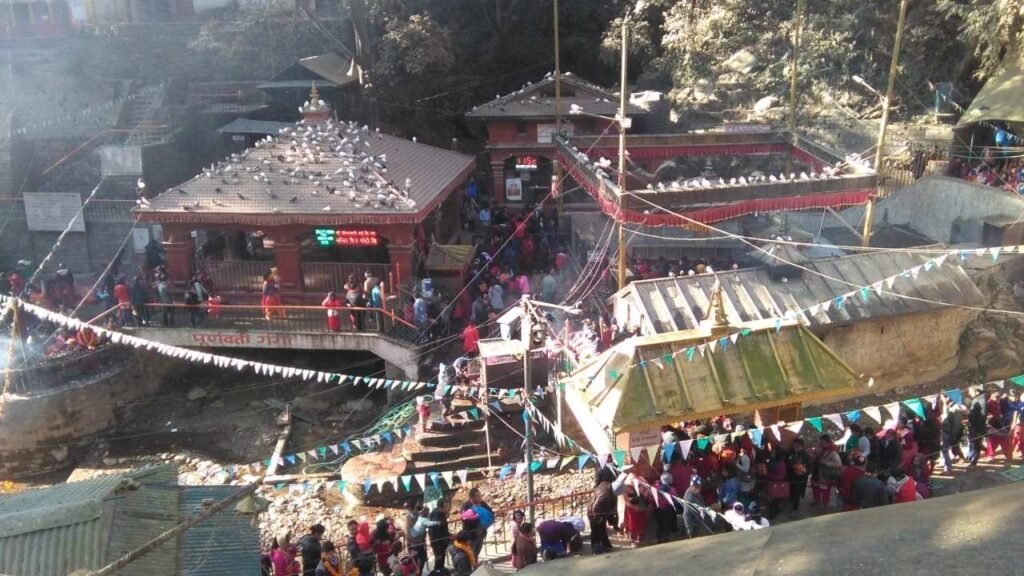
Dakshinkali is also well known for the practice of animal sacrifice, which is performed by some devotees as part of particular religious offerings. This practice should be understood within the specific traditions of the shrine rather than treated as a spectacle for visitors. Travelers who do not wish to witness such rituals should be aware that the busiest worship periods are also when sacrifice-related activity is most visible.
The temple complex contains the principal Kali shrine along with additional sacred spaces and shrines around it. Its importance comes primarily from its continuing religious function rather than from elaborate palace architecture or a monumental historic square. The forested landscape, pilgrimage activity, offerings, and festivals all contribute to the character of the site.
Dakshinkali therefore offers a very different experience from Pashupatinath, Swayambhunath, or the temples of Patan and Bhaktapur. While those sites are deeply connected with historic urban centers, Dakshinkali demonstrates how sacred landscapes outside the city have also played an important role in Kathmandu Valley’s religious life.
Dakshinkali Temple Facts
| Detail | Information |
| Location | Southern edge of Kathmandu Valley |
| Distance from Kathmandu | Approximately 20 to 22 km |
| Main Deity | Goddess Kali |
| Religious Tradition | Hinduism, Shaktism |
| Site Type | Shakti pilgrimage temple |
| Busiest Regular Days | Tuesdays and Saturdays |
| Major Festival | Dashain |
| Known Ritual | Animal sacrifice by some devotees |
| Setting | Forested southern valley |
| Main Character | Active pilgrimage and devotional site |
Dakshinkali’s significance lies in its combination of goddess worship, pilgrimage, ritual practice, and sacred landscape. Its setting outside the historic city centers also makes it an important reminder that Kathmandu Valley’s religious geography extends far beyond its famous Durbar Squares and urban temples.
Temple Etiquette in Nepal
Visiting Kathmandu Valley’s temples is different from visiting ordinary historic monuments because many of these sites are still active places of worship. A few simple rules will help you avoid unintentionally disturbing religious activities or disrespecting local customs.
- Dress Modestly: Cover your shoulders and knees, particularly when visiting Hindu temples and active pilgrimage sites. Avoid beachwear or revealing clothing.
- Remove Your Shoes When Required: Many temples, shrines, and monastery areas require visitors to remove their shoes before entering. Look for signs or follow what other visitors are doing.
- Ask Before Taking Photographs: Photography may be restricted inside temples or during particular rituals. Always ask before photographing priests, devotees, monks, or people performing religious ceremonies.
- Do Not Touch Sacred Objects: Avoid touching statues, offerings, prayer objects, lingams, or other religious items unless you are specifically invited to do so.
- Walk Clockwise Around Stupas: At Buddhist stupas such as Swayambhunath and Boudhanath, pilgrims traditionally circumambulate clockwise. Follow the established direction and avoid walking against the flow of worshippers.
- Respect Restricted Areas: Some temples have areas that are closed to non-Hindus, non-devotees, or the general public. Pashupatinath’s main temple, for example, is restricted to Hindus, while Taleju temples have their own access restrictions.
- Do Not Interrupt Worship: Give devotees space, keep your voice low around active shrines, and never step into a ritual simply to get a better photograph.
- Be Particularly Respectful Around Cremation Ceremonies: At Pashupatinath, cremations take place along the Bagmati River. Keep a respectful distance, avoid intrusive photography, and remember that these are private religious and family ceremonies taking place in a public sacred space.
- Follow Local Photography Rules: Restrictions can vary from one temple to another. If a sign says photography is prohibited, follow it even if other visitors appear to be taking pictures.
The basic principle is simple: treat Kathmandu Valley’s temples as living religious spaces, not just sightseeing attractions. If you observe what worshippers are doing, follow posted instructions, and give religious ceremonies the same privacy and respect you would expect for your own traditions, visiting the temples becomes much more meaningful.