
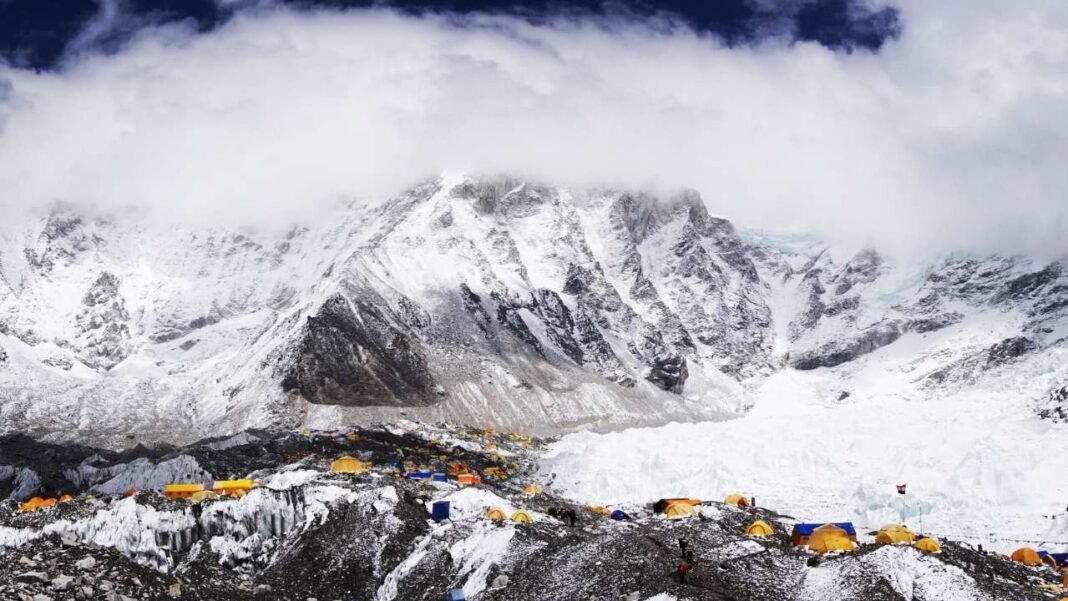

The Everest Base Camp trek typically takes 12 to 14 days, making it one of the world’s most achievable high-altitude adventures. However, there’s no single answer to how long the trek takes because your total time on the trail depends on far more than just the distance. Your itinerary, acclimatization schedule, weather conditions, fitness level, walking pace, and even your choice of return route all influence the overall duration.
While the round-trip distance is roughly 130 kilometers (81 miles), you won’t simply hike from point A to point B. As you climb above 3,000 meters (9,843 ft), your body needs time to adapt to the thinner air. That is why most standard itineraries include two acclimatization days in places like Namche Bazaar and Dingboche. Skipping these rest days may shorten your itinerary on paper, but it significantly increases your risk of altitude sickness and reduces your chances of successfully reaching Everest Base Camp.
Other factors can also extend your trip. Flights to Lukla are frequently delayed by poor mountain weather; many trekkers add side trips such as Kala Patthar or Gokyo Lakes, and some choose to return by helicopter instead of trekking back. Even experienced hikers cannot simply “walk faster” to avoid altitude, as your body adapts at its own pace.
In this guide, you will learn how long the Everest Base Camp trek really takes, what a typical day-by-day itinerary looks like, how many hours you will walk each day, which itinerary is best for your experience level, and the key factors that can shorten or unexpectedly lengthen your adventure.
How Long Does the Everest Base Camp Trek Take?
For most trekkers, the Everest Base Camp (EBC) trek takes 12 to 14 days, including the return journey to Lukla. This is considered the standard itinerary because it provides enough time for proper acclimatization while maintaining a comfortable walking pace.
If you’re short on time, you will find 10 to 11-day itineraries, but these are much more demanding. They usually involve longer hiking days, fewer rest days, or a helicopter return from Gorak Shep or Everest Base Camp. While experienced trekkers sometimes complete the route this quickly, faster is not always better at high altitude.
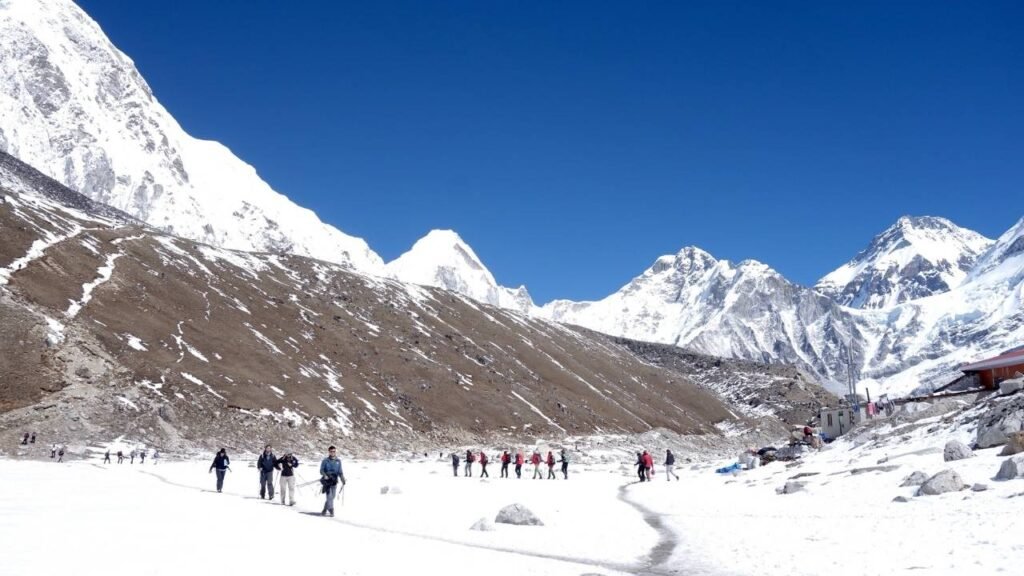
On the other hand, 15 to 16-day itineraries are ideal if you prefer shorter walking days, extra acclimatization, or want to explore side trips like Kala Patthar at sunrise without feeling rushed. Luxury trekking packages often follow a similar timeline, offering more comfortable lodges, flexible schedules, and occasionally helicopter transfers to reduce travel time.
Whether you trek independently or with a guide usually does not change the overall duration significantly. Most guided groups follow proven itineraries designed to maximize your chances of reaching Base Camp safely, while independent trekkers may adjust their pace depending on weather, fitness, and personal preference.
| Trek Style | Typical Duration | Best For |
| Standard itinerary | 12 to 14 days | Most trekkers |
| Fast itinerary | 10 to 11 days | Experienced hikers with limited time |
| Comfortable itinerary | 15 to 16 days | Beginners, photographers, relaxed pace |
| Luxury trek | 12 to 16 days | Comfort-focused travelers |
| Trek + Helicopter return | 8 to 10 days | Travelers wanting to save time on the return |
The reason there is no single answer is that several factors can add to, or occasionally reduce, your total trekking time. The biggest is acclimatization, as your body needs time to adjust to the lower oxygen levels above 3,000 meters. Weather is another major factor, with Lukla flights frequently delayed by fog, wind, or poor visibility, sometimes extending your trip by a day or more.
Your itinerary can also change if you include side trips like Kala Patthar or Gokyo Lakes, take additional rest days, or choose a slower walking pace to improve comfort. Fitness helps you recover better after long hiking days, but it does not eliminate the need for acclimatization. Conversely, returning by helicopter can shorten the overall trip by several days, making it a popular option for travelers with tight schedules.
Typical 12-Day Everest Base Camp Itinerary
A standard 12-day Everest Base Camp itinerary is designed to balance daily hiking distances with proper acclimatization. While the route covers around 130 km (81 miles) round trip, altitude, not distance, is what determines how challenging each day feels.
| Day | Route | Walking Time | Distance | Overnight Altitude | What Makes It Challenging |
| 01 | Lukla → Phakding | 3 to 4 hours | 8 km | 2,610 m | First day on uneven trails |
| 02 | Phakding → Namche Bazaar | 6 to 7 hours | 10 km | 3,440 m | Steep climb after Hillary Suspension Bridge |
| 03 | Acclimatization at Namche | 3 to 4 hours (optional hike) | 4 to 6 km | 3,440 m | High-altitude adjustment hike |
| 04 | Namche → Tengboche | 5 to 6 hours | 10 km | 3,860 m | Long uphill finish to Tengboche Monastery |
| 05 | Tengboche → Dingboche | 5 to 6 hours | 11 km | 4,410 m | Thinner air begins to slow your pace |
| 06 | Acclimatization at Dingboche | 3 to 5 hours (optional hike) | 5 to 7 km | 4,410 m | Steep acclimatization climb above 5,000 m |
| 07 | Dingboche → Lobuche | 5 to 6 hours | 8 km | 4,940 m | Significant altitude gain and rocky terrain |
| 08 | Lobuche → Gorak Shep → Everest Base Camp | 7 to 8 hours | 15 km | 5,364 m | Highest altitude and longest trekking day |
| 09 | Gorak Shep → Kala Patthar → Pheriche | 7 to 8 hours | 13 km | 4,240 m | Pre-dawn climb followed by a long descent |
| 10 | Pheriche → Namche Bazaar | 6 to 7 hours | 19 km | 3,440 m | Long distance despite descending |
| 11 | Namche → Lukla | 6 to 7 hours | 18 km | 2,860 m | Final climb before reaching Lukla |
| 12 | Fly from Lukla to Kathmandu | 35 minutes | 138 km | 1,400 m | Weather can affect flight schedules |
Although every day has its challenges, a few stages consistently feel tougher than the numbers suggest. Namche to Tengboche includes a demanding final ascent after hours of rolling terrain, catching many trekkers off guard. Dingboche to Lobuche is relatively short but feels harder because you’re approaching 5,000 meters, where every uphill step requires more effort.
The toughest day for most people is Lobuche to Gorak Shep and Everest Base Camp. Despite covering only around 15 kilometers, you are trekking above 5,000 meters on rocky glacial terrain, where even a slow pace can feel exhausting. The following morning, the Kala Patthar climb is physically demanding not because of its distance, but because it begins before sunrise in freezing temperatures at extreme altitude.
These stages highlight an important lesson of the Everest Base Camp trek: once you are high in the Himalayas, altitude becomes a much bigger challenge than distance.
What Makes the Everest Base Camp Trek Take Longer?
The biggest reason the Everest Base Camp trek takes nearly two weeks is not the distance, it is the altitude. As you climb higher, your body needs time to adapt to the thinner air, making acclimatization days essential rather than optional. Most standard itineraries include two nights in Namche Bazaar (3,440 m) and another two nights in Dingboche (4,410 m).
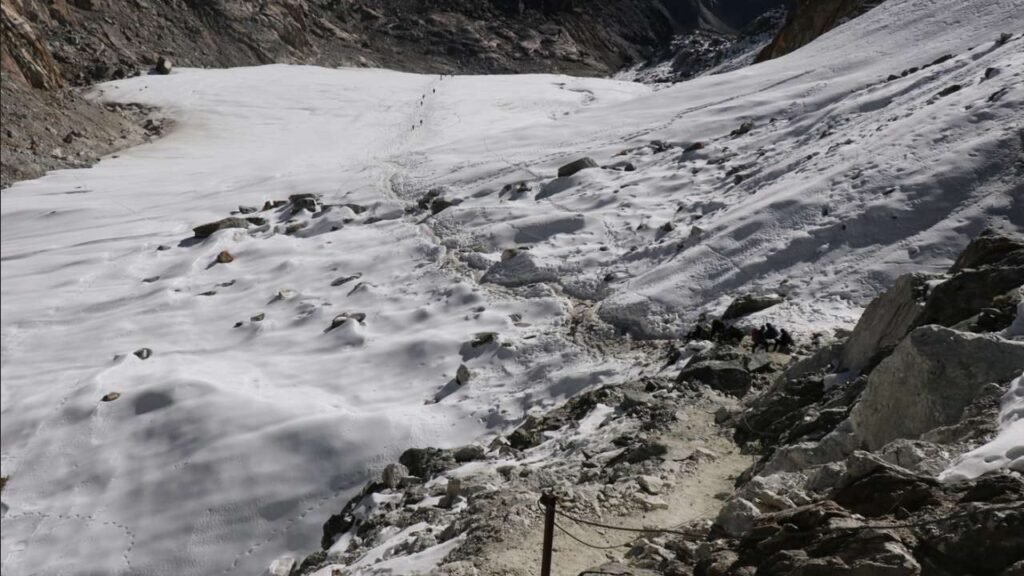
These extra days allow your body to produce more red blood cells, reducing the risk of altitude sickness before you continue climbing.
| Stop | Altitude | Why You Stay |
| Lukla | 2,860 m | Starting point |
| Namche Bazaar | 3,440 m | First acclimatization stop |
| Dingboche | 4,410 m | Second acclimatization stop |
| Lobuche | 4,410 m | Final overnight before Base Camp |
| Gorak Shep | 5,164 m | Highest overnight stay |
Many first-time trekkers assume that being fit means they can skip acclimatization, but altitude does not work that way. A marathon runner and a beginner hiker are both vulnerable to altitude sickness. Fitness can help you recover faster after long hiking days, but it cannot speed up your body’s adaptation to lower oxygen levels. In fact, adding proper acclimatization or an extra rest day often increases your chances of successfully reaching Everest Base Camp.
Weather is another reason your itinerary may become longer than planned. Flights to Lukla are highly dependent on visibility, and fog, strong winds, or snowfall can delay departures for hours, or even several days during busy trekking seasons. That is why experienced trekkers recommend building 2–3 buffer days into their Nepal itinerary. Those extra days provide flexibility if flights are cancelled, the weather turns, or you simply need more time to recover, reducing the risk of missing your international flight home.
Which Everest Base Camp Itinerary Is Right for You?
Not every Everest Base Camp itinerary is built the same. While the destination remains unchanged, the number of trekking days directly affects your daily walking hours, acclimatization time, comfort, and ultimately your chances of reaching Base Camp safely.
| Itinerary | Avg. Walking Hours/Day | Acclimatization | Difficulty | Best For | Recommended Experience |
| 10 Days | 7 to 9 hours | Limited | Very High | Travelers with very limited time | Experienced trekkers |
| 12 Days | 5 to 7 hours | Standard | Moderate–High | Most trekkers | Average fitness |
| 14 Days | 4 to 6 hours | Excellent | Moderate | First-time trekkers, photographers | Beginners |
| 16 Days | 4 to 5 hours | Excellent + Extra Flexibility | Moderate | Relaxed travelers and older hikers | All experience levels |
The 12-day itinerary is the most popular because it balances trekking time with proper acclimatization. If it is your first Himalayan trek, however, a 14-day itinerary gives you shorter hiking days and more time to adjust to the altitude, improving both comfort and your likelihood of completing the trek. By contrast, 10-day itineraries compress the schedule with longer days and fewer recovery opportunities, making them suitable only for experienced trekkers who understand the risks of high-altitude travel.
Although it is possible to reach Everest Base Camp faster, altitude, not fitness, is the biggest limiting factor. Skipping acclimatization days or pushing beyond the recommended ascent rate significantly increases the risk of altitude sickness, one of the main reasons trekkers abandon the route before reaching Base Camp. Saving two days on your itinerary simply is not worth turning around halfway through the trek.
If you are short on time but still want a safer itinerary, consider trekking up and returning by helicopter. This option typically reduces the trip to 8–10 days because you avoid the three to four days of hiking back to Lukla. The trade-off is cost, as helicopter returns can add several hundred dollars, or more, to your budget, depending on whether you book a shared or private flight.
It is a popular choice for travelers with limited vacation time, those who want to reduce the physical strain of the descent, or photographers who prefer spending more time around Everest Base Camp instead of retracing the same trail.
How Many Hours Do You Walk Each Day?
On a standard Everest Base Camp itinerary, you will typically walk 5 to 7 hours per day, although the actual time varies depending on the terrain, altitude, and your pace. Early in the trek, the trails are lower and easier, allowing you to maintain a steady rhythm. As you climb above 4,000 meters, however, thinner air slows even experienced hikers, so shorter distances often take longer to complete.
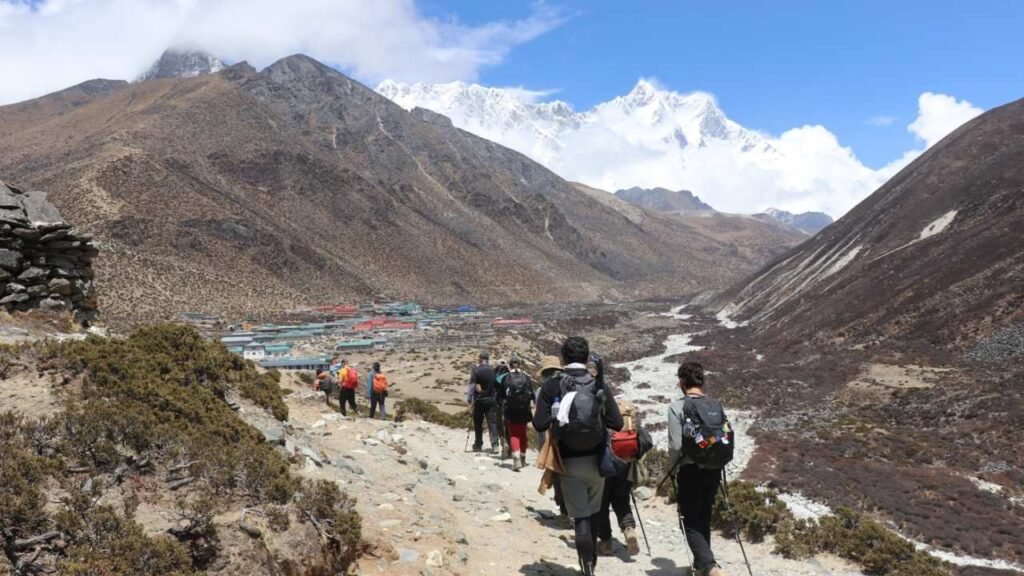
Most trekking days begin after breakfast around 7:30–8:00 AM, with a 1-hour lunch break at a tea house before continuing to the next village. Guides also schedule short rest stops every hour or so to stay hydrated and avoid overexertion. While downhill sections are generally faster, steep descents can still be tiring on your knees, especially during the return journey.
| Trek Day | Average Walking Time |
| Shortest hiking days | 3 to 4 hours |
| Typical trekking days | 5 to 7 hours |
| Longest days (Base Camp & Kala Patthar) | 7 to 8 hours |
| Acclimatization hikes | 3 to 5 hours |
Over the entire trek, you will cover approximately 65 km (40 miles) from Lukla to Everest Base Camp, or around 130 km (81 miles) for the full round trip. Most trekkers spend 55–65 hours walking over 10 trekking days, averaging 10–15 kilometers per day depending on the itinerary.
Compared to other popular Nepal treks, Everest Base Camp sits in the middle in terms of distance, but its high altitude makes it considerably more demanding.
| Trek | Approx. Round-Trip Distance | Typical Duration |
| Everest Base Camp | 130 km | 12 to 14 days |
| Annapurna Base Camp | 115 km | 7 to 11 days |
| Langtang Valley | 77 km | 7 to 10 days |
| Annapurna Circuit | 160–230 km | 14 to 20 days |
| Manaslu Circuit | 180 km | 14 to 18 days |
The Annapurna Circuit distance varies depending on where you start, finish, and whether you use road transport. These comparisons show that Everest Base Camp is not the longest trek in Nepal. What makes it challenging is the sustained time spent above 4,000 meters, where altitude, not distance, becomes the biggest obstacle.
So, How Long Should You Plan for the Everest Base Camp Trek?
Although the Everest Base Camp trek typically takes 12–14 days, it rarely feels that straightforward. The first few days often fly by, but once you climb above 4,000 meters, your pace naturally slows as the altitude begins to take over. The final stretch to Base Camp can feel much longer than the distance suggests, while the descent back to Lukla is usually quicker thanks to lower altitude and easier breathing.
| Traveler | Recommended Duration |
| First-time trekker | 14 days |
| Average fitness | 12–14 days |
| Experienced hike | 12 days |
| Photographer | 15–16 days |
| Luxury trekker | 12–14 days |
| Time-limited traveler | Trek up + helicopter return |
For most people, a 14-day itinerary is the safest and most enjoyable choice, giving you enough time to acclimatize without rushing. If you are reasonably fit and have some hiking experience, 12 days is the standard option. Photographers and those who prefer a relaxed pace will appreciate 15–16 days, while travelers with limited vacation time can save several days by trekking up and returning by helicopter.
In the end, the best itinerary is not the shortest one; it is the one that gives you the highest chance of reaching Everest Base Camp safely while enjoying every step of the journey.