

For most travelers, a Nepal SIM is one of the first practical purchases worth making after arrival. A local connection gives you mobile data for Google Maps, ride and transport arrangements, hotel communication, online bookings, messaging, weather checks, and emergency contact without depending entirely on Wi-Fi.
Nepal has two nationwide mobile network operators: Nepal Telecom (NTC) and Ncell. Both provide mobile services across the country, although their relative coverage varies by location, an important consideration if you are traveling beyond Kathmandu and Pokhara or heading into the Himalayas.
For foreign visitors, Ncell currently has dedicated tourist SIM and eSIM plans, including 7-, 14-, and 28-day options. Its current TouristPro plans are priced at NPR 595, NPR 995, and NPR 1,995 respectively, with unlimited data and all-network voice subject to the applicable fair-use policy. Tourist SIMs can be obtained at Tribhuvan International Airport, Ncell centres, and authorized retailers, while the tourist eSIM can also be purchased online.
Using your home-country SIM through international roaming can be convenient, but the cost depends entirely on your home operator’s Nepal roaming rates. Ncell itself notes that roaming charges are determined by the traveler’s home carrier, so you should check your roaming package before relying on it.
The choice therefore comes down to more than simply finding the cheapest SIM. Ncell can be particularly convenient for tourists because of its dedicated tourist SIM/eSIM products, while Nepal Telecom is an important option to consider when your itinerary includes rural areas and trekking routes. Coverage can become considerably less consistent as you move away from populated areas and deeper into the mountains.
This guide compares Nepal Telecom and Ncell, current SIM and data prices, tourist SIMs, eSIM options, registration requirements, activation, mobile coverage, trekking connectivity, recharge methods, and practical data usage so you can choose the connection that actually fits your Nepal itinerary.
Nepal SIM Card at a Glance
Nepal has two established nationwide GSM mobile operators: Nepal Telecom (NTC) and Ncell. Both offer prepaid mobile services and 4G connectivity, while the availability of eSIM depends on the operator and the type of service. For foreign visitors, the most important distinction is that Ncell currently offers dedicated tourist SIM and tourist eSIM plans, whereas Nepal Telecom’s eSIM process is currently more restrictive and is not presented by NTC as a general tourist eSIM product.
Nepal SIM Card Quick Facts
| Category | Current Information |
| Main Mobile Operators | Nepal Telecom (NTC) and Ncell |
| SIM Types | Physical SIM cards; eSIM is available, including a dedicated tourist eSIM from Ncell |
| ID Required | Foreign travelers should present their original passport for SIM registration and activation |
| Registration | Required; mobile subscribers must be registered with identification documents |
| Typical SIM Cost | Varies by operator and package. Ncell’s current tourist plans start at NPR 595, while standard SIM/package pricing varies |
| Tourist SIM Availability | Yes. Ncell offers dedicated 7-, 14-, and 28-day TouristPro SIM/eSIM plans |
| 4G Availability | 4G is widely available in Nepal, including major cities and increasingly across rural and local-government areas; coverage is not uniform in remote mountain terrain |
| 5G Availability | Not yet commercially available nationwide as of August 2026. Nepal is preparing for commercial 5G, with spectrum allocation and rollout plans still developing |
| Best Network for Coverage | Nepal Telecom generally has the stronger choice for broad geographic and rural coverage, particularly relevant to trekkers; actual coverage varies by route |
| Best Network for Travelers | Ncell is particularly convenient for tourists because of its dedicated tourist SIM/eSIM products, while Nepal Telecom can be the stronger choice when extensive rural or trekking coverage is the priority |
Ncell’s current TouristPro range is especially straightforward for short-term visitors: the 7-day Sprinter costs NPR 595, the 14-day Explorer NPR 995, and the 28-day Voyager NPR 1,995. All three include unlimited data and all-network voice, although Ncell’s fair-use policy applies. Ncell says tourist SIMs can be obtained at Tribhuvan International Airport, Ncell centres, and authorized retailers, while tourist eSIMs are available online.
For registration, Nepal Telecom’s terms require individuals to provide an accepted identification document such as a passport, and Ncell specifically instructs tourists to bring their original passport to register and activate a tourist SIM.
What About 4G and 5G?
4G is currently the practical mobile-data standard for travelers in Nepal. Ncell describes its modern network as 4G and has been moving away from 3G, while Nepal Telecom also operates a 4G LTE network. Coverage is strongest in populated areas and becomes less predictable in remote valleys, high-altitude terrain, and between settlements.
5G should not yet be treated as a reason to choose one Nepal SIM over another. As of August 2026, Nepal is still preparing for commercial 5G deployment. The Nepal Telecommunications Authority has been preparing spectrum allocation, while Nepal Telecom has stated its intention to launch 5G in major cities once the required spectrum is available. Ncell has also been seeking approval and frequencies for 5G. In other words, travelers should currently plan around 4G availability rather than assume that a 5G phone will receive 5G service in Nepal.
One important correction to the usual “best SIM” advice: there is no single winner for every itinerary. If you are mainly visiting Kathmandu, Pokhara, Chitwan, or other populated destinations, Ncell’s tourist products make it an exceptionally convenient choice.
If your trip involves trekking or extended travel through rural Nepal, network coverage becomes more important than the convenience of a tourist package, so Nepal Telecom deserves serious consideration. The detailed NTC-vs-Ncell comparison later in this guide will break that down by destination and use case.
Which SIM Card Is Best in Nepal?
If you are choosing between the two major mobile networks in Nepal, the decision is essentially Nepal Telecom (NTC) vs Ncell. Both provide 4G service, prepaid data packages, voice services, and SIM registration for travelers. The difference becomes more noticeable when you consider where you are traveling, how much data you need, and whether you are heading into rural or mountainous areas.
There is no universal winner. Ncell is particularly convenient for international visitors because it has dedicated tourist SIM and eSIM products, while Nepal Telecom has a strong advantage when broad geographic coverage and trekking connectivity are the priority.
Nepal Telecom (NTC)
Nepal Telecom is Nepal’s state-owned telecommunications operator and has one of the country’s most extensive mobile networks. For travelers, its biggest advantage is the breadth of its 4G footprint.
- Network Coverage
Nepal Telecom currently states that its 4G/LTE network reaches all 77 districts and 741 of Nepal’s 753 local bodies. That does not mean you will have a continuous signal everywhere within those districts or local bodies; mountain terrain, valleys, forests, and distance from cell sites can still create dead zones, but it demonstrates the scale of the network.
This extensive geographic footprint makes NTC particularly relevant if your itinerary extends beyond the major tourist cities. Kathmandu and Pokhara are not the only places where the network matters; NTC has invested in coverage across rural municipalities and major trekking corridors.
- 4G Availability
NTC operates 4G/LTE on 800 MHz (Band 20) and 1800 MHz (Band 3). Its 4G service is available to both prepaid and postpaid customers. Travelers should therefore check that an imported phone supports these LTE bands for the best compatibility. For practical travel purposes, 4G, not 5G, is what you should plan around in Nepal. Even when a destination has excellent mobile service, the actual experience can vary according to terrain, congestion, weather, and the location of the nearest cell site.
- Coverage Outside Major Cities
This is where NTC becomes particularly attractive. NTC’s published coverage extends well beyond Kathmandu and Pokhara into smaller municipalities and rural areas. Its network documentation also identifies coverage and serving sites along a number of popular trekking routes. Its current corporate material lists 73 serving sites on popular trekking routes, including routes in the Everest region, Annapurna, Manaslu, Mustang, Mardi Himal, Kanchenjunga and other trekking areas.
That does not mean continuous mobile service throughout an entire trek. A trekking route can pass through several hours of terrain with no signal before reaching a village or cell site. The important distinction is that NTC has a substantial infrastructure presence in remote areas where travelers may otherwise expect no cellular service.
- Mountain and Trekking Usefulness
For trekkers, NTC is arguably the safer single-SIM choice. This is particularly relevant on routes such as:
- Everest Base Camp
- Annapurna Circuit
- Annapurna Base Camp
- Manaslu Circuit
- Mustang
- Mardi Himal
- Kanchenjunga
- Langtang and other rural Himalayan routes
Coverage is still route-specific. A SIM that works in one village does not guarantee service at the next pass or section of trail. For remote treks, you should also download offline maps and important travel information before leaving reliable connectivity.
- Data Packages
NTC has a broad prepaid package portfolio. Its current subscription-based prepaid packages include options such as:
| NTC Package | Data | Voice | Validity | Price |
| Namaste Recurring 299 | 4 GB all-time + 2 GB night | 300 min all-net | 30 days | NPR 299 |
| Namaste Recurring 499 | 8 GB all-time + 4 GB night | 500 min all-net | 30 days | NPR 499 |
| Namaste Recurring 699 | 2 GB/day (60 GB) | Unlimited all-net | 30 days | NPR 699 |
These are regular prepaid packages rather than tourist-specific packages. NTC also offers separate short-term and high-volume data packs, so travelers do not necessarily need to commit to a monthly package.
- Tourist SIM Options
NTC does provide prepaid SIM service to visitors, but it does not currently market the same dedicated tourist SIM/eSIM package structure that Ncell does. This distinction matters. If you want to walk into an airport counter and select a package specifically designed around a 7-, 14-, or 28-day tourist stay, Ncell has the clearer tourist proposition.
- eSIM Availability
NTC now has an official digital services portal that allows new prepaid eSIM registration, as well as physical-SIM-to-eSIM conversion. This is an important recent development: NTC should no longer be described simply as a physical-SIM-only operator. However, travelers should distinguish between NTC’s general prepaid eSIM service and Ncell’s dedicated tourist eSIM. Ncell’s tourist eSIM is explicitly designed and marketed for non-Nepalese visitors.
- NTC Strengths
- Very broad geographic 4G footprint
- Coverage across all 77 districts
- Strong presence outside major cities
- Particularly useful for rural travel and trekking
- Competitive prepaid data packages
- New prepaid eSIM option
- Good choice for travelers using a dual-SIM phone
- NTC Weaknesses
- Less straightforward tourist-specific product offering
- eSIM process is less tourism-focused than Ncell’s dedicated tourist eSIM
- Coverage is still not continuous in remote mountain terrain
- Package selection can be less immediately intuitive for a short-term visitor
Ncell
Ncell is Nepal’s other major nationwide mobile operator and is particularly attractive to international visitors because of its dedicated tourist SIM and eSIM products.
- Network Coverage
Ncell has a large 4G network covering major population centers and many other parts of Nepal. Its network is particularly convenient for travelers spending most of their time in Kathmandu, Pokhara, Chitwan, Lumbini and other established tourist destinations. However, coverage should not be interpreted as identical to NTC’s. The two networks use different infrastructure, so a location with a strong Ncell signal can have weaker NTC service and vice versa. That difference becomes increasingly important once you leave Nepal’s major urban areas.
- 4G Availability
Ncell’s tourist products specifically advertise fast 4G internet, and its current consumer packages are built heavily around 4G mobile data. For normal tourist use maps, messaging, social media, browsing, ride arrangements, and video calls Ncell’s 4G network is more than adequate wherever coverage is available.
- Urban Performance
For a traveler staying primarily in cities, Ncell is an easy choice. You are likely to spend most of your data time in places with established cellular infrastructure, where the difference between the two operators is less important than it would be on a remote trek. Ncell’s major advantage here is simplicity: you can purchase a tourist-specific product rather than having to work out which regular prepaid package best suits a two-week holiday.
- Tourist SIM Options
This is Ncell’s biggest advantage for international visitors. Ncell currently offers three TouristPro SIM and eSIM plans:
| Tourist Plan | Validity | Data | All-Network Voice | SMS | Price |
| TouristPro Sprinter | 7 days | Unlimited* | Unlimited* | 100 | NPR 595 |
| TouristPro Explorer | 14 days | Unlimited* | Unlimited* | 100 | NPR 995 |
| TouristPro Voyager | 28 days | Unlimited* | Unlimited* | 100 | NPR 1,995 |
*Ncell applies a Fair Usage Policy. For example, Ncell states that the Sprinter is throttled after 10 GB and Explorer after 25 GB; travelers should therefore not interpret “unlimited” as unlimited high-speed data.
Tourist SIMs are available at Tribhuvan International Airport, Ncell centres, and authorized retailers, while tourist eSIMs can be purchased online. Ncell requires the tourist’s original passport for registration and activation. For a short vacation, that is a significant convenience advantage.
- eSIM Availability
Ncell offers a dedicated tourist eSIM, making it particularly attractive to travelers with eSIM-compatible unlocked phones.
You can arrange the eSIM online instead of physically replacing your home SIM. That also makes it easier to keep your home-country SIM active for important SMS or OTPs while routing mobile data through the Nepal eSIM.
- Data Packages
Ncell also has a substantial range of ordinary prepaid data packages. For example, its current consumer offerings include:
- 7 GB for NPR 299, valid for 28 days
- Unlimited data at 3 Mbps for NPR 599, valid for 28 days
- Various shorter-duration data packages and combo plans
- Larger packages for longer-term users
For a tourist, however, the regular package catalogue is less important than the dedicated TouristPro products unless you are staying for an extended period.
- Ncell Strengths
- Dedicated tourist SIM products
- Dedicated tourist eSIM
- Convenient airport availability
- Simple 7-, 14-, and 28-day tourist options
- Strong option for urban travelers
- Broad range of prepaid data packages
- Easy online/app-based package management
- Ncell Weaknesses
- Coverage can be less useful than NTC in some remote and mountainous areas
- Tourist “unlimited” plans have Fair Usage Policy limitations
- A tourist package can cost more than a carefully selected regular prepaid data package
- No single operator guarantees continuous signal throughout Nepal’s trekking regions
Nepal Telecom vs Ncell: Which Is Better?
| Feature | Nepal Telecom (NTC) | Ncell |
| Overall coverage | Excellent geographic reach; 4G across all 77 districts | Extensive nationwide network, particularly strong in populated areas |
| 4G | 4G/LTE across all 77 districts and 741 local bodies according to NTC | Extensive 4G network and dedicated 4G tourist products |
| Rural coverage | Advantage NTC for broad geographic coverage | Good, but varies considerably by location |
| Trekking usefulness | Generally the better single-SIM choice for remote trekking | Useful on many routes; coverage varies by trail and settlement |
| Tourist SIM | Regular prepaid service; no equivalent dedicated TouristPro range | Excellent dedicated, 14, and 28-day tourist plans |
| eSIM | New prepaid eSIM service available | Tourist eSIM available |
| Data pricing | Competitive; strong range of prepaid packages | Competitive; strong regular and tourist packages |
| Best for | Trekkers, rural travel, broad geographic coverage | Short-term tourists, cities, convenience and eSIM users |
The important point is that coverage claims should not be reduced to “NTC works everywhere, and Ncell doesn’t.” Neither network provides uninterrupted service across Nepal. NTC’s advantage is its documented geographic reach and infrastructure along numerous rural and trekking areas; Ncell’s advantage is its very convenient tourist-oriented product ecosystem.
Where Can You Buy a SIM Card in Nepal?
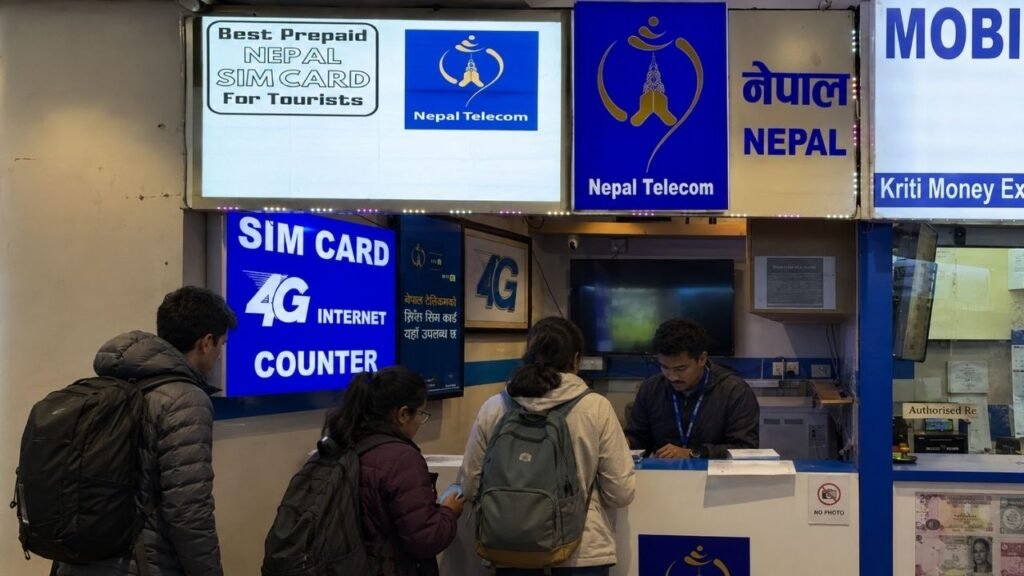
Foreign travelers can buy a Nepal SIM card at Tribhuvan International Airport (TIA), official operator centres, and authorized retail outlets. Ncell specifically confirms that its Tourist SIMs are available at TIA, Ncell Centres, and authorized retailers nationwide. Nepal Telecom also operates official counters and a network of outlets where new SIMs can be obtained.
Tribhuvan International Airport
The airport is the most convenient option if you want mobile data immediately after landing. Ncell has a centre inside TIA’s arrival terminal, and its TouristPro SIMs are specifically available there. The main advantage is convenience: you can complete registration, activate the SIM, and have connectivity before leaving the airport.
The disadvantage is that airport counters may not offer the same range of choices or package flexibility as a full operator centre. Do not assume that an airport SIM is automatically more expensive; compare the advertised package and price rather than relying on the location alone.
Official Operator Stores
For the best combination of price transparency, registration assistance, and customer support, an official Ncell Centre or Nepal Telecom counter is generally the safest choice. Ncell’s official centres provide services including new SIM issuance, SIM replacement, recharge, and mobile-service support.
This is particularly useful if you need an eSIM, have a registration problem, or want help choosing a package rather than simply buying the first SIM available.
Authorized Retailers
Authorized Ncell and Nepal Telecom retailers are widely available in Kathmandu, Pokhara and other towns, including tourist areas. Ncell explicitly states that Tourist SIMs are available through authorized retail outlets nationwide.
They are a perfectly reasonable alternative when an official centre is inconvenient. The important thing is to make sure the SIM is registered in your own name using your passport. Before leaving, test mobile data and confirm that the SIM has actually been activated.
Tourist Areas and Unverified Sellers
You may encounter SIM sellers around busy tourist districts, hotels, shops and transport hubs. Availability alone does not mean the seller is authorized. Avoid buying a SIM that is already registered to someone else or where the seller cannot complete the required registration in your name.
| Where to Buy | Convenience | Price | Registration Help | Recommendation |
| Tribhuvan International Airport | Very high | Check current package | Yes | Best for immediate connectivity |
| Official operator centre | High | Standard operator pricing | Yes | Best overall |
| Authorized retailer | High | Varies by package | Usually | Good alternative |
| Unverified seller | High | Unclear | Unclear | Avoid |
What Documents Do You Need to Buy a Nepal SIM?
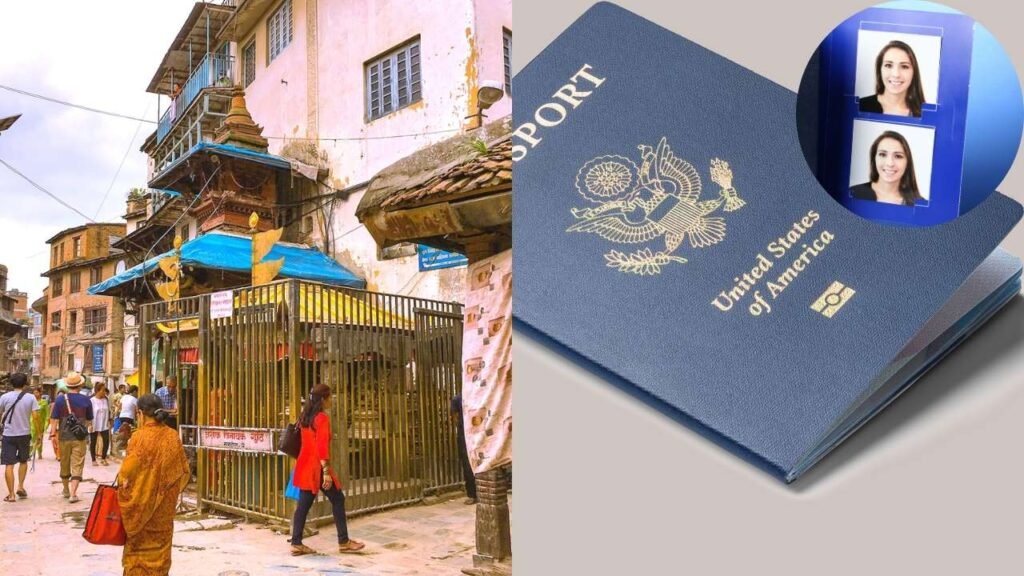
The registration process is straightforward for most foreign visitors, but your SIM must be registered using valid identification. Ncell states that a new SIM requires the subscription form, a copy of an accepted ID such as a passport, and a recent passport-size photograph; the original document and the customer must be present when purchasing the SIM. Nepal Telecom’s terms similarly require an accepted identification document and a photograph when registering a subscriber.
What Foreign Travelers Generally Need
- Original Passport: Bring your physical passport. Ncell specifically instructs tourists to bring their original passport to register and activate a Tourist SIM.
- Passport Details: The operator records the identification information required for the SIM’s KYC (Know Your Customer) registration.
- Photograph: A recent passport-size photograph may be required for a regular SIM registration. Requirements can be handled at the point of sale, so it is useful to have a photo available if requested. Ncell and Nepal Telecom both include photographic identification in their registration requirements.
- Your Physical Presence: Do not expect someone else to register the SIM on your behalf. The operator needs to verify the subscriber’s identity; Ncell specifically states that the customer must be present when purchasing a new SIM.
Do You Need a Nepal Visa?
A visa is not listed by the operators as the standard identification document for purchasing a SIM. For foreign travelers, the key document is the passport. If an individual retailer asks for additional information, follow the operator’s current registration procedure rather than providing unnecessary documents.
Can One Passport Register Multiple SIMs?
The safest approach is not to assume that you can register an unlimited number of SIMs under one passport. Subscriber-registration limits and operator procedures can change, so if you need both NTC and Ncell, ask the authorized outlet to register each SIM correctly in your name.
Why Buy From an Authorized Seller?
The biggest reason is KYC compliance. A properly registered SIM gives you a legitimate connection in your own name and makes later services such as SIM replacement or ownership verification much easier. Ncell’s customer-service documentation, for example, requires the original identification document for SIM-related procedures.
There is also a separate issue travelers sometimes confuse with SIM registration: Nepal’s Mobile Device Management System (MDMS) concerns the registration of mobile handsets, not simply the purchase of a local SIM. Foreign travelers bringing phones into Nepal should therefore distinguish between SIM registration and any applicable handset/IMEI requirements.
Nepal SIM Registration Checklist
- Carry your original passport
- Make sure the SIM is registered in your own name
- Provide the required passport details
- Provide a passport-size photograph if requested
- Buy from an official centre or authorized retailer
- Wait for registration/activation to be completed
- Test a call and mobile data before leaving
- Keep the SIM packaging or number information until you no longer need it
Note: One practical rule: don't simply accept a SIM because it works. Before leaving the shop, make sure the number is registered to you, the package you paid for is active, and mobile data actually works.