
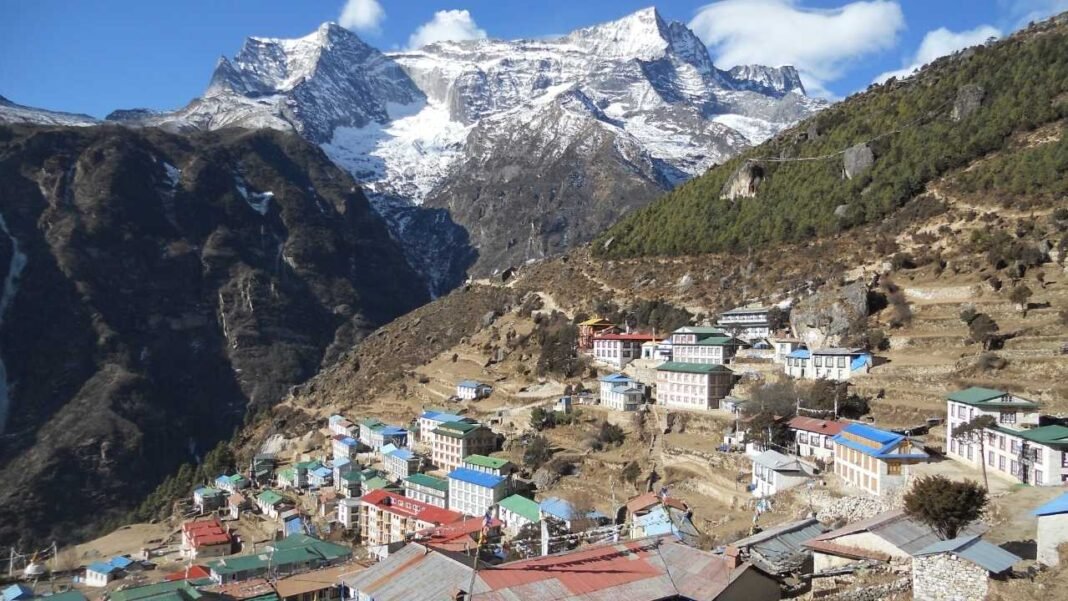

Namche Bazaar sits at 3,440 m (11,286 ft) and is the most important acclimatization stop on the classic Everest Base Camp route and many other treks through the Khumbu. By the time you reach Namche, you have already gained substantial elevation from the lower valleys, and the reduced atmospheric pressure means there is less oxygen available with each breath. This makes Namche an important transition point before the trail climbs toward Tengboche, Dingboche, and eventually the higher elevations of the Everest region.
For most trekkers, the standard approach is to spend an additional night in Namche rather than continuing upward immediately. This gives the body more time to begin adapting to altitude before the next significant increase in sleeping elevation. The acclimatization day is not simply a rest day, either. A common strategy is to hike to a higher elevation during the day and then return to Namche to sleep, a practical application of the “climb high, sleep low” principle. The CDC specifically recommends day trips to higher elevations followed by sleeping at a lower elevation as one way to support acclimatization.
Namche is particularly valuable because altitude exposure becomes increasingly important from this point onward. The next stages of the trek take you progressively higher, and the ability to tolerate altitude varies considerably between individuals. Good physical fitness does not make you immune to altitude illness; gradual ascent and appropriate acclimatization remain important even for experienced and fit trekkers.
An acclimatization stop in Namche therefore should not be viewed as a wasted day or an optional sightseeing break. It is a deliberate part of the ascent profile. Giving your body time to adapt at 3,440 m before continuing higher can make the transition toward the upper Khumbu more manageable and helps you recognize any altitude-related symptoms before the route becomes more remote and significantly higher.
Namche Bazaar Acclimatization: Quick Facts
The figures often quoted for Namche vary slightly between sources. The Nepal Tourism Board currently lists Namche at 3,500 m, while 3,440 m (11,286 ft) is also widely used for the settlement. For consistency with trekking maps and commonly published EBC itineraries, you can use 3,440 m (11,286 ft) in the main article, while noting that published elevations vary.
| Fact | Details |
| Namche Bazaar Elevation | 3,440 m (11,286 ft); some Nepal Tourism Board material gives 3,500 m |
| Typical Acclimatization Stay | 2 nights in Namche, giving you 1 full acclimatization day |
| Common Acclimatization Hike | Syangboche / Everest View Hotel, with Khumjung and Khunde as possible extensions |
| Typical Hiking Time | About 3 to 5 hours for a moderate acclimatization outing, depending on the route and whether you continue toward Khumjung/Khunde |
| Recommended Approach | Hike higher during the day and return to Namche to sleep |
| Main Purpose | Allow the body to begin adapting to lower oxygen availability at altitude |
| Common Next Stop | Tengboche on the classic Everest Base Camp route |
| Main Altitude Risk | Acute Mountain Sickness (AMS) |
The important point is that “one acclimatization day” normally means two nights in Namche, not one night. You arrive in Namche, sleep there, spend the following day hiking at higher elevation and return to Namche, then continue toward Tengboche the next morning. The Nepal Tourism Board specifically recommends spending time around Namche and using nearby areas such as Syangboche, Khumjung and Khunde for acclimatization.
Why Is Namche Bazaar Important for Acclimatization?
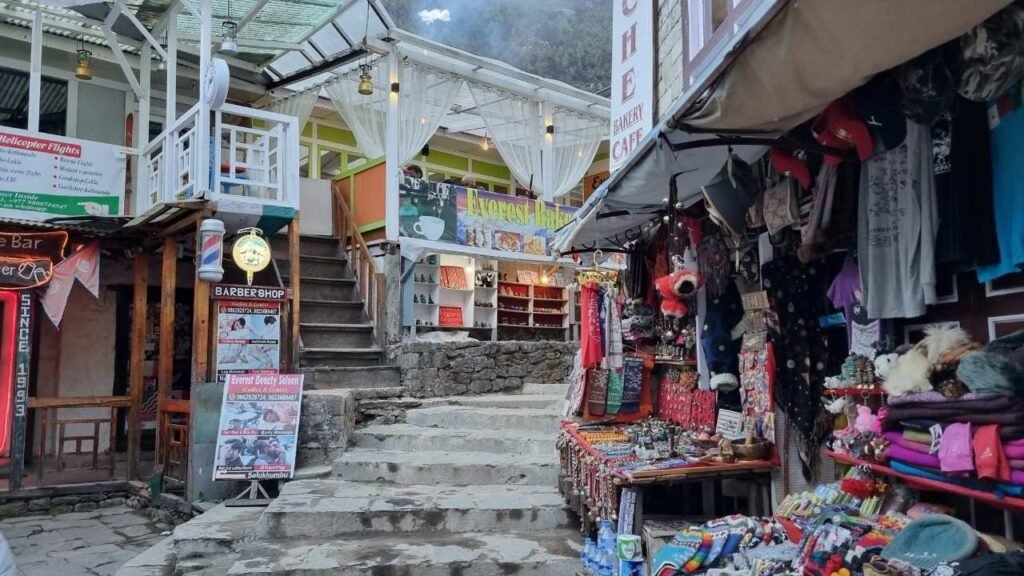
Namche Bazaar is important because it marks a major altitude transition on the Everest trekking route. Trekkers flying into Lukla arrive at about 2,860 m (9,383 ft), while Namche sits at approximately 3,440 m (11,286 ft). That is roughly 580 m (1,900 ft) of additional elevation in a relatively short period, and the body has less time to adjust when the ascent is rapid. The CDC specifically identifies the Lukla-to-Namche section as an important altitude exposure on the Everest route.
Why does the higher altitude matter?
The air does not contain a lower percentage of oxygen at Namche; the atmosphere remains about 21% oxygen, but atmospheric pressure is lower, so the partial pressure of oxygen is reduced. In practical terms, each breath provides less oxygen to the lungs and bloodstream than it would at sea level. At around 3,050 m (10,000 ft), inspired oxygen partial pressure is only about 69% of the sea-level value, according to the CDC.
Your body responds by breathing more deeply and rapidly, increasing heart rate and making other physiological adjustments. These changes take time. The CDC notes that the most important phase of acute acclimatization occurs during the first 3–5 days after ascent, which is why gaining altitude gradually is much easier on the body than climbing rapidly.
Why spend an extra night in Namche?
Spending an additional night gives your body more time to respond to the reduced oxygen availability before you gain more sleeping altitude. This is particularly useful because the classic Everest Base Camp route continues upward from Namche to Tengboche and then toward much higher sleeping elevations around Dingboche and beyond.
There is an important distinction here: acclimatization is not about becoming completely adapted to 3,440 m in one day. It is about giving your body additional time to adjust before exposing it to another significant increase in sleeping altitude. The CDC recommends gradual ascent and, once above 3,000 m, generally limiting increases in sleeping altitude to about 500 m (1,600 ft) per day, with additional acclimatization days as elevation increases.
Does an acclimatization day mean resting in your hotel?
No. This is one of the most common misunderstandings about altitude acclimatization.
A useful acclimatization day in Namche normally involves light-to-moderate activity at a higher elevation during the day, followed by a return to Namche to sleep. For example, trekkers can climb toward Syangboche and the Everest View Hotel, with some itineraries continuing toward Khumjung or Khunde, before descending to Namche.
This approach exposes the body to higher altitude without adding that higher elevation to the night’s sleeping altitude. It is commonly described as “climb high, sleep low.” The principle is consistent with altitude-medicine guidance that day trips to higher elevations followed by returning to a lower sleeping altitude place less physiological stress on the body than sleeping higher.
That does not mean you should turn the acclimatization day into another hard trekking day. The goal is controlled exposure, not exhaustion. The CDC recommends only mild exercise during the first 48 hours at high altitude, and individual symptoms should determine how much activity is appropriate.
How gradual ascent helps
The biggest advantage of the Namche stop is that it slows the rate at which your sleeping altitude increases. Altitude illness risk is strongly influenced by both the altitude you reach and how quickly you get there. Physical fitness does not eliminate this risk; even very fit trekkers can develop acute mountain sickness if they ascend too quickly.
For that reason, Namche should be treated as a deliberate acclimatization checkpoint, not simply another village on the route. A typical schedule gives you two nights in Namche: arrive and sleep at Namche, spend the following day hiking higher and returning to Namche, then continue toward Tengboche if you are feeling well. This extra time can make the subsequent ascent more manageable, although no acclimatization schedule can guarantee that you will avoid altitude illness. Individual susceptibility varies considerably.
The key idea is simple: don’t measure your acclimatization day by how much distance you cover. Measure it by whether you are allowing your body enough time to adapt before sleeping higher.
The Best Acclimatization Hike from Namche Bazaar
The best acclimatization hike is not necessarily the longest or most difficult one. The purpose is to gain some elevation during the day, assess how your body responds, and return to Namche Bazaar at about 3,440 m (11,286 ft) to sleep. The Everest View Hotel and the villages of Khumjung and Khunde are the classic options, while shorter walks around Namche can be more appropriate if you are tired or not feeling fully well.
Namche to Syangboche to Everest View Hotel
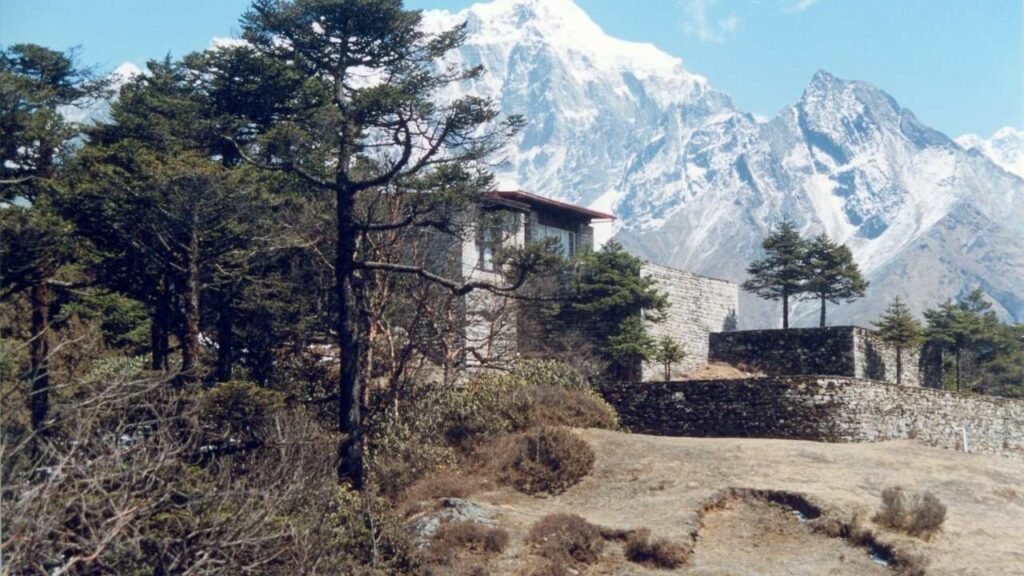
For most trekkers, the classic acclimatization hike from Namche Bazaar is the climb toward Syangboche and Hotel Everest View. The route takes you substantially higher than Namche without requiring you to spend the night at that elevation.
| Route | Approximate Elevation |
| Namche Bazaar | 3,440 m |
| Syangboche | About 3,750 to 3,790 m |
| Hotel Everest View | About 3,880 m |
*Published elevations vary slightly depending on the source and point measured.
From Namche at approximately 3,440 m, the hike to Hotel Everest View gains roughly 440 m (1,440 ft) in elevation. Route measurements also vary, but a reasonable practical estimate is about 5 to 6 km round trip, with most trekkers taking approximately 3 to 4 hours, depending on pace, stops, and the exact route taken.
The Nepal Tourism Board describes Syangboche and nearby Sherpa villages as suitable acclimatization hikes a few hours from Namche, while Hotel Everest View itself lists the climb from Namche at around two hours, or longer if combined with the museum and viewpoint.
The hike is popular because it combines a practical acclimatization gain with some of the first major panoramic views of the Everest region. On a clear day, the viewpoint area can offer views of Everest, Lhotse, Nuptse, Ama Dablam, Thamserku, and other surrounding peaks.
However, the mountain views are only part of the reason for doing this hike. The more important part of the acclimatization strategy is what happens afterward: you descend back to Namche to sleep. Even though you may reach around 3,880 m during the day, your sleeping altitude remains approximately 3,440 m. This gives you higher-altitude exposure without immediately adding another 440 m to your overnight elevation.
A practical route:
Namche to Syangboche to Everest View Hotel to Namche
For many standard Everest Base Camp itineraries, this is enough for the acclimatization day. There is no need to extend the hike simply to cover more distance if you are feeling tired or your body is still adjusting.
Namche to Everest View Hotel to Khumjung to Khunde
If you are feeling well and want a longer acclimatization outing, you can combine the Everest View hike with a visit to Khumjung and Khunde, two of the most important Sherpa settlements above Namche.
Khumjung lies at roughly 3,780 to 3,790 m, while Khunde is nearby at a similar elevation. The exact route and total distance depend on how you link the villages, but a full circuit incorporating Namche, Syangboche/Everest View Hotel, Khumjung and Khunde before returning to Namche can reasonably take 4 to 6 hours of walking and cover roughly 8 to 10 km.
Because route mapping varies, these should be treated as planning estimates rather than fixed figures. Hotel Everest View itself describes a Namche–Khumjung outing of around 4 to 5 hours, while other route descriptions place a longer village circuit at around 9.5 km.
This option adds more than just walking distance. Khumjung is one of the largest Sherpa villages in the Khumbu, located below the sacred peak of Khumbila. Visitors can see the village’s traditional settlement, Khumjung Monastery, and the Hillary School. Nearby Khunde is home to Khunde Hospital, originally established through the work of the Himalayan Trust.
A practical circuit can look like this:
Namche to Syangboche to Everest View Hotel to Khumjung to Khunde to Namche
This is a better choice if you feel strong, have no concerning altitude symptoms, and want to combine acclimatization with a deeper look at Sherpa culture. But remember that longer is not automatically better. The objective is controlled exposure to higher altitude, not to turn your acclimatization day into an exhausting trek.
Shorter Options Around Namche
Not every trekker should attempt the Everest View Hotel or a longer Khumjung to Khunde circuit.
If you arrive in Namche feeling particularly tired after the previous day’s climb, a shorter and gentler walk around Namche may be more appropriate. The Nepal Tourism Board specifically recommends walking in and around Namche during the acclimatization stop and notes that acclimatization should not be rushed.
You can explore parts of the settlement, walk gradually toward nearby viewpoints, or visit the Sagarmatha National Park Visitor Centre area without committing to a long outing. The key is to keep the activity easy and controlled rather than remaining completely inactive all day.
There is also an important distinction between ordinary trekking fatigue and altitude illness. If you are experiencing symptoms such as headache, nausea, dizziness, unusual weakness, or worsening symptoms, do not treat the Everest View hike as something you must complete. Your condition should determine your activity and whether further ascent is appropriate.
Which Acclimatization Hike Should You Choose?
| Option | Approx. Highest Point | Typical Walking Time | Best For |
| Short walk around Namche | Varies | 1 to 2 hours | Tired trekkers or those wanting a gentle day |
| Syangboche/ Everest View Hotel | 3,880 m | 3 to 4 hours | The standard acclimatization hike |
| Everest View + Khumjung | 3,880 m | 4 to 5 hours | Trekkers feeling well who want a longer outing |
| Everest View + Khumjung + Khunde circuit | 3,880 m | 4 to 6 hours | Strong trekkers wanting culture and additional walking |
The Everest View Hotel hike is the best all-round option for most Everest Base Camp trekkers because it provides a meaningful elevation gain of around 440 m above Namche without making the day excessively long. Extending the route through Khumjung and Khunde can add cultural value and walking time, but it should be based on how you feel, not on the idea that a harder acclimatization hike is automatically more effective.
The rule for the day is simple: hike higher if you are feeling well, but return to Namche to sleep and never force the hike just because it is written into your itinerary.
Altitude Sickness in Namche Bazaar
At around 3,440 m (11,286 ft), Namche Bazaar is high enough for acute mountain sickness (AMS) to become a genuine concern. AMS is not simply a sign that you are unfit; it is a response to reduced oxygen availability at altitude, and even experienced, physically fit trekkers can develop it. The risk increases when altitude is gained too quickly.
Common Symptoms of AMS
Symptoms usually develop after ascending and may include:
- Headache
- Nausea or vomiting
- Dizziness
- Unusual tiredness or weakness
- Loss of appetite
- Difficulty sleeping
Mild symptoms do not necessarily mean you must immediately descend, but they do mean you should not continue climbing until they have resolved.
What Should You Do if Symptoms Appear?
If you develop symptoms in Namche, the safest approach is to stop gaining altitude, rest, and monitor your condition. Tell your trekking guide or companions rather than trying to hide the symptoms so that you can be monitored properly.
Do not simply take a painkiller, sleep it off, and continue toward Tengboche the next morning if symptoms are persisting or getting worse. According to the CDC, a person with altitude-illness symptoms should not ascend further until the symptoms have resolved. If symptoms worsen while resting, descent is necessary.
When Is Descent Necessary?
The most serious altitude illnesses are high-altitude cerebral edema (HACE) and high-altitude pulmonary edema (HAPE). Warning signs include:
- Confusion, unusual drowsiness, or altered mental status
- Loss of coordination or difficulty walking normally
- Severe or rapidly worsening weakness
- Shortness of breath, particularly at rest
- Persistent or worsening cough
- Marked breathing difficulty
These are emergencies. Do not continue ascending. The person should be descended immediately to a lower elevation and receive medical assistance. HACE and HAPE can become life-threatening quickly.
Oxygen and medications such as acetazolamide or dexamethasone can have important roles in altitude-illness management when medically appropriate, but they should not create the impression that you can safely remain at altitude with severe symptoms. For serious altitude illness, descent is the definitive intervention; supplemental oxygen may be used as additional treatment where available.
The Key Lesson for Namche
Your acclimatization day in Namche is partly about learning how your body is responding before the trail gets higher and more remote. A moderate hike to around 3,800–3,900 m followed by sleeping back at Namche can support acclimatization, but it does not guarantee protection from AMS. If your body is telling you that altitude is becoming a problem, listen to it before continuing upward.