
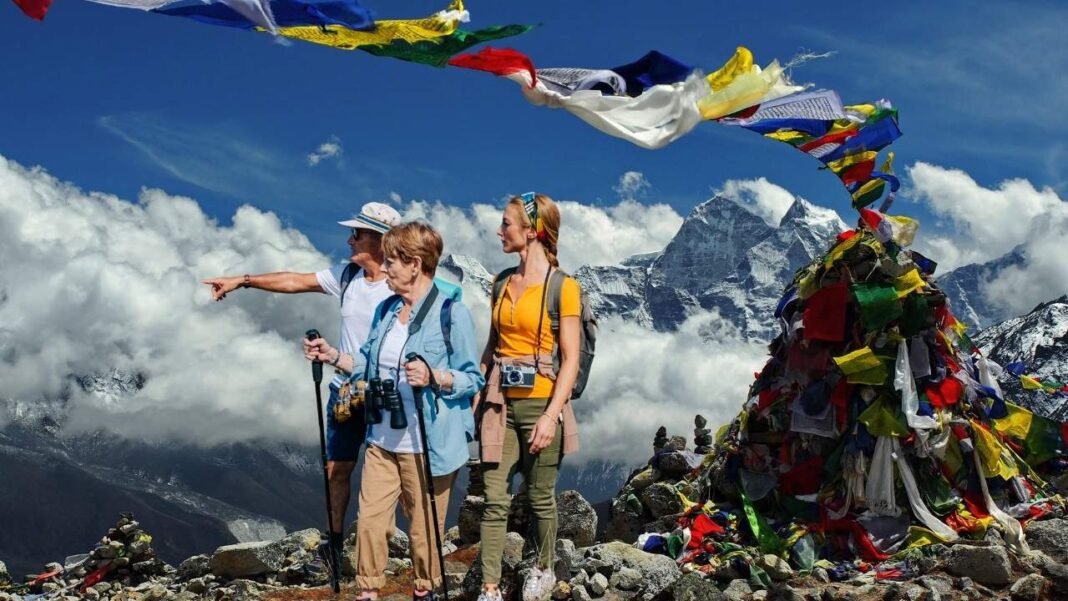

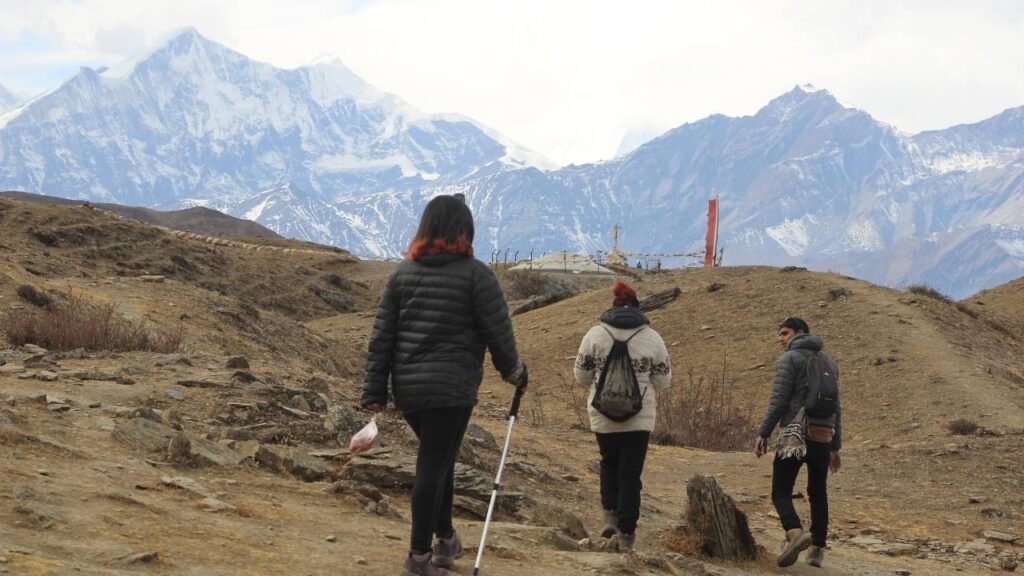
Nepal can be a great destination for a family trek, but you do not need to take your children to Everest Base Camp to make it worthwhile. In fact, some of Nepal’s best family trekking experiences are on shorter, lower-altitude routes around the Annapurna and Pokhara regions.
A family-friendly trek is less about having an easy trail and more about having the right balance. Daily walking should be manageable, the altitude should not increase too quickly, and there should be comfortable places to eat and sleep along the way. Road access can also make a difference. If a child is tired, sick, or simply done with walking for the day, having a road nearby gives you more options than being several days deep into a remote trail.
Age matters, too. A route that works well for a 15-year-old who regularly hikes may be completely unsuitable for a six-year-old. Older children can usually handle longer days and higher elevations, while younger children are better suited to short village walks and lower-altitude trails. Previous hiking experience, fitness, and how well your children cope with long days outdoors should all influence the choice.
That is also why a family trek should not simply be a standard trekking itinerary with children added to it. You may need shorter walking days, extra rest days, more flexible accommodation, lighter backpacks, and enough time to adjust when someone needs a break. The goal is not to reach the destination as quickly as possible. It is to enjoy the mountains without turning every day into a test of endurance.
For most families, Ghorepani Poon Hill, Ghandruk, and short treks around Pokhara are better starting points than Nepal’s more demanding high-altitude routes. Families with older children and previous trekking experience can consider options such as the Everest View Trek, Langtang Valley, or Mardi Himal.
What Makes a Trek Family-Friendly?
A family-friendly trek is not necessarily the easiest trek in Nepal. It is a route where the distance, altitude, accommodation, and overall logistics can be managed without putting unnecessary pressure on children or parents.
Altitude is one of the biggest considerations. A route with gradual elevation gain gives your family more time to adjust, while lower-altitude treks are generally more forgiving if your children have little trekking experience. Daily walking should also be realistic. Four to six comfortable hours on the trail is very different from pushing through eight or nine hours every day.
Accommodation matters as well. Established teahouses and lodges mean you do not have to carry camping equipment, while road access on parts of a route can provide an alternative if plans suddenly change. Well-established trails, clear navigation, and the availability of local guides and porters also make the experience considerably easier.
Families should ideally leave room for rest and acclimatization days rather than following a tight schedule. It is also worth considering what children will actually enjoy along the way. Villages, forests, animals, rivers, viewpoints, monasteries, and local culture can make a moderate trek far more memorable than simply chasing a famous destination.
Finally, emergency access matters. Routes with established trekking infrastructure, communication options, health posts, and practical evacuation possibilities offer an extra layer of reassurance when you are travelling with children.
For this article, the best family treks are therefore judged on overall suitability, not just trail difficulty: manageable altitude, reasonable walking days, reliable accommodation, flexible logistics, safety, and enough along-the-way experiences to keep younger trekkers interested.
Best Family Treks in Nepal at a Glance
Nepal offers family trekking routes ranging from short, low-altitude hikes around Pokhara to longer Himalayan journeys reaching nearly 4,500 meters. The right trek depends on your children’s age, hiking experience, fitness, and ability to handle altitude. The table below compares some of the best family-friendly options by maximum elevation, typical duration, difficulty, and suitability.
| Trek | Max. Altitude | Typical Duration | Difficulty | Best For |
| Ghorepani Poon Hill Trek | 3,210 m (10,531 ft) | 4 to 6 days | Easy to Moderate | First family trek |
| Ghandruk Trek | 1,940 m (6,365 ft) | 3 to 5 days | Easy | Families with younger children |
| Australian Camp Trek | 2,060 m (6,759 ft) | 1 to 2 days | Easy | Very young children and first-time hikers |
| Panchase Trek | 2,517 m (8,258 ft) | 3 to 4 days | Easy to Moderate | Families wanting low-altitude mountain views |
| Everest View Trek | 3,880 m (12,730 ft) | 5 to 8 days | Moderate | Families wanting an Everest experience |
| Langtang Valley Trek | 3,870 m (12,697 ft) | 7 to 9 days | Moderate | Families with older, active children |
| Mardi Himal Trek | 4,500 m (14,764 ft) | 5 to 7 days | Moderate to Challenging | Fit families with older children and trekking experience |
A note on the altitude figures: Poon Hill reaches 3,210 m, while Kyanjin Gompa in Langtang is around 3,870 m. The Everest View route reaches approximately 3,880 m at the Everest View Hotel/Syangboche area. Mardi Himal Base Camp is around 4,500 m and is substantially more demanding from an altitude perspective than the lower-altitude family routes.
The Best Family-Friendly Trekking Routes in Nepal
Ghorepani Poon Hill Trek: Best Overall Family Trek
Maximum Elevation: 3,210 m (10,531 ft) at Poon Hill
Duration: 4 to 5 days
Average Walking: 4 to 6 hours per day
Difficulty: Easy to Moderate
Best Seasons: Spring (March to May) and Autumn (September to November)
Accommodation: Teahouses and mountain lodges
Starting Point: Typically Nayapul/Birethanti or a road-access point depending on the itinerary
Approx. Trekking Distance: 40 to 50 km, depending on the route and road sections
Main Highlights: Poon Hill sunrise, Annapurna and Dhaulagiri views, rhododendron forests, Gurung and Magar villages
Family Suitability: Excellent for active families and older children; younger children depend on fitness and hiking experience
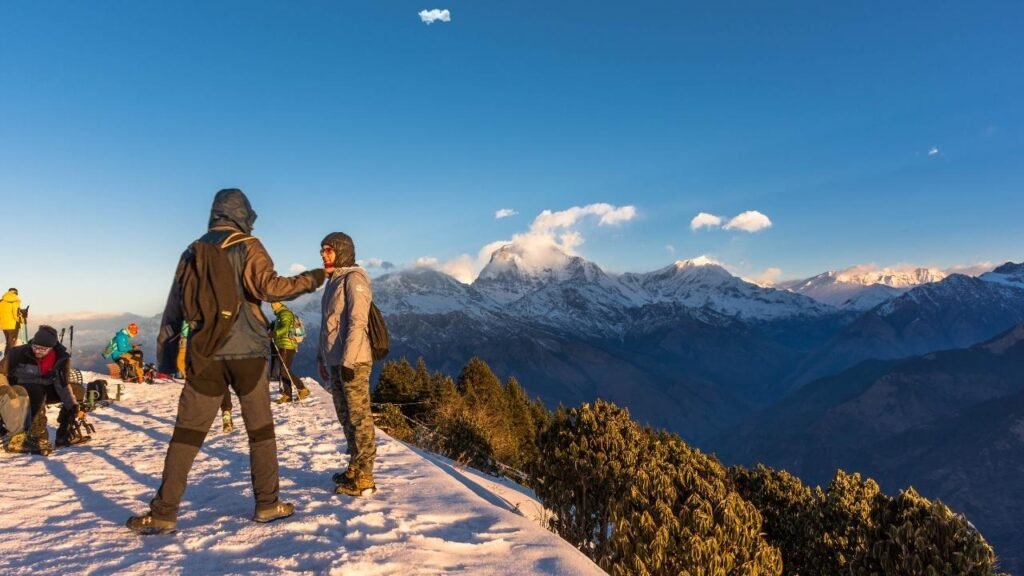
The Ghorepani Poon Hill Trek is one of the strongest choices for a first family trek in Nepal because it delivers a genuine Himalayan experience without requiring the extreme altitude or long commitment of major high-altitude routes. The itinerary is relatively short, accommodation is available throughout the main trekking route, and families can experience mountain villages, forests, and panoramic Himalayan scenery within just a few days.
The trek’s biggest attraction is Poon Hill at 3,210 m, one of the most accessible major viewpoints in the Annapurna region. The early-morning climb is rewarded with sunrise views across the Dhaulagiri and Annapurna ranges, with Machhapuchhre (Fishtail) and other prominent peaks visible in clear weather.
The landscape is another reason it works particularly well for families. Much of the route passes through rhododendron forests, especially attractive in spring, while villages such as Ghorepani provide opportunities to experience local mountain culture. The established teahouse network also means families do not need to camp or carry extensive accommodation equipment.
The main thing parents should not underestimate is the stone staircase section around Ulleri. The trek is relatively moderate in altitude, but thousands of steps can make the early part of the route physically demanding. For families with younger children, shorter walking days, porter support, and a flexible itinerary can make a significant difference.
Best for: Families wanting a classic Himalayan trekking experience with excellent mountain views, comfortable teahouse accommodation, and a manageable altitude and duration.
Ghandruk Trek: Best for Families With Younger Children
Maximum Elevation: Approximately 1,940 m (6,365 ft) at Ghandruk
Duration: 3 to 5 days
Average Walking: 3 to 5 hours per day
Difficulty: Easy
Best Seasons: Spring (March to May) and Autumn (September to November)
Accommodation: Teahouses and village lodges
Starting Point: Usually Nayapul/Birethanti or a road-access point depending on the itinerary
Approx. Trekking Distance: Approximately 20 to 30 km, depending on the route and road use
Main Highlights: Gurung village, Annapurna views, traditional houses, mountain scenery, local culture
Family Suitability: Particularly suitable for families with younger children
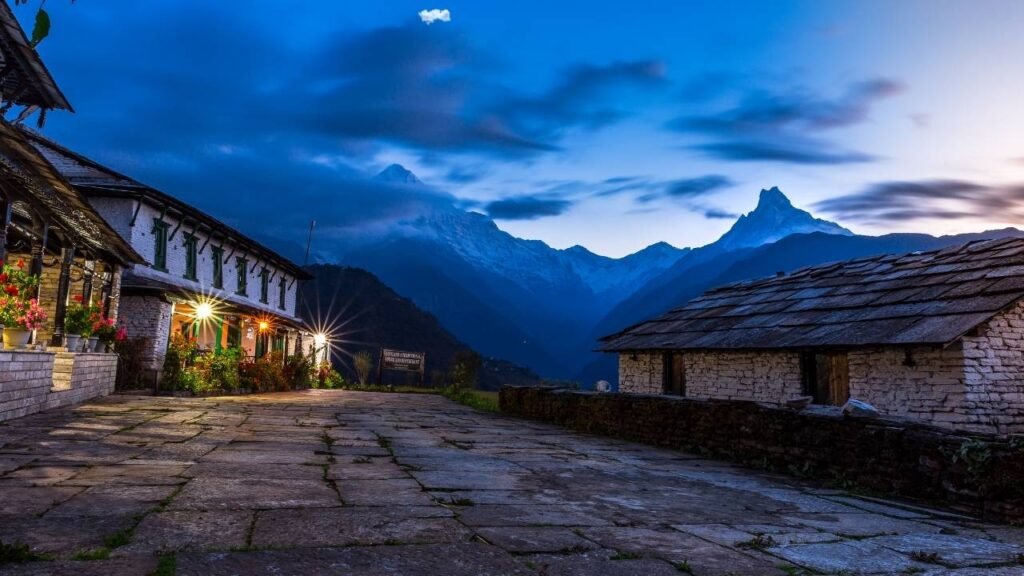
The Ghandruk Trek is one of the better choices when the priority is keeping altitude low and walking demands relatively low. Rather than taking your family deep into the high Himalayas, the route focuses on the foothills of the Annapurna region, where children can experience mountain villages and Himalayan scenery without spending several days above 3,000 m.
Ghandruk itself is a major attraction. The traditional Gurung settlement has stone-paved paths, closely packed houses, local cultural traditions, and broad views toward peaks including Annapurna South, Hiunchuli, and Machhapuchhre (Fishtail). This gives children something to experience beyond simply walking from one teahouse to another.
The lower elevation is a major advantage. At around 1,940 m, Ghandruk presents considerably less altitude exposure than Poon Hill, Everest View, Langtang, or Mardi Himal. Families can therefore concentrate more on walking comfortably, exploring villages, and enjoying the scenery.
The route is not completely flat, however. Stone steps and undulating trails are common, and some itineraries include substantial uphill sections.
The advantage is that these physical challenges can generally be managed through shorter walking days and flexible itineraries, making Ghandruk particularly practical for families traveling with younger children.
Best for: Families with younger children who want mountain scenery, Gurung culture, and a genuine Himalayan village experience without committing to high-altitude trekking.
Australian Camp Trek: Best Short Family Trek
Maximum Elevation: Approximately 2,060 m (6,759 ft) at Australian Camp
Duration: 1 to 2 days
Average Walking: 2 to 4 hours per day
Difficulty: Easy
Best Seasons: Spring (March to May) and Autumn (September to November)
Accommodation: Teahouses and mountain lodges
Starting Point: Kande, near Pokhara
Approx. Trekking Distance: Approximately 10 to 15 km, depending on the itinerary
Main Highlights: Annapurna and Dhaulagiri views, forest trails, Australian Camp, Dhampus
Family Suitability: Excellent for young children, first-time hikers, and families with limited time
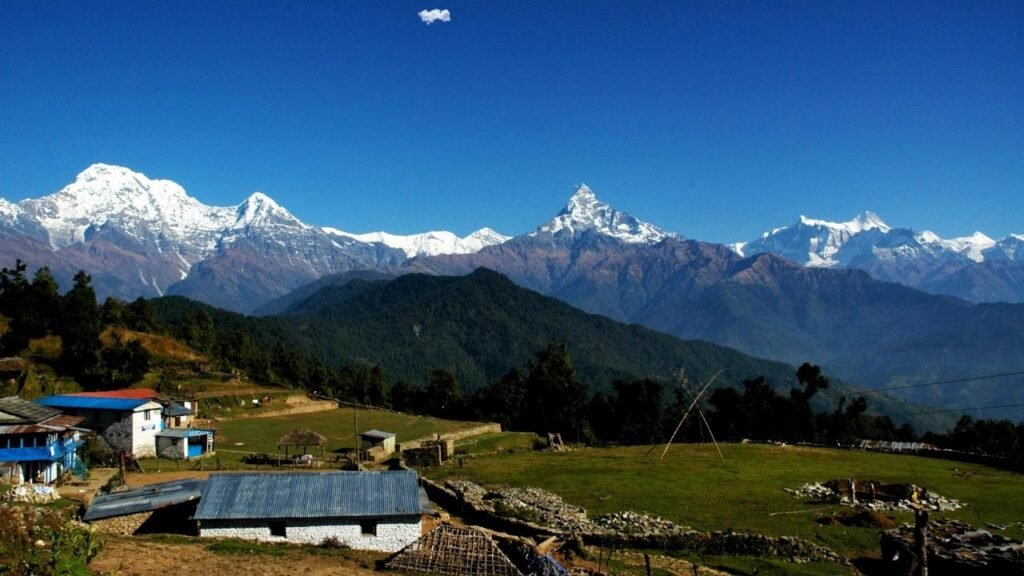
The Australian Camp Trek is one of the shortest ways to introduce children to trekking in Nepal. Located above Pokhara, the route can be completed as a short overnight hike rather than a multi-day Himalayan expedition, making it particularly useful for families who want a trekking experience without committing an entire week to the trail.
The low maximum elevation of around 2,060 m is one of its biggest advantages. Families are not dealing with the same altitude concerns found on higher routes, while the trail still provides impressive views toward the Annapurna range, Machhapuchhre, and Dhaulagiri on clear days.
The walking itself is relatively manageable. The classic route from Kande to Australian Camp and onward toward Dhampus passes through forests, farmland, and small settlements. There are uphill sections, but the overall commitment is considerably lower than Poon Hill or Everest View.
Its proximity to Pokhara also makes logistics simple. Families can reach the trailhead by road, complete a short trek, and return to Pokhara without spending days on complicated transportation. That makes Australian Camp particularly useful as either a standalone family trek or a first hiking experience before attempting a longer route.
Best for: Families with young children, first-time trekkers, or travelers who want a short Himalayan hiking experience without the physical and logistical commitment of a longer trek.
Everest View Trek: Best Family Trek for Everest Views
Maximum Elevation: Approximately 3,880 m (12,730 ft) at the Everest View Hotel/Syangboche area
Duration: 5 to 8 days
Average Walking: 4 to 6 hours per day
Difficulty: Moderate
Best Seasons: Spring (March to May) and Autumn (September to November)
Accommodation: Teahouses and mountain lodges
Starting Point: Lukla
Approx. Trekking Distance: Approximately 55 to 65 km, depending on the itinerary
Main Highlights: Everest views, Namche Bazaar, Sherpa villages, Tengboche area, Buddhist monasteries
Family Suitability: Best for older children and families with previous hiking experience
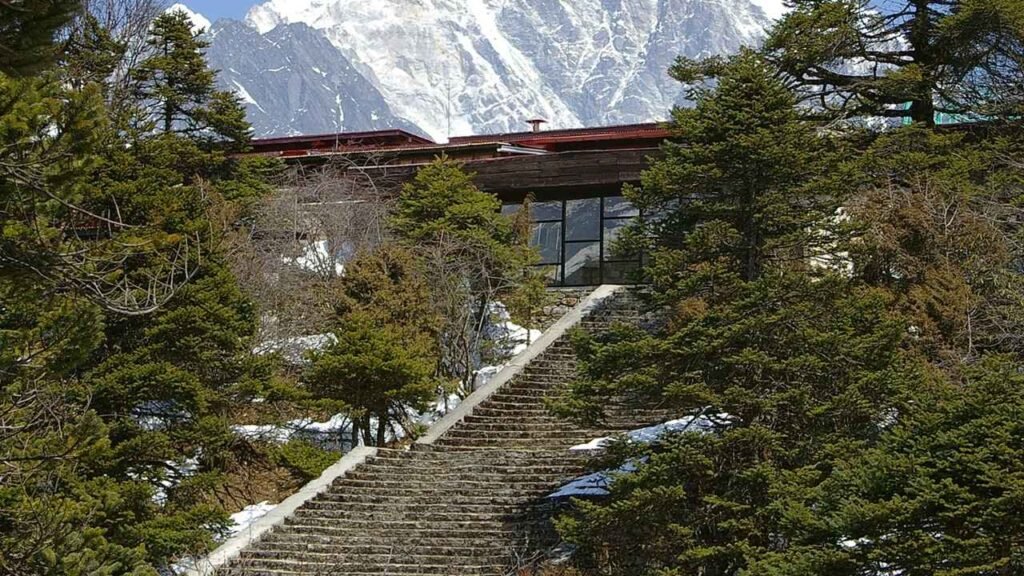
The Everest View Trek is the strongest option for families who want to experience the Everest region without undertaking the considerably longer Everest Base Camp trek. The route takes you through the Khumbu’s famous Sherpa settlements and provides impressive views of Mount Everest, Ama Dablam, Lhotse, Nuptse, and other Himalayan peaks.
The major difference from the lower-altitude family treks is elevation. Reaching approximately 3,880 m means altitude becomes a genuine consideration. Families should therefore build adequate acclimatization into the itinerary rather than treating the trek as simply a longer version of a low-altitude hike.
Namche Bazaar is an important part of the experience. The town provides accommodation, shops, restaurants, and an acclimatization stop, while the surrounding trails offer spectacular mountain views. The route also introduces children to Sherpa culture, Buddhist monasteries, mani walls, prayer flags, and traditional mountain settlements, making it as much a cultural experience as a physical one.
The trek is considerably more demanding than Ghandruk or Australian Camp because of the combination of altitude and repeated climbs and descents. For that reason, it is better suited to older children and teenagers who are comfortable walking several hours a day. A slower itinerary with proper acclimatization is preferable to trying to complete the route as quickly as possible.
The reward is significant: few family treks offer the same combination of iconic Himalayan scenery, Sherpa culture, and access to the Everest region without requiring the full commitment of an Everest Base Camp trek.
Best for: Families with older children or teenagers who want an authentic Everest-region experience, spectacular Himalayan views, and Sherpa culture while avoiding the length and difficulty of Everest Base Camp.
Langtang Valley Trek: Best for Older Children and Active Families
Maximum Elevation: Approximately 3,870 m (12,697 ft) at Kyanjin Gompa
Duration: 7 to 9 days
Average Walking: 5 to 7 hours per day
Difficulty: Moderate
Best Seasons: Spring (March to May) and Autumn (September to November)
Accommodation: Teahouses and mountain lodges
Starting Point: Syabrubesi
Approx. Trekking Distance: Approximately 60 to 75 km, depending on the itinerary and optional climbs
Main Highlights: Langtang Valley, Langtang Lirung, Kyanjin Gompa, Tamang villages, forests, glaciers and mountain scenery
Family Suitability: Best for older children, teenagers, and active families with previous hiking experience
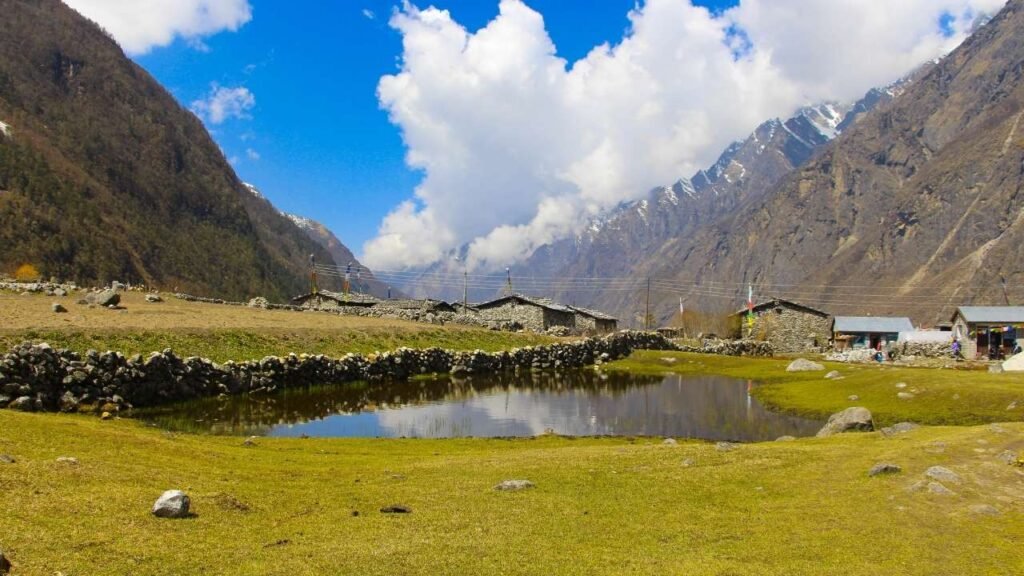
The Langtang Valley Trek is a significant step up from lower-altitude family routes such as Ghandruk and Australian Camp. The trail takes you deep into the Langtang region, following the valley through forests and traditional mountain settlements before reaching Kyanjin Gompa at approximately 3,870 m.
One of the route’s strongest advantages for families is the combination of natural scenery and cultural experiences. The trail passes through settlements influenced by the Tamang and Tibetan Buddhist cultures, while the upper valley opens into a much more dramatic Himalayan landscape dominated by Langtang Lirung and surrounding peaks.
The altitude, however, changes the nature of the trek. Reaching nearly 3,900 m means families need to take acclimatization seriously, particularly because the route involves several days of continuous elevation gain. A sensible itinerary should include adequate time around Kyanjin Gompa rather than treating it simply as a destination to reach and immediately leave.
Families with older children can also use Kyanjin Gompa as a base for optional excursions toward Kyanjin Ri or Tserko Ri. These climbs are substantially more demanding and should be treated as optional objectives rather than essential parts of the family itinerary.
Compared with the Everest region, Langtang is also relatively compact, allowing families to experience a high Himalayan valley without committing to the length of a full Everest Base Camp itinerary. Nevertheless, the combination of 5–7 hours of walking, altitude, and multiple consecutive trekking days makes it much better suited to teenagers and physically active children than very young trekkers.
Best for: Families with older children or teenagers who are comfortable with several hours of hiking per day and want a deeper Himalayan experience combining mountain scenery, Tamang culture, and high-altitude landscapes.
Mardi Himal Trek: Best for Adventurous Families
Maximum Elevation: Approximately 4,500 m (14,764 ft) at Mardi Himal Base Camp
Duration: 5 to 7 days
Average Walking: 5 to 7 hours per day
Difficulty: Moderate to Challenging
Best Seasons: Spring (March to May) and Autumn (September to November)
Accommodation: Basic teahouses and mountain lodges
Starting Point: Usually Kande or nearby road-access points, depending on the itinerary
Approx. Trekking Distance: Approximately 40 to 55 km, depending on the route and starting point
Main Highlights: Mardi Himal, Machhapuchhre, Annapurna South, ridge trails, rhododendron forests and high-altitude landscapes
Family Suitability: Best for fit families with older children or teenagers and previous trekking experience
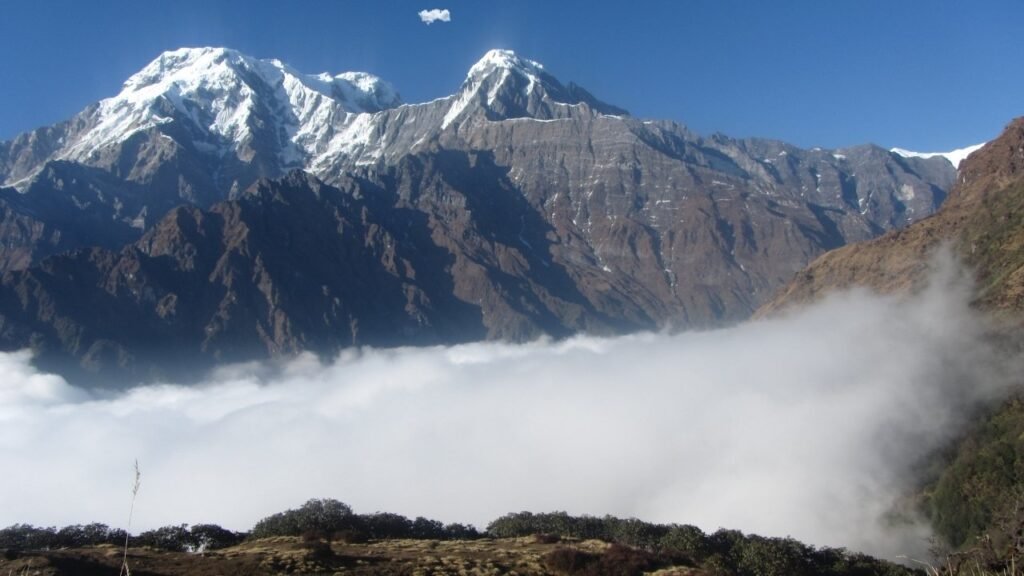
The Mardi Himal Trek is one of the more adventurous options on this list. Although the trek can be completed in less than a week, the route climbs from the lower hills into a high mountain environment, eventually reaching approximately 4,500 m at Mardi Himal Base Camp.
The scenery is the major attraction. The trail begins through rhododendron and forested terrain before emerging onto exposed ridges with increasingly expansive views of Machhapuchhre (Fishtail), Annapurna South, Hiunchuli, and the surrounding Annapurna range. The changing landscape gives the trek a strong sense of progression, which can make it particularly rewarding for older children who already enjoy hiking.
However, this is not a route I would describe as an easy family trek. The combination of steep ascents, uneven terrain, long walking days, and 4,500 m of elevation makes Mardi Himal considerably more demanding than Ghandruk, Australian Camp, or Poon Hill. Accommodation becomes more basic as you climb, and weather conditions can change quickly on the exposed upper sections.
Altitude deserves particular attention. Mardi Himal Base Camp at around 4,500 m is significantly higher than the maximum elevation of Poon Hill or the Everest View Hotel. Families should therefore use a gradual itinerary, monitor everyone for symptoms of altitude sickness, and be prepared to turn around or descend if someone becomes unwell.
For families who are already comfortable with mountain hiking, however, Mardi Himal offers an excellent balance between adventure and accessibility. It provides the feeling of a genuine high-Himalayan expedition without requiring the two-week commitment of some major trekking routes.
Best for: Fit and experienced families with older children or teenagers who want a more challenging Himalayan adventure, are comfortable with basic mountain accommodation, and can handle significant altitude and longer trekking days.